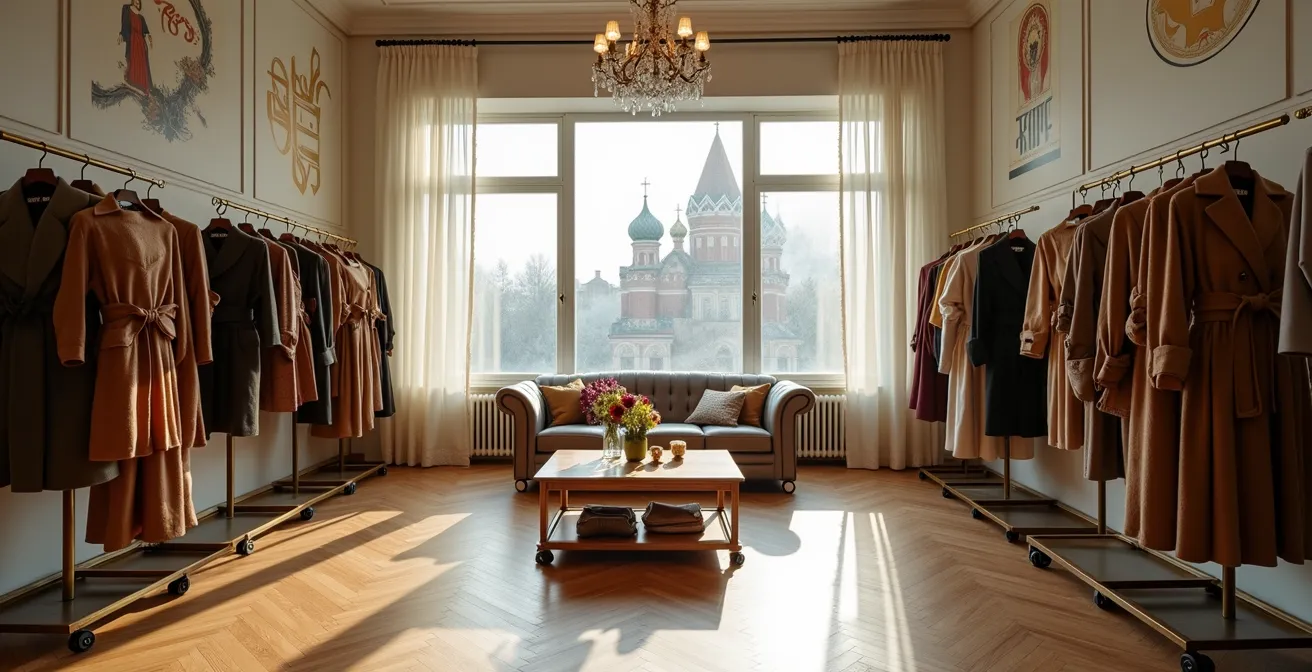
True Soviet couture is found not in sprawling markets, but through a curator’s-level hunt in Moscow’s discreet boutiques.
- Dating a piece requires forensic attention to detail, from the material of its buttons to the typography on its tags.
- Investment-grade watches like Poljot and Raketa have a rich, often shared, history with French horology, making them coveted collector’s items.
Recommendation: Master the art of spotting fakes and understand Russia’s strict customs laws to ensure your treasure makes it home safely.
For the discerning fashionista, the allure of Moscow lies not in the glittering facades of GUM, but in the whispered promise of a forgotten glamour. The quest for authentic Soviet-era couture is a world away from the mass-produced ushankas and matryoshkas of tourist stalls. It’s a hunt for unique pieces imbued with history—a wool officer’s coat with a story in its seams, a dress that whispers of Perestroika optimism. Many guides point towards sprawling flea markets, a chaotic and often overwhelming experience for those seeking genuine quality over nostalgic kitsch.
But the real treasures are rarely found in plain sight. This is not about shopping; this is about sartorial archaeology. The key is to shift your mindset from that of a tourist to that of a curator. It requires developing a discerning eye, understanding the subtle markers of authenticity, and knowing where to look for the city’s true sartorial secrets. This approach transforms a simple shopping trip into a cultural expedition, where each discovery is a piece of wearable history, a testament to a bygone aesthetic that can’t be replicated.
This guide provides the framework for that expedition. We will delve into the art of dating Soviet garments, explore the hidden basements of Kitay-Gorod, compare iconic watch brands from an investor’s perspective, and decode the unwritten rules of negotiation. You will learn not just what to buy, but how to see, evaluate, and preserve these unique finds, ensuring your Moscow haul is one of genuine style and substance.
To navigate this unique fashion landscape, this article provides a detailed roadmap. Explore the sections below to master the art of the Soviet vintage hunt, from identifying historical periods in clothing to securing your finds at the best price.
Summary: A Curator’s Map to Moscow’s Vintage Scene
- Stalinist vs. Perestroika style: How to date vintage Russian clothing?
- Beyond Retro: Hidden vintage basements in the Kitay-Gorod district
- Raketa or Poljot: Which vintage watch brand is a better investment?
- Fixed price vs. Haggle: What are the rules in Moscow vintage stores?
- How to remove the “old trunk” smell from Soviet wool coats?
- How to tell if that Soviet camera at the flea market is actually working?
- Dry Bridge vs. Vernissage: Where to find real Soviet watches?
- Bargaining at Izmailovo: How to save 30% on souvenirs using Euro cash?
Stalinist vs. Perestroika style: How to date vintage Russian clothing?
Distinguishing a 1950s dress from an 1980s jacket is the foundational skill of the sartorial archaeologist. In the Soviet context, this is a science of details, where manufacturing tells a story of industrial priorities and shifting aesthetics. The period of a garment dictates not only its silhouette but also its value and historical significance. A fitted waist and full skirt instantly evoke the post-war Stalinist era’s attempt at a return to femininity, while oversized shoulders and bold synthetics scream Perestroika-era experimentation.
The true curator, however, looks beyond the general shape. It’s the small components that offer the most reliable clues. Materials are a primary indicator; the prevalence of heavy wool and cotton in early Soviet decades gives way to the introduction of ‘lavsan’ (the Soviet answer to polyester) and other synthetic blends later on. Even something as mundane as a zipper holds a key. The presence of a world-renowned YKK zipper almost certainly places a garment in the post-1991 period, whereas a sturdy metal zipper marked ‘Молния’ (Molniya, or ‘Lightning’) is a hallmark of authentic Soviet production.
These details are your forensic tools. By examining the materials of buttons, the typography on a tag, and the construction of the garment, you can build a precise timeline for your find. This knowledge empowers you to identify true historical artifacts and confidently assess their value, separating the genuinely vintage from the merely old.
Your Forensic Field Guide: Dating Soviet Garments
- Button Materials: Examine the buttons. Plastic was common in the 1970s-80s, while metal or wood buttons point to pre-1970s production when industrial focus was elsewhere.
- Zipper Brands: Check for ‘Molniya’ (Молния) zippers, the Soviet standard. A YKK brand suggests a post-1991, post-Soviet piece when Western imports became available.
- Tag Typography: Analyze the care tags. Authentic pre-1991 tags use exclusively Cyrillic script and feature standardized GOST quality marks. Latin script or international sizing indicates a more recent origin.
- Fabric Composition: Feel the fabric. Heavy wool, pure cotton, and early synthetics like ‘lavsan’ are typical of the Soviet era. The diverse and complex synthetic blends of today were rare.
- Silhouette by Era: Identify the defining shape. 1950s styles had fitted waists and full skirts; 1970s introduced flared trousers and geometric prints; and the 1980s are defined by oversized shoulders and flashes of neon.
Beyond Retro: Hidden vintage basements in the Kitay-Gorod district
The true soul of Moscow’s vintage scene is not found in sprawling, impersonal markets, but in the intimate, curated basements of the historic Kitay-Gorod district. This labyrinth of streets, with its pre-revolutionary architecture, conceals a network of subterranean boutiques. These are not just shops; they are the ateliers of passionate curators who have dedicated themselves to preserving sartorial history. Finding them feels like being let in on a secret, an experience that resonates deeply with anyone who cherishes the thrill of discovering a hidden gem in Paris’s Le Marais.
These spaces are often small, with exposed brick walls and warm, atmospheric lighting, where every item is hand-picked. The experience is personal and educational. Unlike the chaotic piles of a flea market, here the clothing is presented with reverence. A shop owner might share the story of a 1960s wool coat or explain the significance of a particular designer from the Thaw era. This is where you find not just clothes, but conversations and context.
Case Study: The Vintage Voyage Philosophy
Opened by collector Alina Lysova, Vintage Voyage is a prime example of this philosophy. Tucked away in a petite basement, the showroom is a treasure trove of authenticated luxury pieces from Hermès to Chanel, alongside rare Soviet finds. It transcends retail by hosting fashion lectures and offering worldwide shipping, transforming the act of shopping into a rich cultural event. It’s this dedication to creating an experience, not just a transaction, that defines the best of Moscow’s hidden vintage scene.
To navigate this world, let go of the map and embrace a spirit of exploration. Look for unassuming doorways and discreet signs. The reward is an unparalleled shopping experience, where you can unearth a true pièce de résistance for your wardrobe, far from the tourist crowds.
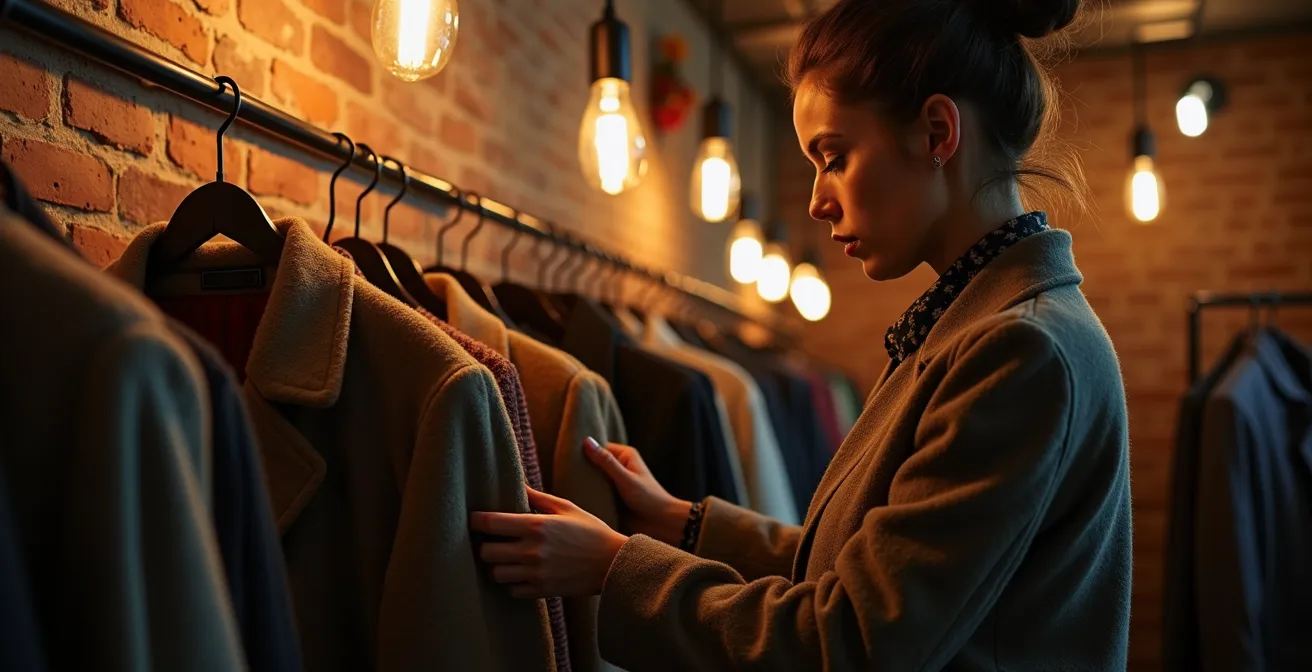
The atmosphere in these boutiques is key; the focus is on the tactile quality of the garments and the personal connection between the curator and the collection. Each piece is given space to breathe, allowing its unique character and history to shine through.
Raketa or Poljot: Which vintage watch brand is a better investment?
For the discerning collector, a Soviet-era watch is more than a timepiece; it’s a piece of Cold War engineering and design history. Two names stand out in the pantheon of Soviet horology: Raketa (Ракета) and Poljot (Полет). Choosing between them is a matter of investment strategy and personal taste. Raketa, known for its robust 2609 movement, is the workhorse. Models like the ‘Big Zero’ and ‘Copernicus’ are design classics, known for their reliability and minimalist aesthetic. They offer stable, if modest, appreciation.
Poljot, meaning ‘Flight’, represents the pinnacle of Soviet watchmaking ambition. As the brand of choice for cosmonauts, its history is intertwined with the Space Race. The iconic ‘Strela’ (Стрела) chronograph, powered by the complex 3133 movement, is highly sought after and commands a significantly higher price. While servicing can be more complex, the investment potential is greater, with values for pristine examples seeing stronger year-on-year growth. For a French collector, the history of these brands is particularly resonant.
The historical collaboration between Soviet watchmaker Slava and French brand LIP in the 1960s created hybrid timepieces that are now highly sought after by collectors in both countries
– Marina Chuikina, STROGO Vintage founder interview
This shared history adds a layer of collectible appeal. To make an informed decision, it’s essential to compare their key attributes, from iconic models to service availability in Europe, as detailed in a comparative analysis of Soviet watch brands.
| Criteria | Raketa | Poljot |
|---|---|---|
| Iconic Models | Copernicus, Big Zero, Polar | Strela chronograph, Ocean, De Luxe |
| Average Resale Value (2024) | €300-800 | €500-1500 |
| Service Availability in France | Moderate – 3-4 specialists | Good – 5-7 specialists including Paris |
| Movement Reliability | 2609 movement – very robust | 3133 chronograph – complex but valued |
| Investment Outlook | Stable growth, 5-10% yearly | Higher potential, 10-15% yearly |
Fixed price vs. Haggle: What are the rules in Moscow vintage stores?
Navigating the etiquette of pricing in Moscow requires cultural fluency. The rules change dramatically depending on your location. In the curated, basement boutiques of Kitay-Gorod or Patriarch Ponds, the price on the tag is generally firm. These are not chaotic bazaars; they are more akin to art galleries. The price reflects the owner’s expertise, the item’s rarity, and the cost of restoration. Attempting to haggle aggressively here would be a faux pas, much like trying to negotiate the price of a croissant in a Parisian boulangerie.
However, a subtle, respectful approach can sometimes yield a modest discount, especially if you are purchasing multiple items. The key is to build rapport. Unlike the transactional nature of Western retail, a personal connection is valued. Starting with a simple, polite Russian greeting like ‘Zdravstvuyte’ (Hello) and expressing genuine admiration for the collection can go a long way. This is not haggling; it is a conversation that may lead to a gesture of goodwill from the owner. According to travel experts, this simple courtesy can sometimes reduce prices by 10-15% immediately.
The situation is entirely different at flea markets like Vernissage at Izmailovo, where bargaining is not just accepted but expected. Here, the first price quoted is merely an opening gambit. The dance of negotiation is part of the experience. It’s important to understand that the first ‘nyet’ (no) is rarely the final answer. It is an invitation to continue the conversation with a polite counter-offer. For international travelers, it’s also wise to be aware of the financial landscape. Due to current sanctions, traditional French bank cards may face restrictions, making fintech cards like Revolut or N26 essential for smooth transactions.
How to remove the “old trunk” smell from Soviet wool coats?
You’ve unearthed the perfect Soviet-era greatcoat. The heavy wool is immaculate, the cut is sharp, but it carries an unmistakable scent—the musty, ‘old trunk’ smell of decades in storage. This is a common challenge for the vintage hunter, but one that can be overcome with a traditional Russian technique that is far gentler than harsh dry cleaning chemicals, which can damage fragile, aged fibers. The secret weapon, found in nearly every Russian home, is vodka.
This is not a myth, but a time-tested method rooted in basic chemistry. Alcohol molecules are highly effective at attracting and neutralizing odor-causing bacteria. When combined with steam, which opens up the dense wool fibers, the method cleanses the garment from the inside out without causing shrinkage or discoloration. This technique was particularly common in Soviet times when access to professional dry cleaning services and chemicals was limited, making it an authentic preservation secret.
Case Study: The Svalka Vodka Steam Method
Svalka, a major Moscow vintage store that processes hundreds of Soviet garments each month, relies on this traditional deodorizing process. Their method is simple and effective: hang the coat in a bathroom after running a hot shower to create a steamy environment. Place a small bowl containing about 100ml of vodka directly below the coat. Close the door and leave it for 2-3 hours. The evaporating alcohol will gently permeate the wool, absorb the musty odor particles, and then dissipate, leaving the coat fresh and odor-free.
This simple, at-home spa treatment for your vintage find is the key to making it wearable. Once the scent is gone, the coat is ready to be integrated into a modern wardrobe, pairing its historic silhouette with contemporary French accessories for a truly unique look.

The beauty of these garments lies in their texture and history. Proper care ensures the heavy, distinctive weave of authentic Soviet wool is preserved, ready to be showcased as a statement piece.
How to tell if that Soviet camera at the flea market is actually working?
Soviet cameras, with their robust mechanical bodies and celebrated optics, are tempting finds at Moscow’s flea markets. Brands like Zenit, Zorki, and FED offer a tangible link to an era of analogue artistry. However, buying a 50-year-old mechanical object requires a curator’s eye for detail. A camera that looks pristine on the outside can be riddled with internal issues. A few quick field tests can separate a functional classic from a handsome paperweight. The potential reward is significant; as a guide for collectors notes, the original LOMO LC-A can fetch €200-500 in European markets, while more common models are far less valuable.
Your smartphone is your most important diagnostic tool. First, check the shutter curtain. Open the back of the camera, hold it up to the light, and fire the shutter at a slow speed. Look for any pinholes or tears in the fabric curtain—a common point of failure. Next, inspect the lens. Shine your phone’s flashlight through the glass at an angle. You’re looking for the tell-tale signs of lens fungus, which appears as milky spots or delicate, spider-web-like patterns. This is generally not repairable and a major red flag.
Finally, test the mechanics. Rotate the aperture ring while looking through the lens; the blades should move smoothly and form a clean circle without sticking. Wind the film advance lever several times. It should have consistent, smooth resistance and spring back cleanly. Any grinding sounds or excessive looseness could indicate stripped gears. This quick checklist will dramatically increase your chances of walking away with a working piece of history.
The Hunter’s Field Checklist for Soviet Cameras
- Shutter Curtain Integrity: Use a smartphone flashlight through the lens mount. Fire the shutter and inspect the fabric curtain for any pinholes, tears, or light leaks.
- Lens Fungus: Shine a light through the lens at an angle. Look for internal spider-web patterns or milky spots, which indicate irreparable fungus growth.
- Aperture Blade Function: Rotate the aperture ring while looking through the lens. The blades should snap open and closed smoothly, without sticking, especially at key settings like f/2.8 and f/16.
- Frame Counter Operation: Advance the film lever multiple times. Check that the frame counter dial moves consistently from 0 upwards; if it’s stuck, it’s a sign of mechanical failure.
- Film Advance Tension: Feel the tension on the film advance lever. It should be smooth and consistent, springing back sharply. Any grinding or looseness suggests damaged internal gears.
Dry Bridge vs. Vernissage: Where to find real Soviet watches?
In the hunt for authentic Soviet watches, names of famous markets are often passed around. A common misconception, however, can lead to a wild goose chase. Many online guides mention the ‘Dry Bridge Market’ as a top spot for vintage finds. It’s crucial to know that this market is located in Tbilisi, Georgia, not Moscow. For the Moscow-based hunter, the real choice is between the sprawling Vernissage Market at Izmailovo and the vast digital marketplace of Avito.ru.
Vernissage Market, part of the Izmailovo Kremlin complex, is the city’s largest open-air antique and flea market. It offers the invaluable advantage of immediate, hands-on inspection. You can feel the weight of a watch, listen to its movement, and test the crown. Haggling is the norm, and deals are best on weekends when the most serious vendors are present, with over 5,000 antique items on display and prices potentially 30-40% lower than on weekdays. However, it requires cash (roubles are best) and at least basic Russian language skills to negotiate effectively.
The digital alternative, Avito.ru, is Russia’s equivalent of Le Bon Coin or eBay. It provides an enormous selection from sellers across the country, often with detailed photos and seller ratings. It allows you to pre-scout models and arrange viewings. The primary challenges for a tourist are the language barrier (requiring browser translation) and the higher risk of fraud. Regardless of where you buy, the most critical skill is spotting a ‘Frankenwatch’—a watch assembled from the parts of multiple different models.
Checklist: How to Spot a ‘Frankenwatch’
- Dial Condition: Be suspicious of a perfectly pristine dial on a 50-year-old watch. It’s likely a modern reprint. Authentic dials show a gentle, even patina or micro-scratches.
- Hand-Model Matching: Each Soviet watch model had a specific, unique design for its hands. Mismatched hands (e.g., Vostok hands on a Raketa dial) are a dead giveaway of a Frankenwatch.
- Case Polish: Over-polishing a case to hide scratches also removes the original factory finishing, such as brushed patterns and sharp edges. An authentic piece retains its original texture.
- Movement-Case Fit: The movement should sit snugly inside the case. Any rattling, or the presence of a plastic spacer ring, indicates the movement is not original to the case.
- Crown Authenticity: Original crowns were often model-specific in size and design. A generic, ill-fitting crown is a clear sign of a replacement.
Key Takeaways
- The pursuit of true Soviet couture is an art of curation, focusing on hidden boutiques over chaotic markets.
- Authenticity is in the details: mastering the forensic examination of fabrics, zippers, and tags is non-negotiable.
- Strict Russian customs laws prohibit the export of cultural valuables; knowing what not to buy is as important as knowing what to buy.
Bargaining at Izmailovo: How to save 30% on souvenirs using Euro cash?
The title’s premise, while enticing, contains a common misconception. While vendors at Izmailovo Market will certainly accept Euros, you will not get the best price. Due to unfavorable on-the-spot exchange rates applied by sellers, paying in foreign currency typically adds a 10-15% premium. The real secret to saving 30% or more is not using Euros, but mastering the art of negotiation with the preferred local currency: roubles. The most effective strategy is the ‘Lot Technique’, which leverages a larger purchase for a deeper discount.
The process begins with discretion. Approach a vendor and inquire about the prices of several individual items you’re interested in, mixing high and low-value pieces (for example, a fur hat, a set of Soviet pins, and a lacquered box). Do not reveal your intent to buy them all. Once you have a baseline for the total combined price, make your move. Propose to buy the entire lot for a single price, starting your offer at around 60% of the combined total. This shifts the dynamic from haggling over single items to a larger, more attractive transaction for the vendor.
Critical Knowledge: The Customs “Do Not Buy” List
No bargain is worth a fine at the airport. Russian and French customs are extremely strict about certain items. A French tourist was recently fined €5,000 for attempting to export an Order of the Red Star medal. Absolutely avoid: authentic military medals with documents, pre-1917 religious icons, any weapons parts (even deactivated), original artwork over 50 years old without an export permit, and rare books published before 1950. Safe souvenirs include reproduction medals, modern icons, and Soviet-era consumer goods like cameras and clothing.
Before any purchase of an older item, you must also be aware of a critical export law. As a strict customs rule, items older than 100 years are classified as ‘cultural valuables’ with severe export restrictions. Always confirm the age of antiques. If a vendor is firm on a price around the 70% mark of your initial combined total, the ‘walk-away’ technique can be effective. Politely decline and leave. More often than not, returning 20-30 minutes later will result in a more favorable final price. This combination of using roubles and strategic bundling is the true path to a successful bargain.
Your hunt for Soviet-era treasures is more than a shopping trip; it’s an immersive cultural journey. With the right knowledge and a curator’s eye, you can navigate Moscow’s hidden corners and bring home not just a souvenir, but a piece of wearable history. Now, it’s time to begin your own sartorial expedition.