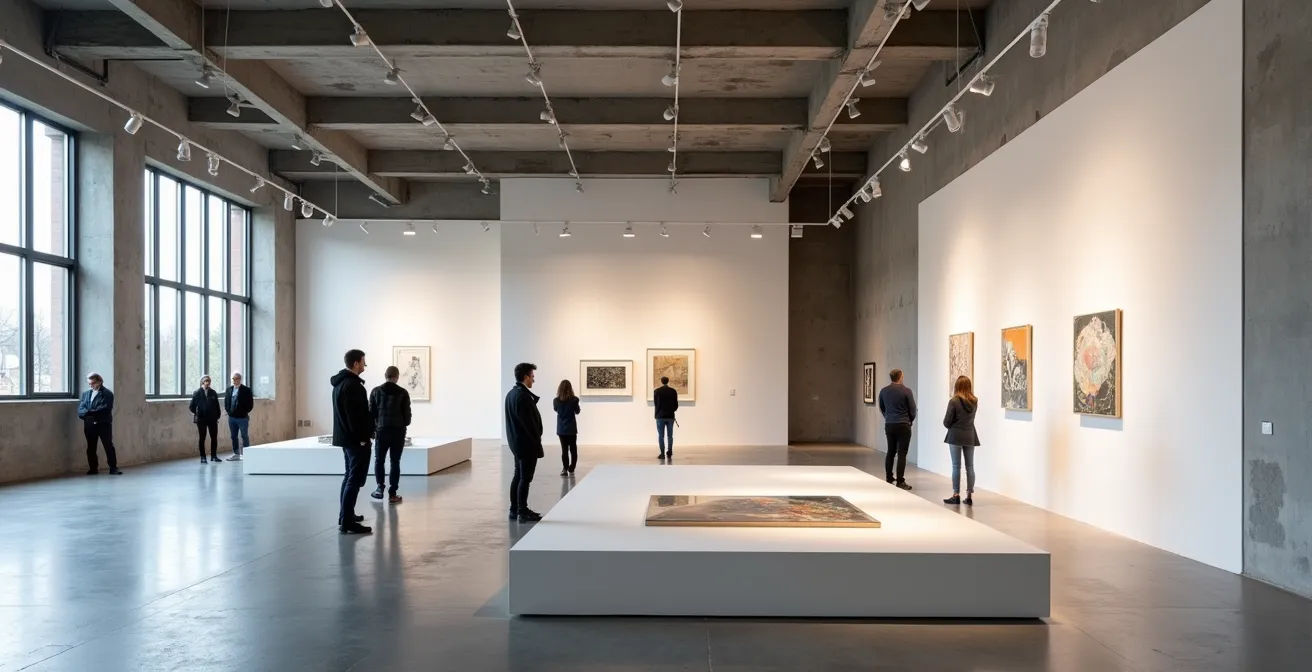
Moscow’s contemporary art scene doesn’t just rival the Pompidou; it offers a fundamentally different experience rooted in a powerful dialogue with its complex history.
- The most vital art isn’t found in polished new buildings, but within the raw, repurposed skeletons of Soviet-era factories like Winzavod and Artplay.
- Iconic works like Malevich’s “Black Square” derive their immense value not just from aesthetics, but from the revolutionary philosophical context they inhabit.
Recommendation: Skip the tourist art traps on Arbat Street and invest your time in the curated collections of museum and gallery shops for pieces with authentic provenance.
For the Parisian art enthusiast, the Centre Pompidou is a benchmark—a multifaceted institution of modern and contemporary culture. Many seek an equivalent on their travels, a simple one-to-one replacement. But to approach Moscow’s art scene with this mindset is to miss the point entirely. The city’s most compelling answer to the Pompidou isn’t a single building, but a sprawling, visceral ecosystem where the avant-garde spirit is not just displayed, but viscerally felt in a constant tension with a formidable past.
The common advice is to visit the major museums, but this barely scratches the surface. The true pulse of Moscow’s contemporary scene lies in understanding its unique DNA. It’s a world away from the established comfort of a Parisian institution. Here, the experience is rawer, more fragmented, and arguably more thrilling. Forget looking for a carbon copy of Beaubourg; instead, the key is to embrace a curatorial strategy focused on the powerful dialogue between post-industrial decay and creative rebirth. This guide is not a simple list. It’s a perspective—a way to navigate Moscow’s art world to find the three pillars that, together, offer an experience as profound and challenging as any you would find on the Place Georges-Pompidou.
This article will guide you through this unique landscape. We will explore why abandoned factories became the crucibles of creativity, provide curated itineraries for the city’s flagship institutions, and offer the strategic insights needed to distinguish authentic art from tourist fare. Prepare to see Moscow not as a list of sights, but as a living gallery.
Summary: Beyond the Pompidou: Which 3 Moscow Art Hubs Redefine the Avant-Garde?
- Why have old Soviet factories become the hottest art venues in Moscow?
- How to visit Gorky Park’s Garage Museum during a rainy afternoon?
- Winzavod vs. Artplay: Which creative cluster offers better gallery hopping?
- The souvenir art mistake that costs tourists 50% more on Arbat Street
- When to visit Moscow museums for free entrance days?
- Lavrushinsky vs. Krymsky Val: Which Tretyakov should you visit first?
- How to glimpse the avant-garde Melnikov House hidden behind Arbat?
- Why is Malevich’s “Black Square” at the New Tretyakov worth €10?
Why have old Soviet factories become the hottest art venues in Moscow?
In the 1990s and early 2000s, as Moscow grappled with its new economic reality, vast industrial complexes—remnants of the Soviet empire—fell into disuse. These sprawling brick behemoths, once symbols of industrial might, became urban voids. Yet, it was precisely this emptiness and raw, unpolished character that attracted the city’s nascent contemporary art scene. This was not gentrification in the Western sense; it was a necessary act of cultural appropriation, a post-industrial renaissance born from pragmatism and vision.
These spaces offered something no new construction could: scale, history, and texture. The high ceilings of a former brewery or the cavernous halls of a gasworks provided the perfect, non-prescriptive backdrop for large-scale installations and ambitious curatorial projects. For artists and gallerists, moving into these spaces was a declaration of independence from the state-sanctioned, traditional art world. For example, the Winzavod Centre for Contemporary Art, once the “Moscow Bavaria” brewery, was transformed after its bankruptcy in the 2000s. It now houses a dense network of galleries, workshops, and cafes, its historic brick walls providing a stark contrast to the cutting-edge art within.
This phenomenon created a unique historical tension. Visiting these clusters is not a neutral experience. You are constantly aware of the layers of history beneath your feet—the ghost of one ideology providing the stage for the next. This is what sets Moscow’s scene apart; the art is not simply in a white cube, it is in active, and often challenging, dialogue with its environment. It’s a conversation between past and present that is uniquely Muscovite.
How to visit Gorky Park’s Garage Museum during a rainy afternoon?
The Garage Museum of Contemporary Art is Moscow’s answer to an international-standard art institution. It stands as a beacon of the city’s global cultural ambitions. Significantly, as noted on its official history, it has been housed in a building designed by the Dutch architect Rem Koolhaas since 2015. Koolhaas masterfully preserved the shell of the former Vremena Goda (Seasons of the Year) Soviet Modernist restaurant, wrapping it in a translucent polycarbonate skin. The result is a space where the past is not erased but is encased and re-contextualized—a physical manifestation of Moscow’s contemporary art scene.
A rainy Moscow afternoon provides the perfect excuse to dedicate several hours to a deep dive into Garage. The crowds are thinner, and the atmosphere is more contemplative. But to make the most of it, a curatorial strategy is required. Instead of aimless wandering, follow a structured itinerary that reveals the institution’s multifaceted identity.
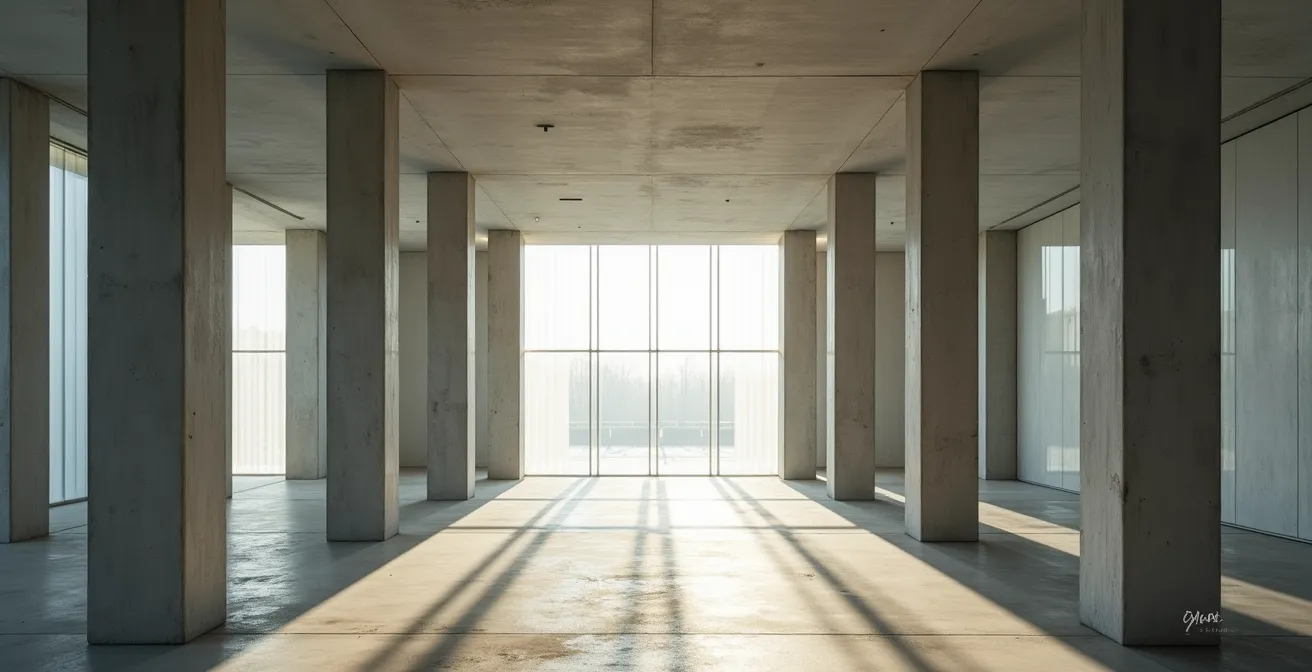
The architectural dialogue is palpable. The raw concrete of the original structure contrasts with the clean, modern lines of the intervention, creating a dramatic visual experience that is an artwork in itself. This is where Garage truly rivals institutions like the Pompidou: not by copying its form, but by forging its own path through a creative collision of histories.
Your Action Plan: A Curated Rainy Afternoon at the Garage Museum
- Arrive at Opening (11:00): Be the first to enter to avoid the main rush and secure a booking for any guided tours, which offer invaluable context.
- Visit the Library: Dive into one of the world’s most extensive public resources on Russian contemporary art, with over 53,000 books and unique archival materials. It’s an exhibition in itself.
- Explore the Open Storage: Discover works from the 1980s onwards in this unique exhibition format that reveals the “behind-the-scenes” of the museum’s collection.
- Attend a Film Screening: Check the museum’s app for the day’s schedule. The auditorium often features experimental films and artist documentaries that complement the main exhibitions.
- Conclude at the Garage Café: Reflect on your visit over a menu that is as thoughtfully curated as the art, featuring excellent vegetarian options and a selection of Russian wines.
Winzavod vs. Artplay: Which creative cluster offers better gallery hopping?
Once you understand the ‘why’ of Moscow’s post-industrial art scene, the next question is ‘where’. The city’s two dominant creative clusters, Winzavod and Artplay, are often mentioned in the same breath, but they offer distinctly different experiences for the discerning art visitor. They are located near each other, making it possible to visit both, but your choice of where to focus your time depends entirely on your interests. Choosing correctly is a key part of your curatorial strategy.
Winzavod is the more established and polished of the two. Housed in the aforementioned 19th-century wine factory, it feels like a curated village of galleries. It is home to some of Moscow’s most important blue-chip galleries, such as Regina Gallery and 11.12 Gallery. The focus here is more on painting, sculpture, and photography. Thursday evenings are the traditional time for vernissages (openings), where you can mingle with the city’s art crowd. It’s the ideal destination for the traditional art collector and those who enjoy a classic gallery-hopping experience in a dense, easily navigable space.
Artplay, by contrast, is a sprawling, 75,000-square-meter design hub that feels more like a creative metropolis. With over 300 architectural workshops and design offices, its focus is broader, encompassing digital art, media installations, architecture, and design. The galleries are more dispersed amongst showrooms for high-end furniture and boutiques like Made in Cosmos, which sells jewelry made from meteorites. Artplay is the place for those interested in the intersection of art and technology and for experiencing large-scale weekend festivals.
The following table, based on an analysis of Moscow’s contemporary art events, breaks down their core differences to help you decide.
| Feature | Winzavod | Artplay |
|---|---|---|
| Primary Focus | Traditional galleries, painting, photography | Digital art, design, architecture, media art |
| Gallery Density | High concentration, blue-chip galleries like Regina and 11.12 | More dispersed, mixed with design showrooms |
| Best For | Art collectors, traditional art lovers | Digital art enthusiasts, large installations |
| Opening Culture | Thursday evening vernissages | Weekend events and festivals |
| Space Type | Former wine factory, industrial aesthetic | 75,000 sqm with 300+ workshops |
The souvenir art mistake that costs tourists 50% more on Arbat Street
No visit to Moscow feels complete without a stroll down the historic Arbat Street. It’s lined with portrait artists, caricaturists, and shops selling Matryoshka dolls and other souvenirs. For the casual tourist, it seems like the obvious place to buy a piece of “Russian art” to take home. This is, however, a critical mistake for anyone with a genuine interest in art. The items sold here are largely mass-produced for the tourist market, lacking any real connection to Moscow’s contemporary art scene.
More importantly, the prices are significantly inflated. An internal comparison of prices for similar-quality prints and art objects reveals a markup of over 50% on tourist-focused items on Arbat Street compared to what you would pay at a legitimate museum or gallery shop. Paying this premium is not for quality, but for the convenience of a tourist-centric location. It’s the antithesis of a curated approach to art acquisition.
The solution is to seek out authentic provenance. Instead of buying a generic print on Arbat, invest your money where it supports the artists and institutions at the heart of the scene. The quality is higher, the selection is more meaningful, and the price is fairer. This is where you find pieces that tell a story about your visit. Here are the premier destinations for acquiring authentic Russian art souvenirs:
- Garage Shop: Explore an impeccably curated selection of books on art and architecture, museum publications, and exclusive collaboration pieces created by artists for the museum.
- New Tretyakov Museum Shop: Find quality-guaranteed reproductions of avant-garde masterpieces and items related to the gallery’s world-class collection.
- Independent Bookstores at Winzavod: Discover unique art prints and publications from local and independent presses tucked away within the gallery cluster.
- Print Shops at Artplay: Browse original works and limited-edition prints directly from local artists who have their studios and workshops within the design hub.
When to visit Moscow museums for free entrance days?
For the budget-conscious traveler, the allure of a “free museum day” is strong. Moscow, like many European capitals, offers specific days when its state-run cultural institutions open their doors without charge. The key date to remember is the third Sunday of every month, when all municipal and state museums and galleries offer free entrance to their permanent exhibitions. This is a fantastic initiative for accessibility, but for the serious art enthusiast, it comes with a significant trade-off.
These free days are, without exception, extremely crowded. Navigating the galleries of the New Tretyakov or the Pushkin Museum becomes a battle for space, and having a quiet, contemplative moment with a major work is nearly impossible. If your goal is to truly engage with the art, particularly seminal pieces like the “Black Square,” paying the modest entrance fee for a quiet weekday visit provides an exponentially better experience. The value of an unobstructed view and a peaceful gallery far outweighs the cost of a ticket.
However, there is one event that aligns free access with a unique experience: Museum Night. Much like the *Nuit Européenne des Musées* familiar to French audiences, Moscow’s version sees galleries and museums host special evening programs, talks, and performances. The atmosphere is festive and communal, offering a completely different perspective on the institutions. While still crowded, the unique programming makes it a worthwhile experience for those looking for atmosphere over quiet contemplation.
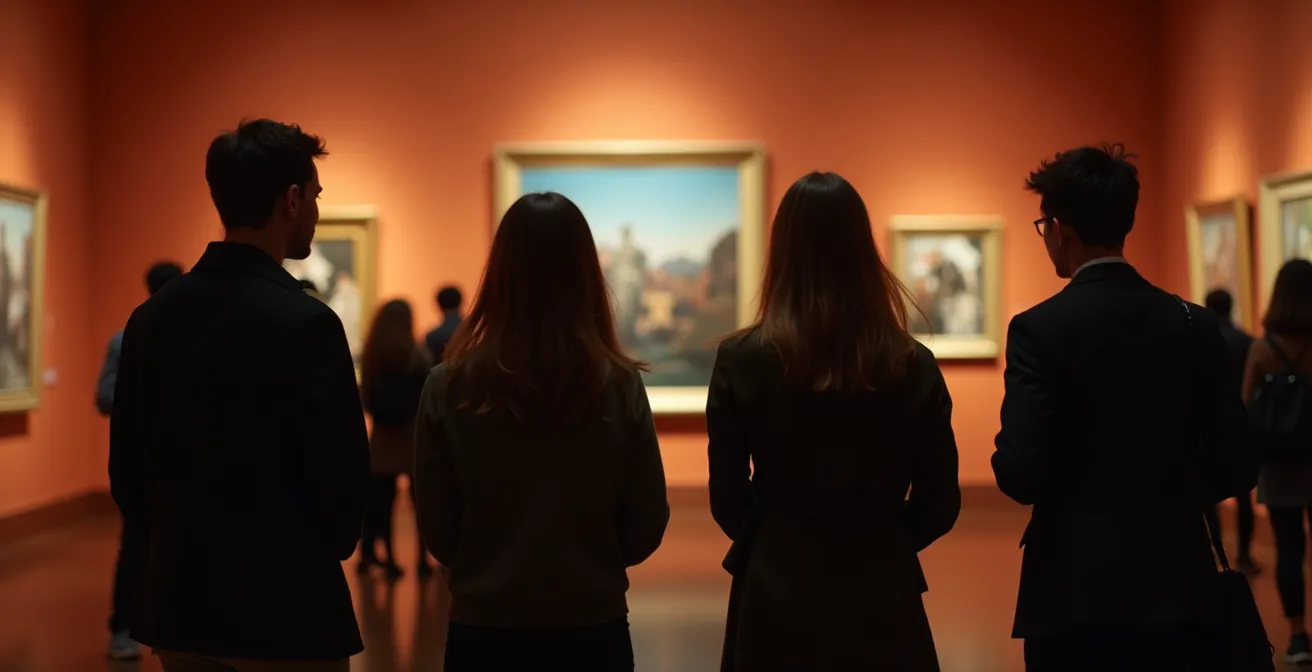
The choice ultimately depends on your goal. If it’s a quick, budget-friendly overview you seek, free Sundays are an option. But for a meaningful artistic encounter, a strategic, paid visit is the superior choice.
Lavrushinsky vs. Krymsky Val: Which Tretyakov should you visit first?
The State Tretyakov Gallery is not one museum, but two distinct buildings with two different souls. A common mistake for first-time visitors is to treat them interchangeably. For the contemporary art enthusiast, understanding their division is paramount. The choice of which to visit first—or at all—depends entirely on your focus. The original gallery in Lavrushinsky Lane is the historic heart, housing the world’s foremost collection of Russian art from the 11th to the early 20th century. It is here you will find the iconic works of the medieval icon painters through to the masters of 19th-century Realism.
The New Tretyakov, located on Krymsky Val opposite Gorky Park, is where the story of the 20th and 21st centuries unfolds. This vast modernist building houses Russia’s most comprehensive collection of modern art. According to the gallery’s own records, its total collection contains more than 130,000 exhibits, with the Krymsky Val branch holding the definitive collection of the Russian avant-garde, Socialist Realism, and contemporary works. As a testament to this, the gallery’s director, Zelfira Tregulova, once stated:
The collection contains more than 130,000 exhibits, ranging from the Theotokos of Vladimir to the monumental Composition VII by Wassily Kandinsky and the Black Square by Kazimir Malevich
– Wikipedia, Tretyakov Gallery
This branch was established in 1985 when the Tretyakov Gallery merged with a contemporary art gallery housed in the Central House of Artists. Its collection is defined by the great movements that shaped modern Russia: Constructivism, Suprematism, and the often-overlooked but historically crucial school of Socialist Realism. The park outside the gallery, Museon Park of Arts, further complements this with a collection of displaced Soviet-era statues, including the infamous “Iron Felix” statue of Felix Dzerzhinsky. For anyone interested in the dialogue between art and ideology, the New Tretyakov is the mandatory first stop.
How to glimpse the avant-garde Melnikov House hidden behind Arbat?
For the true connoisseur of the Russian avant-garde, a pilgrimage to the Melnikov House is a non-negotiable rite of passage. Tucked away in a quiet lane just off the bustling Arbat district, this cylindrical, interlocking masterpiece is one of the world’s most significant monuments of Constructivist architecture. Designed by Konstantin Melnikov in 1927-1929 as his own residence and studio, its radical design, with its hexagonal windows and open-plan spatial flow, was a utopian statement on communal living and artistic functionality.
However, visiting is notoriously difficult. The house is a fragile state museum with extremely limited access to protect its integrity. You cannot simply show up. Instead, a strategic approach is required to experience this architectural icon, even if only from the outside. Melnikov’s influence on Moscow’s architectural landscape is profound; for instance, the Garage Museum’s first home was another of his iconic designs, as a historical note on the museum confirms it was housed in Moscow’s former Bakhmetevsky Bus Garage, designed in 1926. This connection underscores his importance in the city’s avant-garde heritage.
If you’re determined to see the house, here are the essential steps and alternatives:
- Book Months in Advance: Tours are infrequent and groups are tiny. You must book through the official channels of the Shchusev State Museum of Architecture far ahead of your trip.
- Visit the Shchusev Museum: If you cannot get into the house itself, the Shchusev Museum holds Melnikov’s archive. It’s the next best thing, offering drawings, models, and context.
- Take a Constructivist Walking Tour: Several specialist guides in Moscow offer walking tours that focus on the architectural legacy of the Arbat area, with the Melnikov House as the centerpiece.
- Look for Special Openings: Time your visit with events like the Moscow Architecture Biennale, which sometimes features special, albeit rare, opportunities to access the house.
- Consider Virtual Tours: For international visitors unable to secure a spot, the museum sometimes offers high-quality virtual tours that provide a detailed look inside.
Even glimpsing its revolutionary form from the street is a powerful experience, a tangible link to a moment when architecture dreamed of a new world.
Key Takeaways
- Moscow’s premier art experience is the dialogue between post-industrial spaces and contemporary creation, a “historical tension” not found in Paris.
- Flagship institutions like Garage and the New Tretyakov are essential, but the real scene thrives in creative clusters like Winzavod (for traditional galleries) and Artplay (for digital art and design).
- Authentic art is found in museum shops, not on Arbat Street. A curatorial approach to buying art means prioritizing provenance over convenience.
Why is Malevich’s “Black Square” at the New Tretyakov worth €10?
The ten-euro entrance fee to the New Tretyakov Gallery might be the best value in the art world, for it buys you an audience with a painting that detonated modern art: Kazimir Malevich’s “Black Square” (1915). To a new viewer, it can be confounding. It is, as titled, a black square of oil paint on a white background. But its value is not in its aesthetic complexity or technical virtuosity. Its profound importance lies in what it represents: the “zero point” of painting, an act of creation that was also an end to everything that came before.
When Malevich first exhibited it, he hung it in the corner of the room, the place where a Russian Orthodox icon would traditionally be placed. This was not a decoration; it was a spiritual and philosophical replacement. He declared it the icon of his new artistic system, Suprematism, which prioritized pure feeling and perception over the depiction of objects. The “Black Square” was not a picture *of* a square; it was the raw, unmediated experience of form and non-color. It was an exit from the world of things into a new dimension of pure art. The New Tretyakov’s ability to draw crowds, with a reported 894,374 visitors in 2020 alone despite the pandemic, is a testament to the enduring power of works like this.
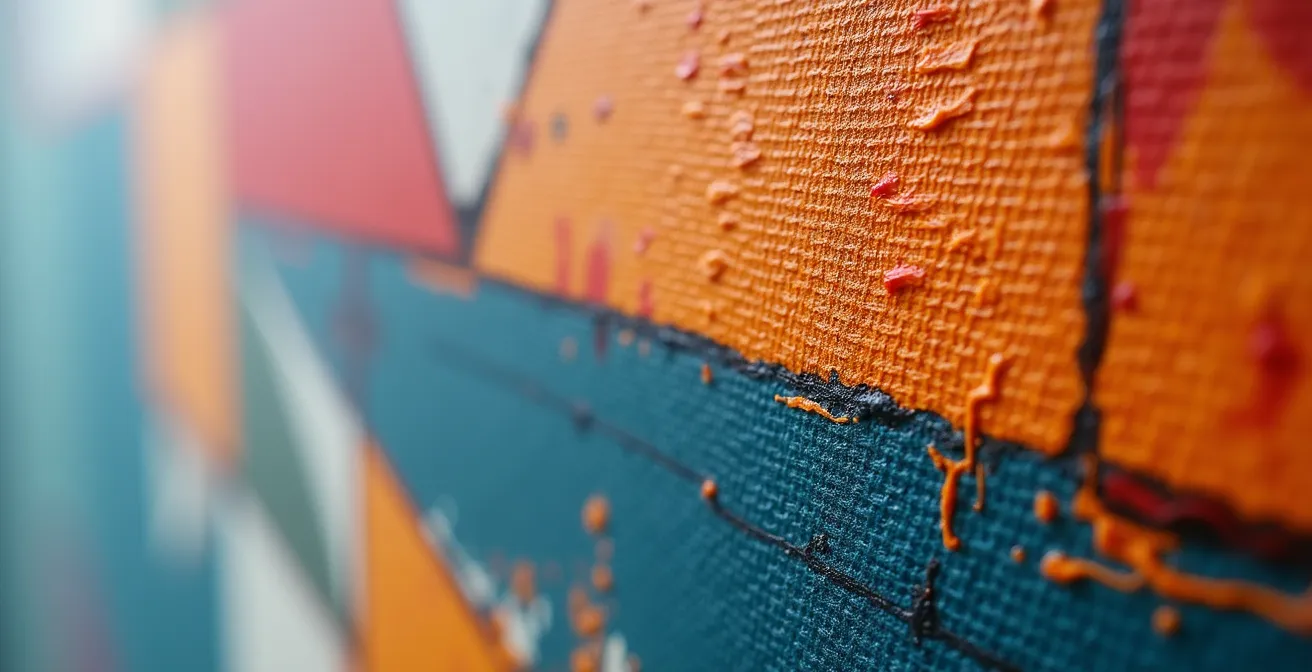
Viewing it in person reveals a texture that photographs miss. The black is not flat; it is cracked and crazed, a living surface that shows its age and the artist’s hand. Standing before it at the New Tretyakov, you are in the presence of an idea so powerful it changed the course of art history. The gallery’s rich collection of the avant-garde, significantly enhanced when it absorbed a large part of the legendary George Costakis collection, allows you to see the “Black Square” in its proper context, surrounded by the artistic revolution it ignited. That ten-euro ticket doesn’t just buy you entry; it buys you a confrontation with the absolute.
Now equipped with a curator’s perspective, your next step is to design your own journey through Moscow’s avant-garde. Move beyond the checklist and seek the powerful dialogue between Russia’s past and its artistic future.
Frequently Asked Questions about Moscow’s Art Scene
Which day offers free entrance to all state museums?
Every third Sunday of the month, all state museums and galleries in Moscow offer free entrance to their permanent collections. This applies to major institutions like the Tretyakov Gallery and the Pushkin Museum, but does not typically include special exhibitions or federal museums like those within the Kremlin.
Are free days worth the crowds?
While tempting, it’s important to be strategic. Free days are extremely crowded, making a contemplative viewing of major works very difficult. For masterpieces like the “Black Square” or to fully appreciate the architecture of Garage, paying for a quiet weekday visit provides a far superior and more valuable experience.
What is Moscow’s Museum Night equivalent to Paris?
Moscow hosts an annual “Museum Night” event that is very similar in spirit to the European *Nuit Européenne des Musées*. It’s a city-wide celebration where museums and galleries stay open late, offering unique evening programming, special tours, concerts, and performances, creating a vibrant, festive atmosphere.