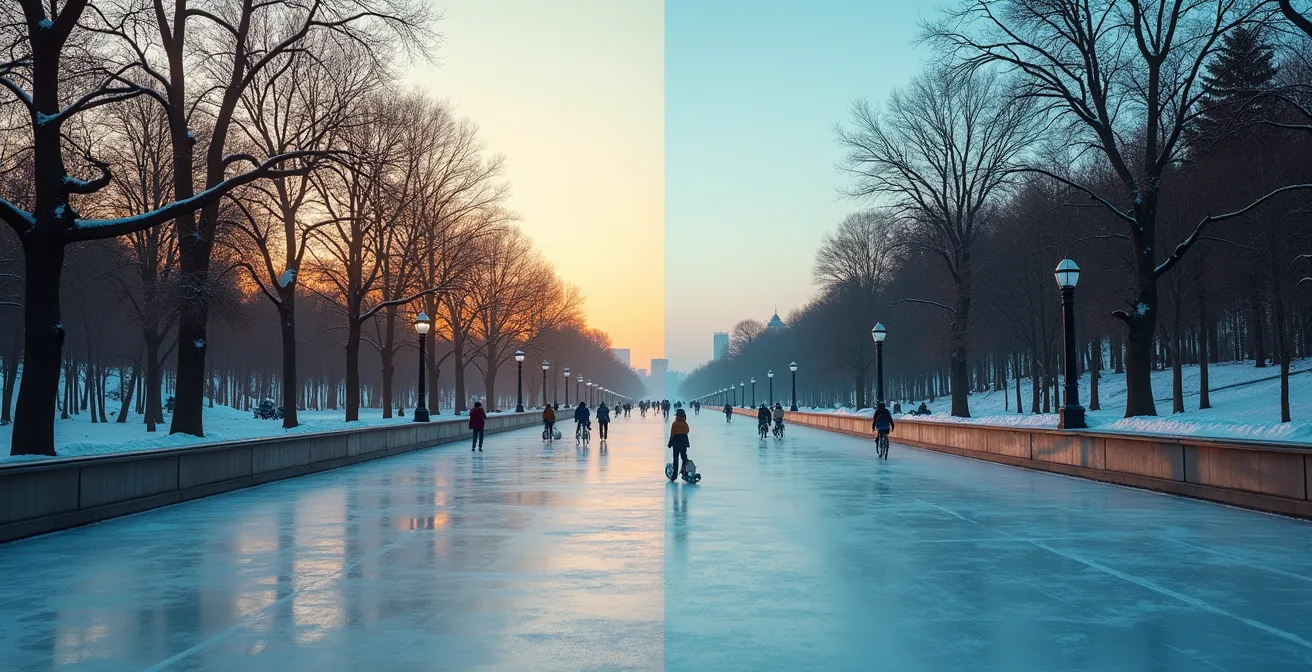
Gorky Park isn’t a simple choice between ice and sun; it’s about mastering the seasonal rhythm to unlock the best experiences.
- Winter is for embracing the grand scale, centered around the legendary mega-rink and cozy indoor cultural hubs.
- Summer transforms the park into a sprawling riverside riviera, perfect for cycling, sunbathing, and exploring its vast green expanse.
Recommendation: For a first-time active visitor, summer offers more variety and spontaneity. For a truly iconic and atmospheric Moscow experience, winter’s magical ice rink is unbeatable.
Deciding when to visit Moscow’s legendary Gorky Park can feel like choosing between two completely different destinations. One is a glittering winter wonderland straight out of a novel; the other is a vibrant, sun-drenched hub of summer energy. For the active traveler, this isn’t just a question of packing a warm coat or sunscreen. It’s about understanding the unique “seasonal rhythm” of the park to decide what gear to bring, what to expect, and how to dive into the activities like a true Muscovite.
While many guides will give you the generic overview—skating in winter, cycling in summer—they often miss the crucial details that transform a good trip into a great one. They won’t tell you the local’s trick to renting skates without a hefty deposit, or which art gallery nearby will satisfy a connoisseur of the Centre Pompidou. The park itself is free to enter and easily accessible from Park Kultury or Oktyabrskaya metro stations, but the real value lies in knowing how to navigate its paid activities and cultural offerings.
This guide abandons the superficial approach. We’re going to treat Gorky Park as a dynamic ecosystem. The real question isn’t simply “winter or summer?” but rather “What kind of experience are you seeking?” Do you want the crisp, exhilarating energy of a city embracing the cold, or the long, lazy days of a European capital in full bloom? This article will break down the park’s signature activities, giving you the practical, on-the-ground intelligence needed to make your choice and plan your adventure, no matter the season.
To help you navigate the distinct offerings of each season and beyond, this guide is structured to answer the most practical questions an active traveler might have. From the logistics of winter sports to the secrets of summer leisure, here is your roadmap to mastering Gorky Park.
Summary: A Tale of Two Seasons at Gorky Park
- How to rent skates at the Gorky Park mega-rink without a deposit?
- Olive Beach: Is it possible to sunbathe in Moscow in July?
- Why cross the road to the Muzeon Park of Fallen Monuments?
- Where to find the best corn-on-the-cob or ice cream in the park?
- How far can you cycle along the Moscow River from Gorky Park?
- How to visit Gorky Park’s Garage Museum during a rainy afternoon?
- VDNKh or Sokolniki: Which park has the safest tubing slides for kids?
- Which 3 Moscow art galleries rival the Centre Pompidou in quality?
How to rent skates at the Gorky Park mega-rink without a deposit?
Come winter, Gorky Park transforms. The pathways flood with water and freeze over to create one of Europe’s most spectacular outdoor ice rinks, a sprawling 20,000-square-meter maze of glittering ice lanes complete with music and light shows. This isn’t just an activity; it’s the epicenter of Moscow’s winter social life. As an activities coordinator, I can tell you this is a must-do for an authentic experience. The energy is infectious, with skaters of all levels gliding under festive lights.
Navigating the rental system is key to a smooth experience. While you can pay on-site, this often requires leaving a 1000 RUB deposit for your skates. Here’s the inside track: booking online is your best friend. Not only does it secure your spot during a chosen session (typically 10am-3pm or 5pm-11pm), but it also bypasses the deposit requirement entirely. Entrance fees and rental costs are quite reasonable; a 2024 guide notes that a visit costs between 500-700 RUB per session, with skate rental adding around 400 RUB.
Once you’ve booked, the process is simple. Arrive at one of the six rental pavilions dotted around the rink’s perimeter, show your confirmation, and grab your skates. Lockers are available for a small additional fee (around 150 RUB), which is highly recommended for storing your winter boots and bag. This bit of “activity hacking” saves you time and hassle, letting you get straight to the magic of skating through the heart of Moscow.
Olive Beach: Is it possible to sunbathe in Moscow in July?
When the ice melts and temperatures soar, Gorky Park undergoes a radical transformation. The focus shifts from the central pathways to the beautiful embankment along the Moskva River. And yes, you can absolutely sunbathe in Moscow in July! The prime spot for this is Olive Beach (Olyvkovyy Plyazh), the city’s answer to the Parisian “Paris Plages.” It’s a stylish, man-made urban beach located just below Pushkinskiy Bridge, offering a fantastic place to relax and soak up the summer sun.
This isn’t a swimming beach, but it’s perfectly designed for leisure. Think expansive wooden decking furnished with comfortable sun loungers and umbrellas, creating a chic, resort-like atmosphere. It’s the ideal spot for an active traveler to take a well-deserved break, read a book, and watch the river cruises glide by. The area is flanked by excellent cafes and restaurants with terraces, making it easy to grab a cold drink or a meal without straying far from your sun spot.
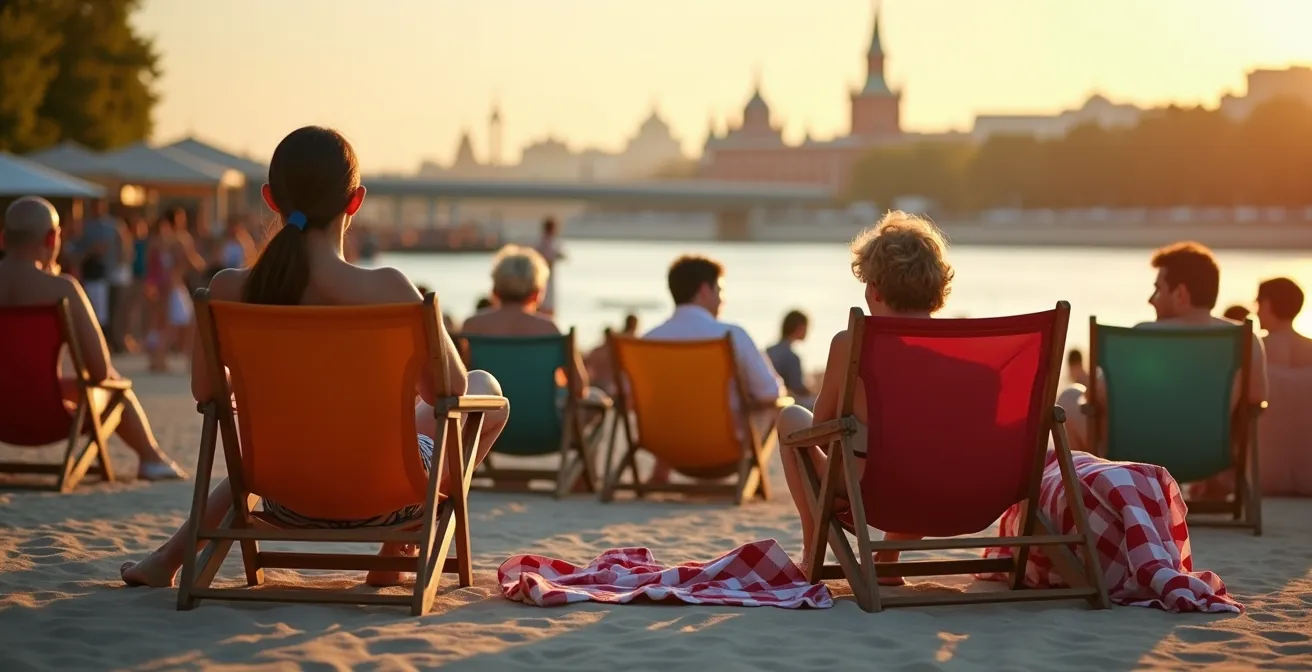
The vibe is relaxed yet vibrant, attracting a mix of locals and tourists. Arriving early on a sunny weekend is a good idea to secure a prime lounger. Olive Beach perfectly encapsulates the summer rhythm of Moscow: a surprising and delightful blend of urban grit and laid-back, continental European leisure. It proves that you don’t need a coastline to enjoy a proper beach day.
Why cross the road to the Muzeon Park of Fallen Monuments?
While Gorky Park itself offers plenty, one of its most fascinating cultural extensions lies just across the Garden Ring road: the Muzeon Park of Arts. Think of it as Gorky Park’s more contemplative, artistic sibling. Crossing the road is essential because it offers a surreal and unforgettable journey through Russia’s turbulent 20th-century history. This is where dozens of Soviet-era statues—depicting figures like Lenin, Stalin, and Dzerzhinsky—were moved after the fall of the USSR. Instead of being destroyed, they were arranged in this open-air park, creating a “graveyard” of fallen idols.
It’s a powerful and slightly eerie experience to walk among these titans of a bygone era, now stripped of their power and exposed to the elements. The park isn’t just about the past, however. It has evolved into a vibrant space for contemporary art as well. As the travel guide Express to Russia highlights, this is a significant cultural venue:
Muzeon Park of Arts is the largest open-air sculpture museum in Russia, home to 1,000 sculptures by Soviet and Russian sculptors.
– Express to Russia, Moscow Travel Guide
The park is also the starting point for the riverside promenade and cycle path, seamlessly connecting it back to Gorky Park proper. It’s an unmissable, year-round destination that provides deep historical context to the modern, vibrant city you see around you. It takes less than an hour to wander through but leaves a lasting impression, making it a crucial stop for any culturally curious traveler.
Where to find the best corn-on-the-cob or ice cream in the park?
No matter the season, an active day in Gorky Park will build up an appetite. The park is dotted with a huge variety of food options, from quick snacks to sophisticated dining. As your activities coordinator, I’d say part of the fun is grabbing a classic park treat and enjoying it on the go. Two quintessential Moscow park snacks are “Kukuruza” (boiled corn-on-the-cob) and “Morozhenoe” (ice cream). You’ll find them at numerous kiosks scattered throughout the park, especially along the main promenades.
These kiosks are perfect for a quick, cheap, and cheerful refuel. But if you’re looking for something more substantial, Gorky Park’s food scene has evolved significantly. You can find everything from trendy food trucks to proper sit-down restaurants. For a French traveler looking for a familiar café culture experience, the options are plentiful. To help you choose, here’s a quick breakdown of what to expect, sourced from travel experts who have mapped out the park’s culinary landscape.
| Location | Food Type | Price Range | Specialty |
|---|---|---|---|
| Kiosks | Quick snacks | €1-3 | Kukuruza (corn), Morozhenoe (ice cream) |
| Ostrovok Café | European/Russian | €10-20 | Lakeside dining with view |
| Syrovarnya | Cheese-focused | €15-25 | Homemade cheese dishes |
| Food-truck court | International | €5-10 | Drive-in café style |
For the best experience, grab a “kukuruza” in winter to warm your hands or a classic Russian ice cream cone in summer to cool down. For a more relaxed meal, the lakeside “Ostrovok Café” offers a great balance of price and atmosphere. This culinary variety ensures that you can stay energized for your park adventures all day long.
How far can you cycle along the Moscow River from Gorky Park?
For the active traveler, Gorky Park in summer is synonymous with cycling. The park is the central hub of a fantastic network of riverside cycle paths that let you explore a huge stretch of the city away from the traffic. Starting from the Muzeon Park of Arts, you can embark on a continuous, scenic ride that showcases some of Moscow’s most impressive landmarks. The main route is well-paved, mostly flat, and offers stunning views of the river and the city skyline.
So, just how far can you go? The dedicated track allows for an impressive journey. According to a local city guide, the path stretches for almost 10km from Muzeon to Vorobyovy Gory (Sparrow Hills). This route will take you past Neskuchny Garden (the oldest part of the park), under soaring bridges, and all the way to the foot of the famous Sparrow Hills, home to Moscow State University. A ride to the hills and back is a fantastic half-day activity, covering nearly 20km of beautiful, uninterrupted cycling.
Don’t have a bike? No problem. The city’s Velobike rental system is easy to use, even for foreigners. You register via the mobile app, and you can unlock a bike using your login details and a Troika transport card. A 24-hour pass is very affordable, though it does require a refundable deposit to be blocked on your card. Returning the bike to any station is straightforward. This accessibility makes a spontaneous cycling adventure a breeze.
Your Action Plan: Preparing for a Full Day in the Park
- Assess your season: Decide on your primary activity (e.g., skating, cycling) and pack core gear accordingly (gloves, sunglasses).
- Book ahead online: Secure tickets for the ice rink or check the Velobike app for bike availability to save time and hassle.
- Plan your route: Map a rough path, whether it’s a 10km cycle to Sparrow Hills or a walk from Olive Beach to the Garage Museum.
- Pack light essentials: Carry a water bottle, a portable charger, and your payment method (a card with tap-to-pay is ideal for kiosks).
- Build in flex time: Leave room for spontaneous discoveries, like lingering at Muzeon or grabbing an unexpected ice cream.
How to visit Gorky Park’s Garage Museum during a rainy afternoon?
Moscow’s weather can be unpredictable, even in summer. A sudden downpour can disrupt your outdoor plans, but in Gorky Park, that’s just an opportunity to pivot to a world-class cultural experience. The park is home to the Garage Museum of Contemporary Art, a sleek, modern institution that has become a major player in the international art scene. Housed in a stunningly renovated 1960s Soviet modernist restaurant, the museum is the perfect sanctuary for a rainy afternoon.
Visiting is simple. It’s located right in the heart of Gorky Park, so you can just walk over. The museum focuses on Russian and international contemporary art, with a dynamic program of exhibitions, performances, and educational events. Its ambition and quality are widely recognized. As the experts at Lonely Planet note, it holds a position of great importance within the park’s ecosystem:
Darya Zhukova’s Garage Museum of Contemporary Art plays the flagship role.
– Lonely Planet, Moscow Travel Guide
Inside, you’ll find not just galleries but also a fantastic bookshop, a café, and a creative space for children. This makes it an excellent destination for solo travelers and families alike. A rainy day doesn’t have to mean a wasted day; at Gorky Park, it’s an invitation to swap your bicycle for a bit of cutting-edge culture. Check their website for current exhibitions and opening hours before you go, as they often host internationally acclaimed shows.
VDNKh or Sokolniki: Which park has the safest tubing slides for kids?
While Gorky Park’s ice rink is its winter crown jewel, families with children looking for a different kind of snowy thrill might consider “vatrushka” or snow tubing. While Gorky Park has some gentle slopes, Moscow’s other major parks, VDNKh and Sokolniki, offer more dedicated and impressive tubing facilities. As an activities coordinator, a common question from parents is about safety and which park is best for younger children. The choice really depends on the kind of experience you’re after.
VDNKh (Vystavka Dostizheniy Narodnogo Khozyaystva) is a vast, open-air museum of Soviet architecture, and in winter, it hosts several smaller tubing slides across its territory. This setup is generally less intimidating for younger kids, allowing them to choose a slide that matches their comfort level. The atmosphere is also unique, as you’re sliding amidst monumental Soviet pavilions.
Sokolniki Park, on the other hand, boasts “The Hill,” a single, massive, dedicated slide that’s a magnet for thrill-seekers. It’s exhilarating but can get very crowded, and the speed might be too much for small children. For safety and a more relaxed family outing, VDNKh is often the better bet. Here’s a quick comparison to help you decide:
| Park | Slide Type | Size/Features | Best For |
|---|---|---|---|
| VDNKh | Multiple smaller slides | Several options across vast territory | Younger children (less intimidating) |
| Sokolniki | ‘The Hill’ mega-slide | One massive dedicated slide | Thrill-seekers (can be crowded) |
| Overall atmosphere | Open-air museum style | Forest park feel | Families wanting multiple attractions |
Ultimately, for families prioritizing safety and a less overwhelming experience for young kids, VDNKh’s collection of smaller, more manageable slides makes it the recommended choice over Sokolniki’s single, high-intensity mega-slide.
Key Takeaways
- Gorky Park offers two distinct personalities: a magical ice kingdom in winter and a vibrant riverside hub in summer.
- Planning is key. Booking activities like skating online can save you time and money (no deposit).
- The park’s value extends beyond its borders to adjacent cultural sites like Muzeon Park and world-class galleries like the New Tretyakov.
Which 3 Moscow art galleries rival the Centre Pompidou in quality?
For a visitor from France, the Centre Pompidou in Paris sets a high bar for 20th-century and contemporary art. The great news is that Moscow’s art scene is incredibly rich, and the area around Gorky Park serves as a fantastic starting point for an art tour that can absolutely stand alongside a Parisian experience. The Garage Museum within the park is a prime example, but if you’re looking to dive deeper into Russia’s pivotal contributions to modern art, there are three institutions in particular that you should not miss.
These galleries offer collections and exhibitions that are not just of high quality, but are historically essential to understanding the trajectory of modern art globally. Each has a distinct focus, creating a complementary trio that provides a comprehensive overview. Your mission, should you choose to accept it, is to explore these pillars of Russian art:
- New Tretyakov Gallery: Located right next to Muzeon Park, this is Moscow’s direct equivalent to the Pompidou for 20th-century Russian art. It houses an unparalleled collection of the Russian avant-garde, including masterpieces by Malevich, Kandinsky, and Chagall. This is where you come to see the iconic “Black Square” and understand the revolutionary movements that changed art forever.
- Pushkin State Museum of Fine Arts: Often called Moscow’s “Louvre,” its collection of French Impressionist and Post-Impressionist art is breathtaking. Thanks to the nationalized collections of pre-revolutionary industrialists Shchukin and Morozov, you’ll find an astonishing array of works by Monet, Renoir, Cézanne, Gauguin, Van Gogh, and Matisse.
- Multimedia Art Museum, Moscow (MAMM): This is the city’s leading institution for photography, video, and new media art. Much like the Pompidou’s focus on contemporary forms, MAMM offers a dynamic and constantly changing program of Russian and international exhibitions, making it a hotspot for what’s happening in art right now.
Together, these three institutions provide a powerful artistic journey, from the birth of modernism at the Tretyakov to its French counterparts at the Pushkin, and its evolution into new forms at MAMM. A visit to Gorky Park can easily be the start of a world-class art pilgrimage.
Now that you’re equipped with the insider knowledge for both seasons, the only thing left is to choose your adventure. Whether you’re lacing up skates for a magical winter night or hopping on a bike for a sunny riverside journey, Gorky Park is ready to offer you an unforgettable Moscow experience.