In summary:
- Your Parisian sense of distance is misleading in Moscow; the city’s monumental scale requires strategic transport planning, not just walking.
- Success depends on mastering Moscow’s “operational logic”: understanding visa timelines, public transport rules, and cultural etiquette in advance.
- Prioritise experiences based on cultural parallels (e.g., Tretyakov for Russian art lovers, Pushkin for Impressionist fans) to make the most of your time.
- Actively schedule “recovery” activities like a traditional banya to combat sightseeing fatigue and truly immerse yourself in the culture.
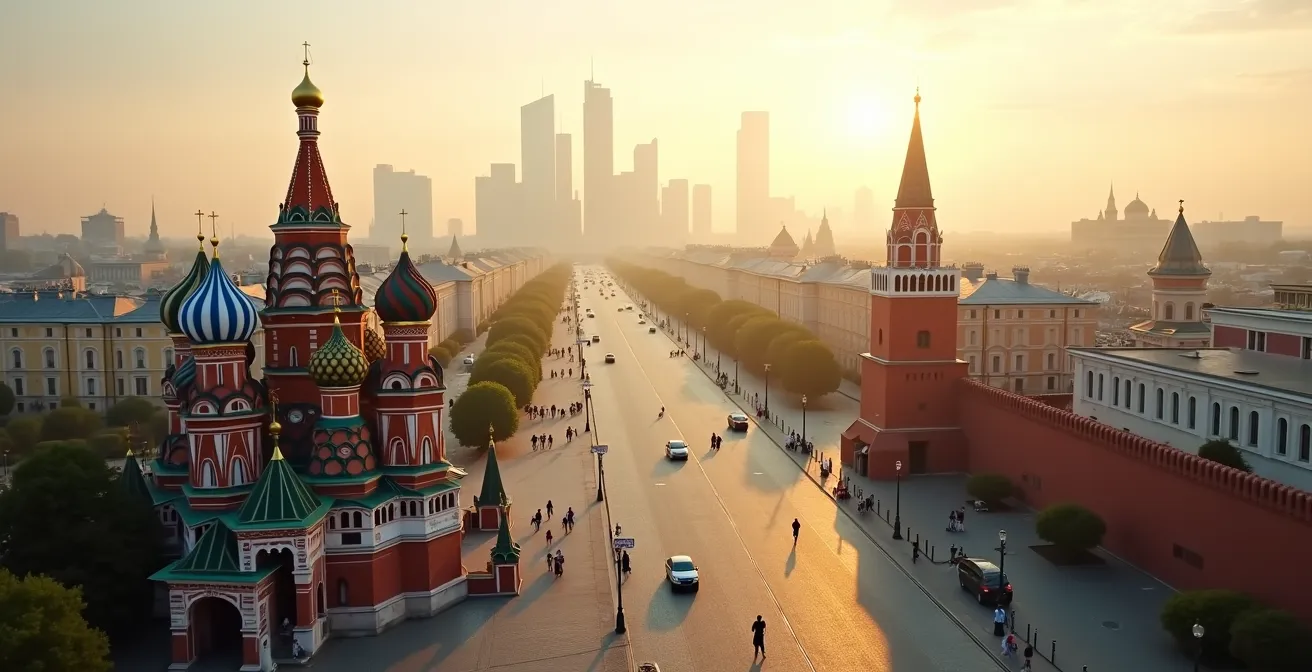
For a Parisian, the idea of a city break is second nature. You know how to navigate arrondissements, how long it takes to walk from the Louvre to Notre-Dame, and how to decipher a Métro map. But planning a trip to Moscow requires unlearning some of these instincts. The sheer scale of Russia’s capital can be deceptive; a distance that looks like a short stroll on a map can turn into an exhausting trek. Many guides will give you a checklist of sights—the Kremlin, Red Square, St. Basil’s—but fail to address the core challenge for a Western European visitor: how to experience this immense cultural wealth without succumbing to logistical friction and burnout.
The key isn’t just knowing *what* to see, but understanding the city’s unique operational logic. This means decrypting its spatial dimensions, its public transport system, and its specific cultural codes before you even leave Charles de Gaulle. This guide is designed for you, the discerning French traveller, who wants to delve into Russian history and art but is rightly concerned about the language barrier and the complexities of a vast, non-EU metropolis. We will move beyond the platitudes to give you a strategic framework for a 5-day itinerary that is as enriching as it is manageable.
This article will provide a clear roadmap, breaking down the essential logistical and cultural elements you need to master. From navigating the city’s deceptive distances to choosing the right museum for your tastes and respecting local customs, you’ll find a complete plan to structure your visit. The following sections offer detailed answers to the most critical questions a French traveller might have.
Summary: A Strategic Guide to Moscow for the French Traveller
- Why does walking in Moscow take 2x longer than in Paris for the same map distance?
- How to secure your Russian tourist visa in France within 10 days?
- Tretyakov or Pushkin Museum: Which one should art lovers prioritize?
- The 3 clothing mistakes that will bar your entry to Orthodox sites
- How to balance heavy historical sightseeing with relaxing “banya” breaks?
- How many days in advance should a French citizen apply for a visa?
- Metro plus Bus: How to trigger the free transfer within 90 minutes?
- Staying at the Metropol: Is the €300/night historic premium justified?
Why does walking in Moscow take 2x longer than in Paris for the same map distance?
The first mental adjustment a Parisian must make in Moscow is to abandon their sense of scale. A 1-kilometre walk in Le Marais is a pleasant, distraction-filled journey. In Moscow, that same kilometre can feel like an expedition. This isn’t just an impression; it’s a result of Soviet-era urban planning that prioritized monumental avenues and vast public squares over pedestrian-friendly density. Understanding this “logistical friction” is the first step to avoiding exhaustion.
Unlike the winding streets of Paris, Moscow’s main arteries, like Tverskaya Street, are often two to three times wider than the Champs-Élysées. Crossing them is not a simple matter of finding a zebra crossing. You must often descend into a podzemny perekhod (underground passage), navigate a labyrinth of tunnels, and resurface on the other side. Each major crossing can easily add 5-10 minutes to your journey. Furthermore, pedestrian crossings on these grand avenues can be spaced 500 to 800 metres apart, forcing long detours.
The buildings themselves contribute to this effect. Huge Soviet-era administrative blocks or residential complexes have massive footprints, requiring you to walk around their entire perimeter. This combines with a psychological effect: the wide-open spaces create an optical illusion, making destinations appear much closer than they are. The key is to treat walking as a short-distance activity for exploring a specific neighbourhood (like Kitay-Gorod or Arbat Street) and rely on the hyper-efficient Metro for anything longer than one or two kilometres.
How to secure your Russian tourist visa in France within 10 days?
Navigating the Russian visa process is often the biggest source of pre-trip anxiety for French citizens. While the process is structured, it is unforgiving of mistakes. The standard processing time through the official visa centre in France (VFS Global) is approximately 10 business days. This timeframe, however, does not include the time to gather your documents or potential postal delays. Achieving a 10-day turnaround from start to finish is possible only with perfect preparation or by using the express service.
Before you even begin the application, you must secure a “Tourist Invitation” or “Visa Support Letter” from a registered Russian tour operator or the hotel where you will be staying. This is a mandatory document. Once you have it, you can fill out the online application form, print it, and gather the other required items: a valid passport, a passport-sized photo, and proof of travel insurance. It is crucial that your insurance policy explicitly states it is valid in Russia. While recent policy updates show that citizens of 55 countries can obtain an electronic visa, French citizens typically still require the standard tourist visa processed via VFS.
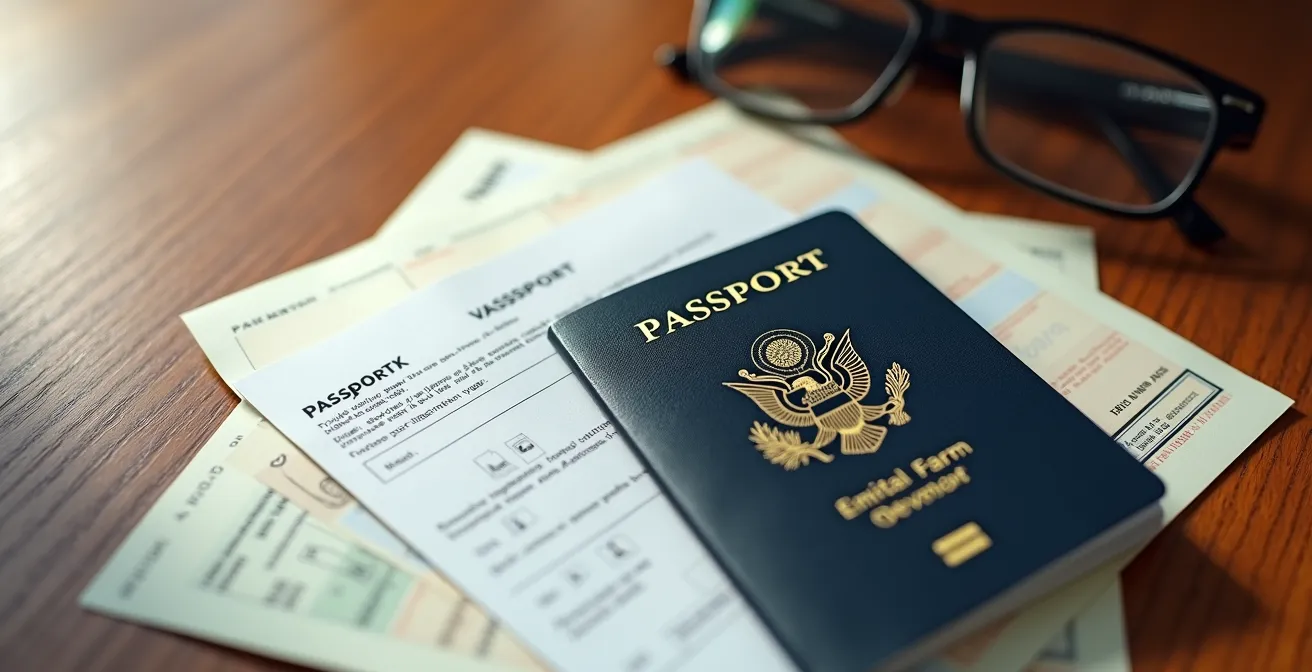
With all your documents meticulously organized, you can book an appointment at a VFS centre (in Paris, Marseille, or Strasbourg) or send your application by mail. To be safe, always start this process at least a month before your trip. If you are short on time, VFS offers an express service that can reduce the processing time to just 3 business days for an additional fee. This is a worthwhile investment for peace of mind if your departure date is looming.
Tretyakov or Pushkin Museum: Which one should art lovers prioritize?
For an art-loving couple from Paris, choosing between Moscow’s two main art museums can be a dilemma, especially on a tight schedule. The simplest way to make the decision is through a cultural equivalence: the State Tretyakov Gallery is Moscow’s Musée d’Orsay, while the Pushkin State Museum of Fine Arts is its Petit Louvre. Your choice depends on whether you want to dive deep into the soul of Russian art or see world-class international collections.
The Tretyakov Gallery is the world’s foremost repository of Russian art, from mesmerising medieval icons by Andrei Rublev to the dramatic Realism of the 19th-century Peredvizhniki (Wanderers) movement. For anyone interested in Russian history and culture, this is an unmissable stop. It’s here you’ll find the masters of the Russian avant-garde, including Wassily Kandinsky, Kazimir Malevich, and Marc Chagall. A visit here is a journey through Russia’s identity as seen by its own greatest artists.
The Pushkin Museum, on the other hand, offers a more familiar landscape for a European art enthusiast. As National Geographic Travel highlights, its collection is a treasure. This is where you’ll find the legendary Shchukin and Morozov collections of French Impressionist and Post-Impressionist art. As their guide states:
The Pushkin Museum houses a world-class treasure trove of French Impressionist and Post-Impressionist art including works by Monet, Renoir, Cézanne, Gauguin, and Matisse.
– National Geographic Travel, Moscow Weekend Itinerary Guide
This remarkable collection feels like a hidden corner of Paris in the heart of Moscow. For a clear comparison, this table breaks down the key differences:
| Aspect | Tretyakov Gallery | Pushkin Museum |
|---|---|---|
| French Equivalent | Musée d’Orsay (national art focus) | Petit Louvre (world collections) |
| Main Collections | Russian icons, realism, avant-garde | Impressionist, Egyptian, world art |
| Must-See for French | Kandinsky, Malevich, Chagall | Shchukin Collection (Monet, Matisse) |
| Visit Duration | 3-4 hours | 2-3 hours |
| Best Day to Visit | Tuesday-Wednesday (less crowded) | Thursday-Friday |
The 3 clothing mistakes that will bar your entry to Orthodox sites
A visit to Moscow is incomplete without stepping inside the gilded, onion-domed world of its Orthodox churches and monasteries, such as those within the Kremlin or the Novodevichy Convent. However, these are active places of worship with a strict dress code. Arriving unprepared is not just disrespectful; it will almost certainly result in you being denied entry. For French visitors accustomed to the more relaxed atmosphere of secularised European cathedrals, understanding these rules is a critical piece of cultural decryption.
The three most common mistakes tourists make are related to exposed skin, head coverings, and inappropriate attire. For men, shorts that do not fully cover the knees are strictly forbidden, as is wearing any kind of hat inside the church. For women, the rules are more stringent: shoulders must be covered, and skirts or dresses should fall below the knee. Most importantly, women are required to cover their hair with a scarf (a platok).
While major tourist sites like St. Basil’s Cathedral or Christ the Saviour Cathedral often provide communal shawls and wraps near the entrance, relying on these is not ideal. Bringing your own lightweight silk or cotton scarf is far more practical and hygienic. The third mistake is wearing clothing with provocative graphics, political slogans, or even ironic text. The dress code is about modesty and reverence, and any attire that draws attention is considered inappropriate. Adhering to these simple rules shows respect and ensures your visit will be a smooth and meaningful one.
Your Essential Checklist for Visiting Orthodox Sites
- For Men: Check for long trousers that cover the knees completely. Ensure you have no hat or cap on when you enter.
- For Women: Pack a lightweight headscarf. Confirm your shoulders are covered and your skirt or dress is below the knee.
- Universal Rules: Scan your outfit for any loud graphics, political messages, or overly casual items like torn jeans.
- Practical Tip: Keep a dedicated scarf in your day bag. It takes up no space and saves you from using a communal wrap.
- Emergency Plan: If you forget, locate the entrance desk where loaner shawls are typically offered before you attempt to enter.
How to balance heavy historical sightseeing with relaxing “banya” breaks?
A five-day itinerary packed with four-hour museum visits and extensive historical tours is a recipe for burnout. The most successful Moscow trips are not about checking off a list, but about finding a sustainable rhythm. The secret, embraced by seasoned travellers to Russia, is to integrate the traditional banya (Russian bathhouse) not as another tourist attraction, but as a strategic tool for physical and mental recovery.
Instead of pushing through fatigue, consider adopting what can be called the “Kremlin-Banya-Dinner Rhythm.” This proven daily structure is remarkably effective. Start your day with an intensive 4-hour morning tour, whether it’s exploring the Kremlin and its cathedrals or delving into the Tretyakov Gallery. By early afternoon, instead of forcing another museum, head to a banya. A three-hour session at a traditional establishment like the opulent Sanduny Baths or a modern spa complex allows your body to fully recover.
Case Study: The Kremlin-Banya-Dinner Rhythm Strategy
A proven daily structure for Moscow visitors: Start with 4-hour morning historical tours (Kremlin, Red Square), followed by a 3-hour afternoon banya session for physical recovery at traditional Sanduny Baths or modern spa complexes, ending with relaxed evening dining. This rhythm prevents tourist fatigue while maximizing cultural immersion. Visitors report feeling more energized for subsequent days when incorporating banya sessions as active recovery rather than just another attraction to check off.
The experience—alternating between the intense heat of the steam room (parilka), a refreshing dip in a cold plunge pool, and the unique tradition of being gently beaten with birch or oak branches (venik) to improve circulation—is profoundly restorative. It leaves you feeling completely refreshed and ready for a relaxed evening meal. This isn’t wasted time; it’s an investment in your energy for the following days and a deep cultural immersion in its own right.

How many days in advance should a French citizen apply for a visa?
The single most critical timeline in your Moscow trip planning is the visa application. While the official processing time is relatively short, the entire chain of events requires a much larger buffer. For a French citizen applying for a standard Russian tourist visa, the golden rule is to start the process 45 to 60 days before your travel date. This may seem overly cautious, but it accounts for the various stages and potential delays that can occur.
First, you need to gather your documents, which can take a week. This includes obtaining the mandatory visa support letter (invitation), ensuring your passport has at least six months of validity and two blank pages, getting the correct passport photos, and arranging compliant travel insurance. Once your file is complete, you submit it to VFS Global. The standard processing takes about 10 business days (two weeks).
So, why the 45-day buffer? This accounts for several variables. First, securing an appointment at a VFS centre during peak season can take time. Second, and most importantly, you must factor in both French and Russian public holidays, which can bring the consulates to a standstill. Periods like the French “ponts de mai,” the August vacation rush, and Russian holidays in early May and June are notorious for causing significant processing backlogs. A 45-day lead time gives you a comfortable margin to handle any unexpected requests for additional information or correct any errors in your application without stress.
Metro plus Bus: How to trigger the free transfer within 90 minutes?
Moscow’s public transport system is a marvel of efficiency, but one of its best features is often overlooked by tourists: the free 90-minute transfer. This allows you to combine one Metro ride with an unlimited number of bus, tram, or trolleybus rides within a 90-minute window, all for the price of a single journey. Mastering this is key to cost-effective and flexible travel, especially for reaching destinations not directly on a Metro line, like Gorky Park or the Sparrow Hills viewpoint.
To use this feature, you’ll need a Troika card, the Muscovite equivalent of a Navigo pass. You can get one at any Metro ticket window (kassa) for a 50 ruble deposit. However, here is the crucial step that most tourists miss: you cannot simply add a cash balance to the card. You must specifically ask the cashier to load a “90-minute ticket” (bilet na devyanosto minut) onto your card. While current Moscow public transport pricing shows a single ride with a standard Troika balance is cheap, the 90-minute ticket offers even better value for multi-modal journeys.
Practical Transfer Example: Tretyakov Gallery to Gorky Park
Imagine you’ve just finished your visit to the Tretyakov Gallery. You start at Tretyakovskaya metro station and tap your Troika card to enter; the 90-minute timer begins. You travel two stops to Park Kultury station and exit the metro. From there, you have plenty of time to find the stop for bus #B, which takes you directly to the main entrance of Gorky Park. When you board the bus and tap your Troika card on the validator, the screen will display a ‘0 ruble’ charge, confirming your free transfer was successful.
This simple trick transforms your ability to navigate the city. It encourages you to use the extensive surface network to get closer to your final destination, saving you long walks from the nearest Metro station and preserving your energy for the sights themselves.
Key Takeaways
- The “historic premium” of the Metropol is not just for the room, but for the time and money saved on transport due to its unparalleled location.
- For a special occasion, the experience can offer better value than a standard 5-star hotel when factoring in convenience and historical immersion.
- Comparing it to Parisian “Palace” hotels reveals it as a form of accessible luxury, offering a similar sense of history for a fraction of the price.
Staying at the Metropol: Is the €300/night historic premium justified?
For a history-loving couple, the prospect of staying at the legendary Hotel Metropol is tempting. Opened in 1905, this Art Nouveau masterpiece is a landmark in its own right, a place where history was made. But with rates around €300 per night, is the premium justified compared to other modern 5-star hotels? For a French visitor, the answer lies in comparing its value not just to other Moscow hotels, but to the “Palace” hotels of Paris.
The core value proposition of the Metropol isn’t just luxury; it’s unbeatable location combined with historical immersion. You are a five-minute walk from the Kremlin, Red Square, and the Bolshoi Theatre. This saves you hours in transport over a 5-day trip, as well as significant taxi or Metro fares. As the experts at Express to Russia point out, the experience itself is a key part of the value. They note that the unique experience of breakfasting in its legendary hall while being steps from major sites is a significant part of what you’re paying for.
When placed next to its Parisian equivalents like Le Bristol or the Crillon, the Metropol’s value becomes even clearer. While Parisian palaces command rates upwards of €1500 per night, the Metropol offers a comparable sense of grandeur and historical significance for a fraction of the price. It positions itself as a form of “accessible luxury.”
| Hotel Category | Moscow Metropol | Paris Le Bristol | Paris Crillon |
|---|---|---|---|
| Average Nightly Rate | €300 | €1500+ | €1500+ |
| Walking Distance to Main Sites | 5 min to Kremlin/Red Square | 10 min to Champs-Élysées | 5 min to Place de la Concorde |
| Historic Significance | Art Nouveau landmark (1905) | 18th century palace | 18th century palace |
| Signature Experience | Breakfast in legendary hall | Rooftop garden dining | Les Ambassadeurs restaurant |
| Value Proposition | Accessible luxury | Ultimate prestige | Ultimate prestige |
Ultimately, the decision is personal. If your trip is a special occasion and you value seamless access to historical sites and the chance to sleep within a piece of history, the premium is not just justified—it’s a strategic investment in an unforgettable experience.
Now that you have the strategic keys to unlock Moscow’s logic, the next step is to start sketching out a daily plan that puts these principles into practice for an enriching and seamless cultural adventure.
Frequently Asked Questions on Planning a Moscow Trip
What is the recommended timeline for French citizens to apply for a Russian visa?
Apply 45 days before you travel. This allows one week to gather your documents (invitation, insurance, etc.), 10 business days for the standard VFS processing, plus a crucial three-week buffer to absorb any delays caused by French or Russian public holidays.
Is the express visa service at VFS France worth the extra cost?
The express service costs approximately €70 versus the €35 standard fee, and it reduces processing time from 10 days to just 3 days. It is absolutely worthwhile if you are travelling within three weeks and need guaranteed peace of mind.
Which periods should French applicants particularly avoid for visa applications?
You should avoid submitting your application during periods when consulates are overwhelmed. In France, this means the May holidays (ponts de mai) and the peak August vacation period. You must also account for Russian national holidays in early May and early June, during which processing times can skyrocket.