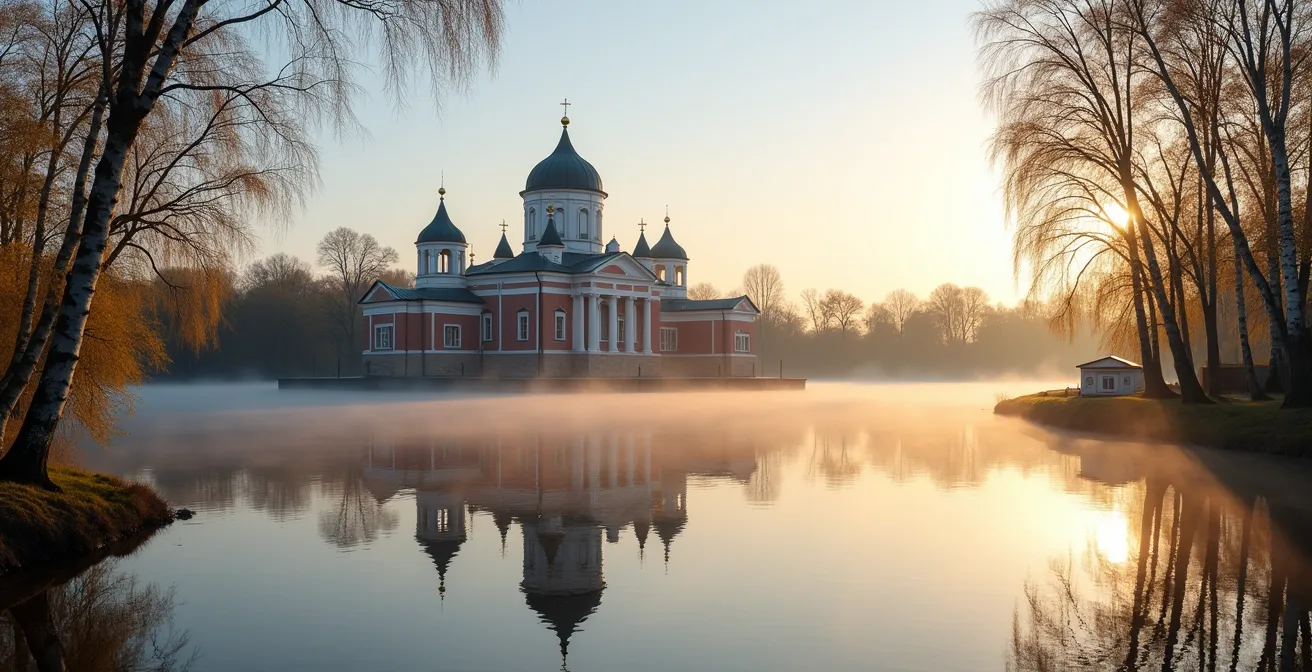
The common belief is that Moscow’s heart is the Kremlin; the reality is that its soul resides at the Novodevichy Convent.
- Unlike rebuilt monuments, the Convent offers a unique, virtually intact example of 17th-century “Moscow Baroque” architecture, which is the core of its UNESCO status.
- It serves as a living narrative of Russian culture, with deep, surprising connections to French history, from Napoleon’s invasion to the 2018 World Cup victory.
Recommendation: Swap one more tour of the crowded Red Square for an afternoon at Novodevichy to experience an authentic and more profound side of Moscow.
For many travelers, especially those from France, a trip to Moscow is synonymous with the formidable silhouette of the Red Square. The Kremlin’s red walls, St. Basil’s vibrant domes, and the solemnity of Lenin’s Mausoleum seem to encapsulate the entirety of the Russian experience. It’s a tour of power, of monumental history, and of undeniable grandeur. Most guides will direct you there, and you’ll leave with photos that are instantly recognizable. This itinerary is logical, but it misses a crucial, more intimate dimension of the city.
While the Kremlin is Moscow’s imposing heart, its living soul is found elsewhere, nestled in a quiet bend of the Moskva River. But what if the key to truly understanding Moscow wasn’t in its political center, but in its spiritual and artistic one? The Novodevichy Convent is often relegated to a secondary point of interest, a footnote for those with an “extra day.” This is a fundamental misunderstanding of its importance. This is not just another beautiful monastery; it is a narrative thread connecting centuries of Russian art, literature, and history—with surprising ties back to France itself.
This article will guide you away from the well-trodden path and reveal why the Novodevichy Convent is not an optional extra, but an essential pilgrimage. We will explore the stories etched into its cemetery, decode the genius of its unique architecture, and trace the footsteps of figures from Tchaikovsky to Napoleon. By the end, you will see it not as a detour, but as the destination for an authentic Moscow experience.
To fully appreciate why this site is a must-see, this guide breaks down its most fascinating aspects, from its hallowed graves to its architectural splendor and its surprising connections to modern events. The following sections offer a complete roadmap for discovering the true essence of the Novodevichy Convent.
Summary: Discovering the Novodevichy Convent, Moscow’s Hidden Soul
- Novodevichy Cemetery: How to find Chekhov and Khrushchev’s graves?
- Moscow Baroque style: What makes the Novodevichy bell tower unique?
- The best photo spot for the convent reflection: The Swan Lake connection
- Is the Novodevichy Convent currently covered in scaffolding (2024-2025 status)?
- How to walk from the Olympic Stadium to the quiet Convent in 15 minutes?
- Why is the Novodevichy Convent a UNESCO site and not the Cathedral of Christ the Savior?
- Tolstoy’s Estate in Khamovniki: How does his wooden house reflect his philosophy?
- UNESCO sites in Moscow: The itinerary to see all 3 in 24 hours
Novodevichy Cemetery: How to find Chekhov and Khrushchev’s graves?
The Novodevichy Cemetery is more than a burial ground; it is an open-air museum of Russian cultural and political history. While many cemeteries are solemn places of rest, this one tells the nation’s story through its elaborate and symbolic tombstones. For French visitors, it offers a direct connection to the Russian artists who profoundly influenced their own culture. With over 27,000 notable burials, the cemetery holds the remains of Russia’s most celebrated writers, composers, and political figures, making a visit a veritable cultural pilgrimage.
Here, you can stand before the final resting place of Anton Chekhov, whose plays revolutionized modern theatre across Europe. You can find the tombs of composers like Prokofiev and Shostakovich, whose modernist sounds echoed in Paris. Even the grave of filmmaker Sergei Eisenstein, a pioneer who inspired the French New Wave, is located here. Each monument is a work of art, telling a story about the person’s life and legacy. One of the most striking is Nikita Khrushchev’s. As the only Soviet leader buried here instead of at the Kremlin Wall, his stark black and white marble monument, created by the dissident sculptor Ernst Neizvestny, is a powerful symbol of the contradictions of his rule—the thaws and the freezes, the de-Stalinization and the brutal repression.
Navigating this vast necropolis can be daunting. To make your visit meaningful, focus on the “cultural trail” that connects Russia to France.
Your Plan for the French Culture Trail in Novodevichy Cemetery
- Start at Anton Chekhov’s grave in the ‘cherry orchard’ section; look for his simple, elegant cross monument.
- Find Sergei Prokofiev’s tomb, the composer whose work deeply influenced French modernist music in the 20th century.
- Locate Sergei Eisenstein’s memorial, the visionary filmmaker who inspired French New Wave directors like Godard and Truffaut.
- Visit Nikita Khrushchev’s stark black-and-white monument, a symbol of a complex legacy that fascinated Western observers.
- End at Dmitri Shostakovich’s grave, with its poignant musical note engraving, a testament to art’s endurance under political pressure.
Moscow Baroque style: What makes the Novodevichy bell tower unique?
The Novodevichy Convent’s architectural brilliance lies in its unique and exceptionally preserved “Moscow Baroque” style, also known as Naryshkin Baroque. This is not the heavy, opulent Baroque of Western Europe. Instead, it is a distinctly Russian interpretation, blending traditional forms with Western decorative elements, creating something airy, elegant, and harmonious. The ensemble is a symphony of fiery red brick walls, dazzling white stone details, and shimmering golden domes. The most breathtaking element of this style is the main bell tower.
Reaching an impressive height of 72 meters, the six-tiered bell tower is a masterpiece of verticality and ornamentation. Its design, with octagonal tiers placed on a square base and adorned with intricate white “lacework” of stone carvings, creates a sense of upward momentum and lightness. This is not just a functional structure for bells; it is a statement of artistic and spiritual aspiration. The delicate columns, kokoshniki gables resembling traditional women’s headdresses, and finely carved window frames make the tower appear more like a piece of jewelry than a massive stone building.
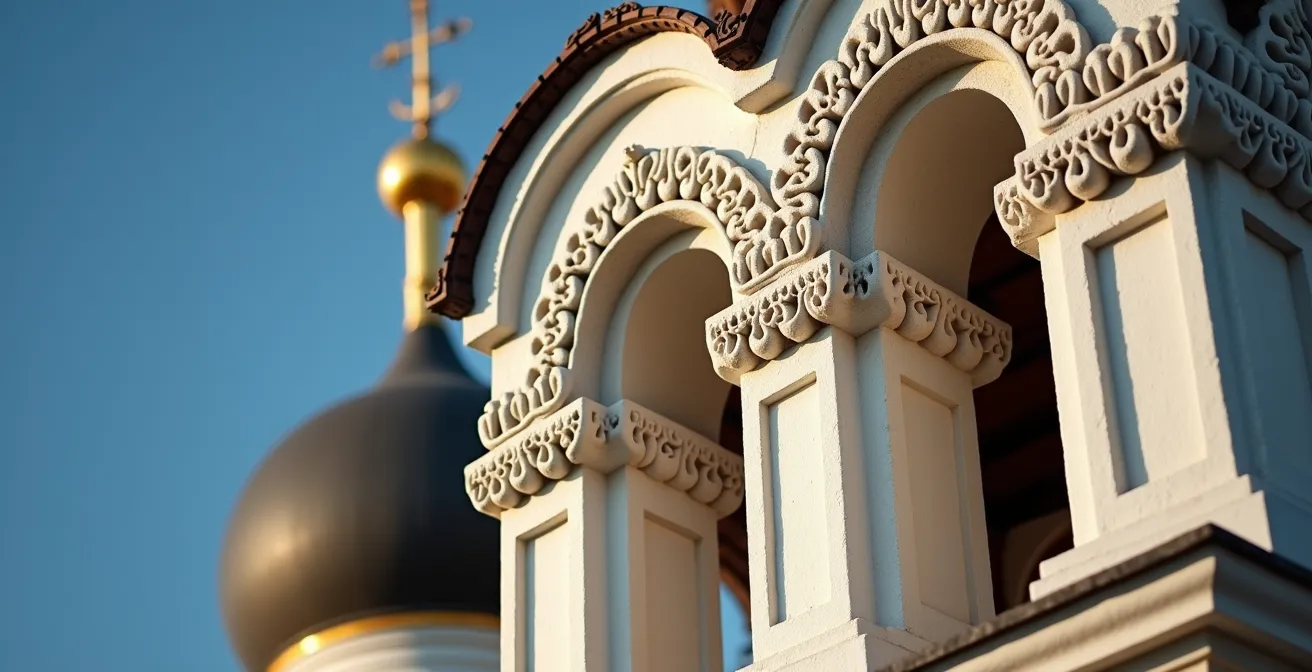
The UNESCO World Heritage Centre itself highlights the tower’s singular importance, emphasizing its unparalleled design. This official recognition underscores that you are not just looking at a pretty building, but at a pinnacle of Russian architectural innovation.
It has no analogues among ancient Russian convents or among other buildings of Moscow Baroque style.
– UNESCO World Heritage Centre, Ensemble of the Novodevichy Convent description
The best photo spot for the convent reflection: The Swan Lake connection
While the convent’s interior is a marvel, one of its most iconic and breathtaking views is from the outside. Just beyond the southern wall lies a serene pond that offers a picture-perfect reflection of the fortress’s towers and domes. This is the spot for the quintessential Novodevichy photograph, where the fiery brick and golden cupolas are mirrored in the water, doubling their visual impact. Capturing this image connects you not just to a beautiful view, but to a deep well of Russian artistic history.
This is no ordinary pond. It is believed to be the very body of water that inspired Pyotr Ilyich Tchaikovsky to compose his masterpiece, Swan Lake. The composer lived nearby and would walk these grounds, and the serene setting, with the majestic convent as a backdrop, is said to have sparked the imagery for his world-famous ballet. When you stand on the bank, you are seeing the convent through Tchaikovsky’s eyes, at the birthplace of one of the most beloved works of art ever created. From this vantage point, you can also see the modern skyscrapers of the Moscow City financial district in the distance, creating a stunning visual contrast between old and new Russia.
To capture the perfect shot, timing and positioning are everything. For the best light, photographers recommend the summer golden hour (around 5-7 AM), positioning yourself on the west bank to catch the morning sun illuminating the domes. In autumn, the mist rising from the pond creates a wonderfully melancholic mood. In winter, the snow-dusted towers reflected on the frozen surface offer a fairy-tale scene. Regardless of the season, using the pond’s reflection is the key to a truly spectacular and memorable photograph of this living piece of history.
Is the Novodevichy Convent currently covered in scaffolding (2024-2025 status)?
A common concern for visitors to historical sites is the dreaded presence of scaffolding, which can obscure views and ruin photographs. Given that Novodevichy is a centuries-old complex, restoration is a constant reality. While there have been periods of significant work, including after the last major scaffolding incident which was due to a fire in 2015, the site is vast and restorations are typically phased. As of 2024, major, all-encompassing scaffolding is not obstructing the primary views, though smaller, targeted work on individual structures can always be underway.
The beauty of the Novodevichy Convent is that it is an ensemble of many buildings. Even if one part, such as the main Smolensk Cathedral, is partially covered, the complex offers a wealth of other perfectly preserved structures to admire. The 72-meter Bell Tower, the various gate-churches, and the fortified walls themselves provide more than enough architectural splendor. Instead of being a deterrent, potential restoration work encourages visitors to explore the lesser-known corners of the convent and appreciate the intricate details that make the entire site so special.
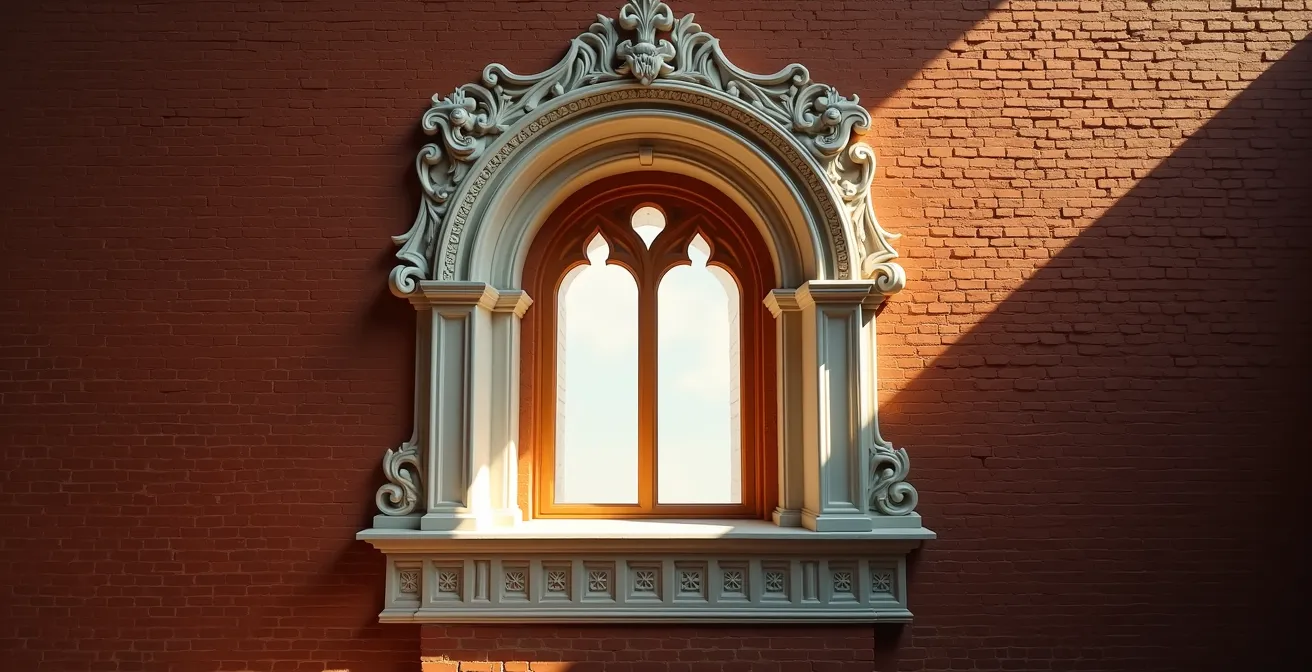
If you find the main cathedral inaccessible, consider it an opportunity to focus on other gems within the walls. The following table outlines key buildings and their typical accessibility, ensuring you have a fulfilling visit regardless of any localized work.
| Building | Access Status | Key Features |
|---|---|---|
| Smolensk Cathedral | Museum (ticket required) | 16th-century frescoes, golden iconostasis |
| Dormition Church | Active church (free) | Working church since 1945, beautiful iconostasis |
| Bell Tower | External viewing only | 72m height, unique Naryshkin Baroque |
| Transfiguration Gate-Church | Viewable from grounds | Red Moscow Baroque, five domes |
How to walk from the Olympic Stadium to the quiet Convent in 15 minutes?
One of the most powerful ways to experience the Novodevichy Convent, especially for a French visitor, is to approach it on foot from the nearby Luzhniki Olympic Complex. This short, 15-minute walk is a journey through time, connecting a site of modern French triumph with a place of historical resilience against a French emperor. In 2018, the Luzhniki Stadium was the stage where the French national team lifted the World Cup trophy, a moment of contemporary national glory. This walk bridges that recent memory with a much older, darker chapter of Franco-Russian history.
As you leave the stadium and cross the river, you are walking towards the very convent that Napoleon’s retreating army attempted to blow up in 1812. According to legend, the nuns managed to extinguish the fuses, saving the historic cloister from destruction. This short walk becomes a symbolic “time-travel” route, taking you from a scene of French victory to a testament of Russian survival in the face of French aggression. This juxtaposition provides a profound context that you simply cannot get from a taxi ride.
The route itself is straightforward and pleasant, offering riverside views and a glimpse into a quieter Moscow neighborhood. Follow these simple steps to trace this historic path.
The Time-Traveler’s Walking Route: From French Glory to Napoleonic History
- Exit Luzhniki Stadium from the main southern entrance, where France celebrated its 2018 World Cup win.
- Cross the Luzhnetsky Bridge over the Moscow River, enjoying the view (5 minutes).
- Turn right onto Luzhnetskiy Proyezd and follow the river’s bend, leaving the modern complex behind (5 minutes).
- Enter the residential area via Ulitsa Usacheva, passing Soviet-era apartment blocks that represent another layer of Moscow’s history.
- Arrive at the convent’s main entrance on Novodevichy Proyezd, where the nuns famously defied Napoleon’s army in 1812 (5 minutes).
Why is the Novodevichy Convent a UNESCO site and not the Cathedral of Christ the Savior?
This is a crucial question that gets to the heart of what makes Novodevichy so special. The Cathedral of Christ the Savior, with its massive golden dome, is an icon of Moscow. However, it is a reconstruction. The original 19th-century cathedral was demolished by Stalin in 1931, and the current structure was completed in 2000. While visually spectacular, it lacks the key ingredient that UNESCO prizes above all: authenticity. The Novodevichy Convent, on the other hand, is a masterpiece of preservation.
UNESCO’s criteria for World Heritage status are incredibly strict. A site must not only be of “outstanding universal value” but also meet conditions of integrity and authenticity. The convent excels in this regard. Unlike many other Moscow cloisters that were rebuilt or heavily altered over the centuries, Novodevichy has remained virtually intact since the 17th century. Its walls, towers, and most of its churches have survived revolutions, wars, and Soviet atheism, offering a direct, unbroken link to the past. It is the best-preserved example of the “Moscow Baroque” architectural style in existence.
The World Heritage Committee’s evaluation makes this distinction crystal clear, praising its exceptional state of preservation and coherence.
The monastery is one of the most outstanding and representative examples of the so-called ‘Moscow Baroque’, having retained its integrity better than any of the other rebuilt monasteries in Moscow.
– UNESCO World Heritage Committee, UNESCO Evaluation Report 2004
When you visit Novodevichy, you are not seeing a modern interpretation of history; you are stepping directly into it. This is why it holds a place on the prestigious list while other, more famous-looking landmarks, do not. It is an authentic, irreplaceable treasure.
Tolstoy’s Estate in Khamovniki: How does his wooden house reflect his philosophy?
Just a short distance from the grandeur of the Novodevichy Convent lies another historical treasure that offers a fascinating counterpoint: Leo Tolstoy’s winter estate in Khamovniki. Visiting both sites provides a profound insight into the two contrasting poles of the Russian soul: the opulent, spiritual grandeur represented by the convent, and the philosophical pursuit of simplicity and moral truth embodied by Tolstoy. The convent itself was a part of Tolstoy’s mental landscape; he integrated it into his major works, having his characters like Pierre Bezukhov and Kitty Shcherbatskaya interact with the area in War and Peace and Anna Karenina.
Tolstoy’s home is a humble, two-story wooden house. He lived here with his family during the winters from 1882 to 1901. In this simple setting, he wrote some of his most powerful later works, grappling with questions of faith, social justice, and the rejection of materialism. The house’s spartan furnishings, the writer’s simple work desk, and the tools he used for shoemaking all reflect his philosophy of a simple life, manual labor, and a deep skepticism towards the aristocracy and organized religion—institutions that the Novodevichy Convent historically represented. The contrast between the two sites is a lesson in Russian history and thought.
This table highlights the starkly different philosophies embodied by these two neighboring landmarks.
| Aspect | Novodevichy Convent | Tolstoy’s Estate |
|---|---|---|
| Architecture | Elaborate Moscow Baroque | Simple wooden construction |
| Purpose | Royal women’s retreat | Writer’s working home |
| Philosophy | Display of power and wealth | Rejection of materialism |
| Social class | Aristocracy only | Open to peasants |
| Legacy | UNESCO World Heritage Site | Museum of simple living |
Key Takeaways
- Authenticity is everything: Novodevichy is a UNESCO site because it’s a rare, intact 17th-century original, unlike many rebuilt Moscow landmarks.
- It’s a narrative hub: The convent and its cemetery connect stories from Tchaikovsky and Chekhov to Napoleon and the 2018 French World Cup victory.
- More than a building: Even with occasional restoration, the vast ensemble of churches, towers, and grounds offers a rich and complete experience.
UNESCO sites in Moscow: The itinerary to see all 3 in 24 hours
Putting the Novodevichy Convent in its proper context means seeing it as one of the three pillars of Moscow’s UNESCO World Heritage. While many tourists focus solely on the first, Moscow proudly hosts three UNESCO World Heritage sites, each representing a different facet of Russian history and architecture. Seeing all three is not only possible in a single day, but it also creates a much richer and more comprehensive understanding of the city’s evolution from a medieval stronghold to an imperial capital.
The three sites are: the Kremlin and Red Square (the center of political power), the Church of the Ascension in Kolomenskoye (a 16th-century architectural revolution), and the Ensemble of the Novodevichy Convent (the pinnacle of Moscow Baroque). Visiting them in sequence allows you to trace the architectural and spiritual development of Russia across centuries. This itinerary is designed to be efficient and culturally rich, offering a perfect day for a discerning traveler who wants to go beyond the surface.
For a French tourist, this packed day of cultural immersion can be punctuated with a familiar taste of home, making the experience both enlightening and comfortable.
Your 24-Hour UNESCO Moscow Itinerary for French Tourists
- 9 AM: Start at the Kremlin & Red Square. Explore the heart of Russian political power and its iconic cathedrals (3 hours).
- 12 PM: Lunch at Café Pushkin on Tverskoy Boulevard. Enjoy the atmosphere of a 19th-century aristocrat’s library with exquisite French-style patisserie.
- 2 PM: Take the Metro to Sportivnaya station and walk to the Novodevichy Convent for a deep exploration of its grounds and cemetery (2 hours).
- 4 PM: Ensure you visit the Novodevichy Cemetery to see the graves of Chekhov and Eisenstein, connecting back to French cultural history (1 hour).
- 5:30 PM: Take a Yandex Go taxi (Russia’s Uber) to the Kolomenskoye Estate on the outskirts of Moscow (30 minutes).
- 6 PM: Explore Kolomenskoye’s stunning Church of the Ascension at sunset, a unique tent-roofed masterpiece that predates St. Basil’s (2 hours).
- 8 PM: Return to the city center for a late dinner at a traditional Russian restaurant to complete your day of cultural immersion.
By stepping away from the crowds and dedicating time to the Novodevichy Convent, you are not just visiting another landmark; you are choosing a more profound, authentic, and memorable encounter with Moscow’s soul. Re-evaluate your itinerary and make this quiet epicenter of Russian culture a priority.