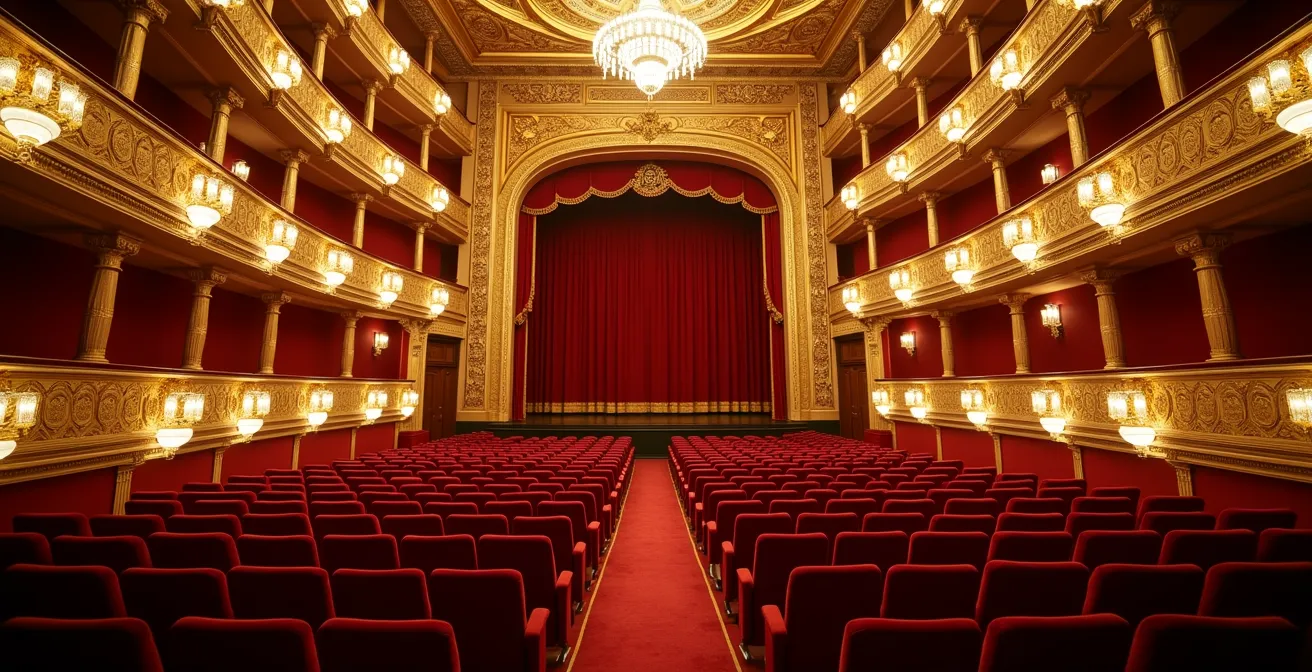
Securing Bolshoi tickets isn’t about being lucky; it’s about understanding a system designed to be challenging for outsiders.
- The official website is your only truly safe option, but requires precise timing and a clear strategy to navigate its sales windows.
- The most expensive seats on the Historic Stage, particularly in the stalls, can be a tourist trap offering poor sightlines for the price.
Recommendation: Focus on a value-driven choice by targeting the best seats in the Bel-étage or considering the modern New Stage, rather than simply chasing any available ticket for a big-name ballet.
The dream of an evening at the Bolshoi Theatre is a potent one. It conjures images of gilded imperial splendor, the soaring notes of Tchaikovsky, and the ethereal grace of the world’s most revered dancers. Yet, for many culture lovers, this dream quickly collides with a daunting reality: a confusing maze of third-party websites, astronomically inflated prices, and the paralyzing fear of being scammed. Many aspiring visitors, especially those from France and across Europe, find themselves overwhelmed, questioning if the experience is worth the immense hassle.
The common advice to “buy from the official website” and “book in advance” is true, but woefully incomplete. It fails to address the core of the problem. The official process is notoriously competitive and opaque, pushing frustrated tourists into the arms of opportunistic brokers. But what if the key wasn’t just knowing *where* to buy, but *how* to approach the entire endeavor as a strategic maneuver? This guide is not another list of obvious tips. It is a protective playbook, designed from an arts critic’s perspective, to arm you with the insider knowledge needed to outsmart the system.
We will move beyond the transaction of buying a ticket and focus on the art of securing an authentic, high-value cultural experience. We will dissect the crucial choice between iconic ballets, decode the real dress code, expose the seating chart’s hidden traps, and even explore the wider Bolshoi ecosystem. This is your map to navigating the process with the confidence of a seasoned local, ensuring your Moscow cultural pilgrimage is memorable for the art on stage, not the frustration of securing your seat.
This article will guide you through the essential strategies for a successful Bolshoi visit. Explore the detailed sections below to master every aspect of your planning, from choosing the right performance to finding the best seat for your budget.
Summary: The Critic’s Playbook for an Authentic Bolshoi Experience
- Swan Lake or Nutcracker: Which ballet is better for a first-time viewer?
- Jeans or Tuxedo: What is the real dress code for the Bolshoi New Stage?
- Historic Stage seating: Why the expensive stalls might offer a poor view?
- Stanislavsky Theatre vs. Bolshoi: Why the second option might be better?
- How to visit the Bolshoi backstage if you can’t get a ticket for a show?
- Historic vs. New Stage: Which Bolshoi venue offers better value for money?
- Music in the Metro: How to find the schedule of official metro performers?
- Is the acoustics of the renovated Bolshoi really worse than before?
Swan Lake or Nutcracker: Which ballet is better for a first-time viewer?
The choice between the two titans of Tchaikovsky’s repertoire often defines a first visit. While both offer a magnificent spectacle, they serve very different strategic purposes for the savvy visitor. The Nutcracker is inextricably linked with the Christmas and New Year season, transforming it into a high-demand, peak-season event. This popularity comes at a steep cost, as an analysis of broker sites reveals that tickets can cost over $1,500 during the holidays, making it a significant tourist trap for those unaware.
Swan Lake, conversely, is a staple of the Bolshoi’s year-round repertoire. This consistent availability translates into more choice and better value. For a first-time viewer, it represents the quintessential Russian classical ballet experience. Opting for Swan Lake allows you to witness the Bolshoi’s signature style, particularly Yuri Grigorovich’s iconic Soviet-era choreography, on the legendary Historic Stage without the extreme price pressure. While The Nutcracker offers undeniable festive magic, it demands booking 3-4 months in advance and a willingness to pay a substantial premium.
Ultimately, the decision should be guided by value and experience. If your visit is not tied to the December holidays, Swan Lake offers a more accessible and equally profound introduction to the Bolshoi’s artistry. It allows for better seat selection and frees up your budget for other cultural pursuits, representing a more strategic choice for a first-time immersion into this hallowed world.
Jeans or Tuxedo: What is the real dress code for the Bolshoi New Stage?
The question of attire causes significant anxiety for international visitors, who often picture a sea of tuxedos and ball gowns. The reality, especially at the more modern New Stage, is far more relaxed and pragmatic. The unwritten rule is not formality, but presentability. While you will see patrons dressed to the nines for a premiere, the majority of the audience opts for smart casual attire. Torn jeans, shorts, and slogan T-shirts are unwelcome, but elegant denim is perfectly acceptable.
A case study of a French visitor’s experience offers the best real-world guidance. The visitor noted that one can comfortably attend the Bolshoi “well dressed in jeans” without issue. The key is the overall presentation. This is facilitated by the theatre’s mandatory cloakroom system, a standard in Russian cultural venues. Bulky winter coats and boots are checked at the entrance, allowing patrons to change into more elegant shoes inside. This practical system ensures that looking presentable is achievable even after navigating Moscow’s often harsh weather.

As the illustration above suggests, the atmosphere in the New Stage lobby is one of sophisticated comfort. The modern architecture lends itself to a less rigid dress code than the imperial grandeur of the Historic Stage. A dark blazer, a classic dress, or a smart blouse with trousers will place you perfectly within the local norm. The focus is on showing respect for the institution and the performers, a sentiment that is conveyed through neatness and style rather than strict adherence to an archaic formal code. For a French visitor accustomed to a certain sartorial standard, this translates to dressing as you would for a stylish evening out in Paris, not for a royal gala.
Historic Stage seating: Why the expensive stalls might offer a poor view?
On the iconic Historic Stage, the most expensive seats are not always the best. This is the most critical piece of insider knowledge for any first-time visitor. The “Parterre,” or the stalls on the ground floor, commands premium prices due to its proximity to the stage. However, it suffers from a significant design flaw: a very shallow rake. This means your view can be almost completely obstructed by the head of the person in front of you. Paying top-tier prices for a view of someone’s hairdo is the ultimate Bolshoi tourist trap, and one that is easily avoided with a little knowledge.
The official ticket prices for the Historic Stage can be deceptive, with some sources showing Historic Stage tickets range from 100 to 15,000 Roubles depending on the location and performance. To navigate this, one must look beyond price and focus on the architectural layout. The real value is found by looking up. The first row of the Bel-étage (the first balcony) is widely considered the “sweet spot” of the entire theatre, offering a perfect, elevated, and unobstructed view for a price often significantly lower than the Parterre. The central seats of the Amphitheatre also provide an excellent overview and are prized for their acoustic properties. A comparative analysis makes the value proposition clear.
| Seating Section | Price Range (2024) | View Quality | Best Value Rating |
|---|---|---|---|
| Parterre (Stalls) | 5,000-15,000 RUB | Variable – tall person can block view | ★★☆☆☆ |
| Bel-étage First Row | 3,000-8,000 RUB | Perfect elevated view | ★★★★★ |
| Amphitheatre Center | 2,000-5,000 RUB | Good overview, acoustic sweet spot | ★★★★☆ |
| Side Boxes | 4,000-10,000 RUB | Partial view, sold per seat | ★★☆☆☆ |
As the data shows, the highest price does not correlate with the best experience. The side boxes, while evocative, often provide only a partial view of the stage and should be approached with caution. The strategic choice is clear: resist the temptation of the stalls and aim for the elevated central sections to guarantee a spectacular view worthy of the Bolshoi’s magic.
Stanislavsky Theatre vs. Bolshoi: Why the second option might be better?
While the Bolshoi is the ultimate prize, the obsession with its Historic Stage can blind visitors to other world-class options. The Stanislavsky and Nemirovich-Danchenko Music Theatre, Moscow’s “second” premier venue, is a formidable artistic institution in its own right. For the strategic culture lover, it can sometimes be the superior choice, offering high-quality productions with a fraction of the booking hassle and a more local, less tourist-heavy atmosphere.
However, the question isn’t just about choosing one *or* the other. It’s about understanding the Bolshoi’s own diverse ecosystem. The Bolshoi is not a single entity; it’s a complex of four stages. While the Historic Stage is notoriously difficult to book, the New Stage, Boris Pokrovsky Chamber Stage, and Beethoven Hall offer significantly cheaper tickets and better availability. These venues often feature more modern or experimental works, but the quality of performance remains exceptionally high. Choosing a performance on the Bolshoi’s New Stage can therefore provide the best of both worlds: the prestige and artistic standard of the Bolshoi name, but with the better value and accessibility more commonly associated with the Stanislavsky.
This approach allows you to experience the Bolshoi institution without succumbing to the feverish competition for the Historic Stage. To make an informed decision, a systematic comparison is key.
Your Action Plan: Comparing Moscow’s Top Theatres
- Check the official schedules for both the Bolshoi (all stages) and the Stanislavsky Theatre 2-3 months before your visit to see the full repertoire.
- Register an account on both official websites well in advance to be ready for the moment tickets go on sale.
- Compare the repertoire: Target the Bolshoi’s Historic Stage for 19th-century classics, but look to the New Stage or Stanislavsky for 20th-century and contemporary masterpieces.
- Analyze value: Compare prices for similar seats at the Bolshoi’s New Stage and the Stanislavsky; they are often comparable and offer better sightlines than the Bolshoi’s Historic Stage.
- Factor in the booking experience: The Stanislavsky website and the Bolshoi’s alternative stages typically experience less traffic, making the purchase process smoother.
How to visit the Bolshoi backstage if you can’t get a ticket for a show?
For many, the magic of the Bolshoi extends beyond the footlights into the hidden world of its workshops and rehearsal rooms. Fortunately, even if you are unable to secure a ticket for a performance, this world is not entirely closed off. The Bolshoi offers official guided tours that provide a fascinating glimpse behind the curtain, but accessing them requires a specific, old-fashioned approach. These tours cannot be booked online; tickets must be purchased in person, on the day of the tour only.
The English-language tour is held on Mondays, Wednesdays, and Fridays at 11:30 AM. To secure a spot in the small group (limited to 20 people), you must arrive early at door number 12 of the Historic building. According to official information, the official English tour costs 2,000 rubles, a reasonable price for an hour-long immersion into the theatre’s history and inner workings. For those who miss out, some private operators like GetYourGuide offer pre-bookable tours, though at a higher price point.
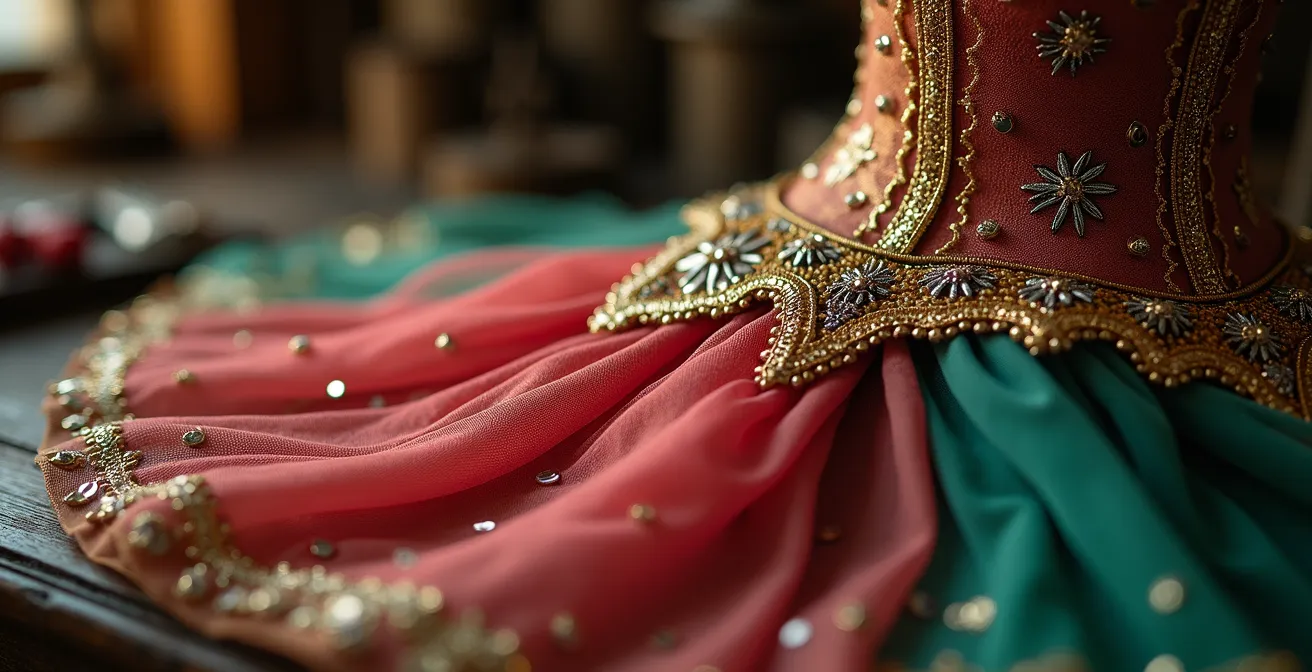
The tour grants access to areas that reveal the immense craftsmanship supporting every performance, from the opulent foyers to the workshops where costumes, like the ones pictured, are meticulously created and maintained. For those on a tight budget or with limited time, there are other ways to experience the building’s atmosphere. The Beethoven Hall, one of the chamber stages, hosts regular concerts with more accessible tickets, allowing you to be inside the legendary complex. And for a truly modern approach, Google Arts & Culture offers an extensive virtual tour, letting you explore the main auditorium and imperial foyers from anywhere in the world.
Historic vs. New Stage: Which Bolshoi venue offers better value for money?
The debate between the Bolshoi’s two main venues is central to any strategic visit. The Historic Stage is the icon, a symbol of imperial Russian culture. The New Stage, built in 2002, is the modern workhorse. While the heart may pull you towards the gilded splendor of the historic building, the head—and the wallet—should give serious consideration to the new one. The New Stage consistently offers superior value for money across almost every metric.
As a travel guide aptly puts it, “The New Stage is cheaper, but doesn’t quite have the same feel as the beautiful historic stage.” This single sentence from the Introducing Moscow travel guide perfectly captures the trade-off. You sacrifice the legendary, opulent atmosphere for a more comfortable, practical, and acoustically superior experience at a significantly lower price point. The repertoire is also a key differentiator, with the Historic Stage focusing on grand 19th-century classics and the New Stage presenting 20th-century and contemporary works.
A direct comparison of the two venues reveals a clear winner in terms of pure value, as detailed in an analysis of the Bolshoi experience.
| Feature | Historic Stage | New Stage |
|---|---|---|
| Ticket Price Range | 600-15,000 RUB | 200-5,000 RUB |
| Atmosphere | Imperial grandeur, iconic experience | Modern comfort, relaxed vibe |
| Repertoire | 19th-century classics | 20th-century & contemporary works |
| Acoustics | Debated post-renovation | Superior modern acoustics |
| Sightlines | Variable, shallow rake | Steep rake, all seats good |
| Best for | Once-in-a-lifetime experience | Regular ballet lovers |
The data is unequivocal. The New Stage boasts better sightlines from all seats due to its modern, steeply-raked design, and its acoustics are considered technically superior. For a regular balletomane or a visitor focused purely on the quality of the performance and sound, the New Stage is the logical choice. The Historic Stage is an event in itself, an experience of place as much as performance. The best choice depends on your priority: iconic atmosphere or practical value.
Music in the Metro: How to find the schedule of official metro performers?
Your cultural evening in Moscow can begin long before you reach the theatre doors. In a city that treats art as a public utility, even the subway system becomes a stage. The Moscow Metro’s “Muzyka v metro” (Музыка в метро) project is a formal, curated program that places conservatory-level musicians at designated performance spots in the system’s most architecturally stunning stations. This is not informal busking; it’s an official cultural offering that provides a perfect, and free, prelude to a Bolshoi performance.
The program transforms stations like Mayakovskaya and Kurskaya—themselves masterpieces of Soviet design—into temporary concert halls. The acoustics in these marble-clad spaces are surprisingly rich, creating a sublime atmosphere. To experience this, you need to know where and when to look. The schedule is published on the official Moscow Metro website. While it may be primarily in Russian, using a browser’s built-in translation tool is usually sufficient to decipher the times and locations.
To integrate this into your Bolshoi evening, follow these simple steps:
- Visit the official Moscow Metro website and search for the “Музыка в метро” section ahead of your trip.
- Identify performances scheduled at stations along your route to the Teatralnaya station (the stop for the Bolshoi).
- Plan to travel during the peak performance hours, which are typically the evening rush hour from 5 PM to 7 PM.
- Allow an extra 30 minutes for your journey to pause and enjoy a free classical performance, setting the perfect artistic tone for the main event.
This small strategic step elevates a simple commute into a memorable part of your cultural experience. It is a quintessential Moscow moment, blending grand art with daily life, and an insider’s secret to starting your night of elegance long before the first curtain rises.
Key Takeaways
- Never buy from a broker. Use the official Bolshoi website, but be prepared for a competitive, time-sensitive process.
- For the best value and view on the Historic Stage, target the first row of the Bel-étage, not the expensive and often obstructed stalls.
- The Bolshoi’s New Stage and the Stanislavsky Theatre offer world-class performances with better sightlines, lower prices, and easier booking.
Is the acoustics of the renovated Bolshoi really worse than before?
Among seasoned opera and ballet fans, the acoustics of the Historic Stage post-renovation (completed in 2011) is a topic of heated debate. Some regulars and sound engineers argue that the changes, intended to restore the original imperial-era sound, have created an acoustic environment that is less forgiving than its predecessor. This conversation, however, is largely academic for the vast majority of visitors. It is an insider’s debate that should not cause any concern for a first-time attendee.
As a leading travel expert on Russia notes, the concern is overstated for the general audience. This perspective is crucial for visitors worried they might be getting a subpar experience.
For 99% of visitors, especially first-timers, the acoustics are world-class and breathtaking. The debate is one for seasoned regulars and sound engineers.
– Express to Russia travel experts, Express to Russia Guide
The takeaway is clear: do not let this niche debate influence your decision to attend a performance on the Historic Stage. The sound you will experience will be rich, immersive, and of an exceptional standard. That said, if you wish to optimize your auditory experience based on expert opinion, there are strategic seats to target:
- The central seats in the Bel-étage are often cited as the primary acoustic “sweet spot,” offering a perfect balance of direct and reflected sound.
- The central seats of the Amphitheatre, located above the Bel-étage, are another excellent choice for pristine sound.
- For guaranteed acoustic perfection without any debate, the New Stage was built with modern acoustic science at its core and is technically flawless.
For your first visit, your choice of repertoire and the visual spectacle should be your primary guides. The acoustic quality you will encounter on the Historic Stage will almost certainly be one of the most impressive you have ever heard.
Armed with this insider knowledge, you are no longer just another tourist hoping for a ticket. You are a strategic planner, ready to engage with the Bolshoi on your own terms. The next logical step is to put this plan into action by visiting the official Bolshoi website, creating your account in advance, and marking your calendar for the day tickets for your chosen performance go on sale. Plan your cultural maneuver with confidence.