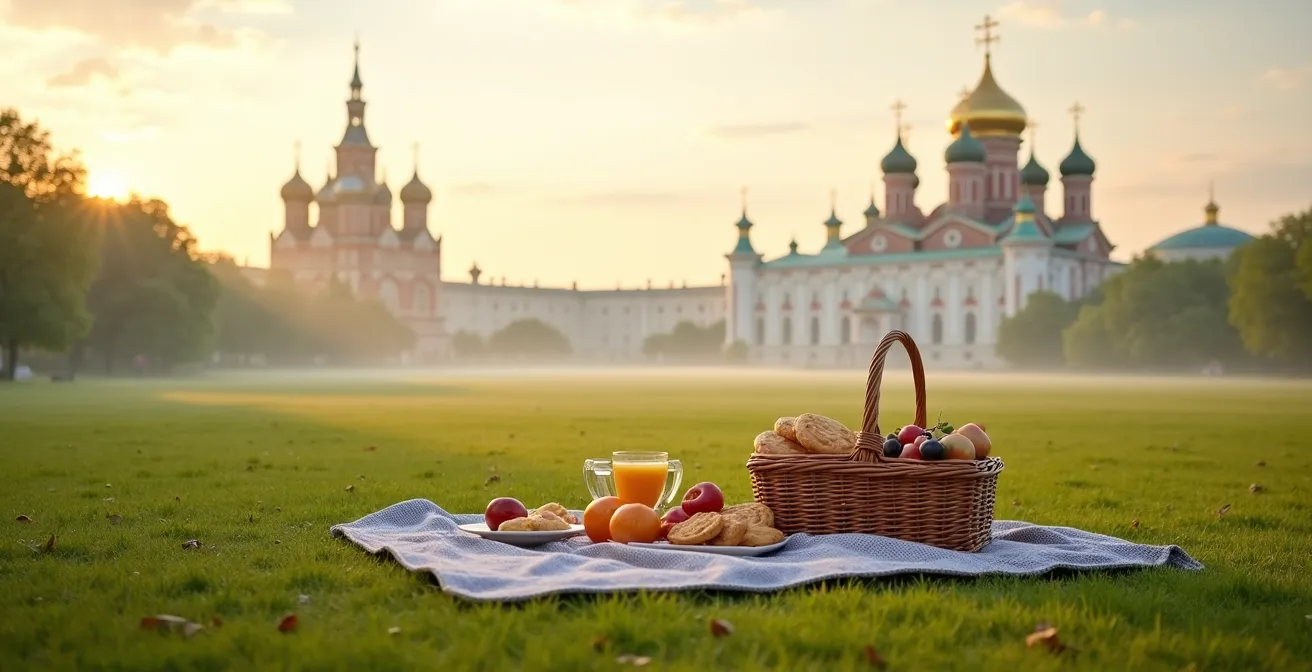
The best Moscow palace for your family isn’t about which is ‘better,’ but about matching its personality to your day: choose Tsaritsyno for a fairytale adventure and Kolomenskoye for authentic time travel.
- Tsaritsyno offers a stunning, picture-perfect Gothic fantasy landscape ideal for high-energy play and impressive photos.
- Kolomenskoye provides a deeper, more authentic dive into Old Russian history, with a mix of original and reconstructed sites perfect for curious minds.
Recommendation: Assess your family’s ‘energy level’ for the day. For imaginative play and vast open spaces, head to Tsaritsyno. For a calmer, more educational stroll through history, Kolomenskoye is your destination.
Choosing the perfect spot for a family picnic in Moscow can feel like navigating a history book. With sprawling royal estates dotting the city, the decision often boils down to two magnificent contenders: Tsaritsyno and Kolomenskoye. At first glance, both offer vast green spaces, impressive architecture, and a break from the urban hustle. Many guides will list their attractions, mention their beauty, and leave the final, crucial choice up to you. This often leads to a coin-toss decision based on which is slightly closer to your hotel.
But what if the key to the perfect family day out isn’t about proximity, but about personality? While sites like the Grand Kremlin Palace represent inaccessible state power, these estates were designed for life and leisure. The real question isn’t just “which park to visit,” but “which story does my family want to step into today?” The secret lies in understanding the unique ‘experiential DNA’ of each estate. One is a meticulously crafted fairytale, a fantasy brought to life, while the other is a genuine time capsule offering a portal to ancient Russia.
This guide moves beyond simple descriptions. We will analyze the core experience each park offers a family. By breaking down their atmosphere, the nature of their historical offerings, and the practicalities of a visit, you’ll be able to confidently match an estate’s unique character to your family’s mood, interests, and energy levels. We will explore the truth behind their famous landmarks, compare them to other iconic palaces, and provide practical tips for making the most of your day, ensuring your family picnic becomes a truly memorable royal experience.
To help you plan your ideal family outing, this article breaks down the key questions and comparisons. Explore the summary below to navigate directly to the answers you need for your decision-making.
Summary: Planning Your Royal Moscow Picnic
- Is the “Eighth Wonder of the World” at Kolomenskoye a total reconstruction?
- Can you actually visit the Grand Kremlin Palace as a normal tourist?
- Why is Kuskovo called the “Russian Versailles” of the 18th century?
- Troika rides at Tsaritsyno: Are they a tourist trap or a must-do?
- How to rent a bike to cover the massive grounds of VDNKh or Tsaritsyno?
- How to rent skates at the Gorky Park mega-rink without a deposit?
- Winter Palace vs. Grand Kremlin Palace: Which offers more opulence?
- How to visit the Terem Palace typically closed to the public?
Is the “Eighth Wonder of the World” at Kolomenskoye a total reconstruction?
Yes, the famous wooden palace of Tsar Alexei Mikhailovich, often called the “Eighth Wonder of the World,” is a modern, full-scale reconstruction. The original 17th-century structure was dismantled over a century later. However, dismissing it as ‘fake’ would be a mistake for any family interested in history. Detailed plans survived, allowing for the stunning recreation you see today. According to historical records, the wooden palace was meticulously reconstructed in 2010, giving visitors an unparalleled window into the intricate, fairy-tale-like woodwork of pre-Petrine Russia.
What makes Kolomenskoye exceptional is its dual heritage. While the wooden palace is a faithful replica, the estate’s true historical heart is the UNESCO World Heritage site: the Church of the Ascension. This stunning, white-stone tent-roofed church dates back to the 16th century and is completely authentic. This creates a unique “authenticity spectrum” for visiting families. Your children can marvel at the vibrant, almost storybook-like colors and carvings of the reconstructed palace, then walk just a few hundred meters to touch the stones of a building that stood centuries ago.
This blend makes Kolomenskoye a fantastic educational playground. It’s an opportunity to discuss the difference between preservation and reconstruction. For a family picnic, it means you can enjoy the sprawling grounds with a choice of backdrops: the imagined grandeur of a Tsar’s life in the wooden palace or the quiet, profound history of the ancient church overlooking the Moskva River. It’s less of a museum and more of an interactive timeline.
Can you actually visit the Grand Kremlin Palace as a normal tourist?
The short answer is: not easily, and not in the way you might visit other palaces. The Grand Kremlin Palace is not a public museum but the official working residence of the President of Russia. This status makes access highly restricted and exclusive. Casual tourist visits are not permitted; you can’t simply walk up and buy a ticket as you would for the Armoury Chamber or the cathedrals within the Kremlin walls. Access is almost exclusively granted through pre-booked, accredited tour agencies.
This exclusivity comes at a significant price. While costs vary, reports suggest that a two-hour excursion to the Grand Kremlin Palace costs over $80 per person, making it one of the most expensive tourist experiences in Moscow. For a family, this can quickly become a major budget consideration. The tours are strictly guided and follow a set path through ceremonial halls like the opulent St. George’s Hall. While breathtaking, the experience is more formal and less about leisurely exploration.
For most families with children, the accessible parts of the Kremlin offer a more practical and equally impressive experience. You can freely explore Cathedral Square, visit the Armoury with its dazzling collection of Fabergé eggs and royal carriages, and marvel at the Tsar Bell and Tsar Cannon. These areas provide a rich historical context and plenty of “wow” moments without the cost and rigidity of a private Grand Kremlin Palace tour. It’s a classic case of accessibility versus exclusivity, and for families, the former usually wins.
Why is Kuskovo called the “Russian Versailles” of the 18th century?
The nickname “Russian Versailles” is evocative, but it’s also a bit misleading. Kuskovo earned this comparison due to its magnificent formal gardens, extensive grounds, and the sheer elegance of its summer palace, all reflecting the French aesthetic that dominated 18th-century European aristocracy. However, its purpose and scale were fundamentally different from its French counterpart. Versailles was the colossal center of political power for an entire nation. Kuskovo, by contrast, was the private leisure estate of one of Russia’s wealthiest families, the Sheremetevs, designed specifically for hosting lavish parties and theatrical performances.
For a French family visiting, a more accurate comparison might be to a smaller, more intimate estate like the Château de Bagatelle or the Petit Trianon—places designed for pleasure and escape, not for governing. The main palace at Kuskovo is a beautiful, but relatively small, wooden structure meant only for summer use. The real magic of the estate lies in its collection of charming follies scattered across the park: the Dutch House, the Italian House, the Grotto, and the Hermitage pavilion. These created a sort of 18th-century theme park for the Sheremetevs’ guests.
This table helps clarify the distinction between Kuskovo’s role as a private playground and Versailles’ as a seat of absolute power. This information, drawn from an analysis of top Russian palaces, highlights the different social functions.
| Feature | Kuskovo | Versailles |
|---|---|---|
| Primary Function | Private aristocratic estate for leisure | Center of political power |
| Owner | Sheremetev family | French Royal family |
| Social Purpose | Private parties and theatricals | Rigid court etiquette and state functions |
| Comparable French Estate | Château de Bagatelle or Petit Trianon | No equivalent – unique as power center |
Troika rides at Tsaritsyno: Are they a tourist trap or a must-do?
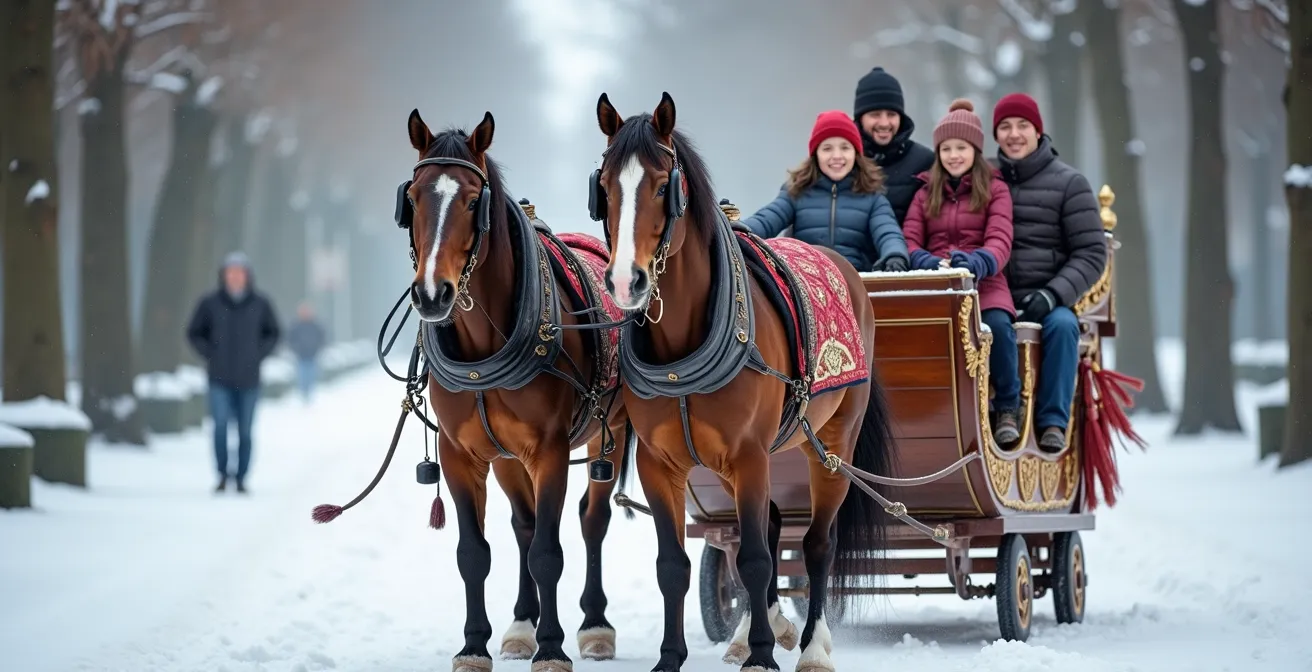
The troika ride at Tsaritsyno occupies a fascinating middle ground between a genuine cultural experience and a theme park attraction. On one hand, the image of a sleigh pulled by three horses dashing through a snowy landscape is a powerful and romantic symbol of old Russia. For a family, especially with children, the thrill and novelty of the experience are undeniable. The jingling bells and the stunning backdrop of Tsaritsyno’s neo-Gothic palaces create a magical, almost cinematic moment.
On the other hand, it’s important to frame the experience correctly. This is not a journey back in time to a 19th-century village. Tsaritsyno itself is a grand, 18th-century fantasy that was largely completed in modern times. The troika rides are a modern tourist offering within this setting. A tourist perspective often captures this duality perfectly. As one travel guide notes, the ride offers a wonderful escape, but its context feels more constructed than historical.
Why not get out of town, enjoy enchanting winter landscape and dash through the snow on a colorful sleigh pulled by three horses? The experience offers a romantic escape from the city, though the authenticity at neo-Gothic Tsaritsyno may feel more like a theme park attraction than a genuine historical experience.
So, is it a trap or a must-do? The answer depends on your expectations. If you’re seeking a deeply authentic, historical immersion, this might not be it. But if you’re looking for a joyful, picturesque, and memorable family activity that perfectly complements Tsaritsyno’s fairytale atmosphere, it is absolutely a must-do. It’s less about historical accuracy and more about creating a magical family memory. For children, the distinction is irrelevant—the sheer fun is what matters.
How to rent a bike to cover the massive grounds of VDNKh or Tsaritsyno?
Renting a bike is an excellent and highly recommended way for a family to explore the vast territories of Moscow’s larger parks like Tsaritsyno or VDNKh. The sheer scale of these estates can be daunting on foot, especially with children whose energy can wane. A bike transforms an exhausting long walk into a fun and efficient adventure. The process is generally straightforward and designed for tourists, though there are a few key things to know to make it seamless. Prices are quite reasonable, as bike rentals at Moscow parks typically run about 300-600 rubles per hour.
While specific rental points and exact procedures can vary slightly between parks, the general process is consistent. You’ll need to locate a rental stand (often near main entrances), choose your bikes, and be prepared for a security deposit. This deposit is a standard practice and is fully refundable upon the safe return of the equipment. It ensures that the bikes, which can include everything from standard adult bikes to tandems and children’s models, are cared for. Based on typical procedures, here is a practical plan to get your family rolling.
Your Action Plan for Renting Bikes in a Moscow Park
- Locate the Rental Point: Upon arrival, identify the main bike rental station. At VDNKh, for example, a prominent stand is located near the main entrance arch. At Tsaritsyno, look for signs near the central palace area.
- Prepare for the Deposit: Have cash ready for the security deposit. A standard amount is around 3,000 rubles per bike, which will be returned to you. While some places might accept cards, cash is often faster and more reliable.
- Check the Pricing and Time: Confirm the hourly rate (usually around 350-400 rubles) and note if there are any weekday discounts or special offers for longer rentals. Keep track of your start time to avoid extra charges.
- Select the Right Bikes: Inspect the bikes offered. You’ll typically find a variety, including children’s bikes, bikes with child seats, and even fun options like tandem bikes. Ensure tires are full and brakes are working before you leave the stand.
- Understand the Return Process: Confirm where you need to return the bikes. Usually, it’s the same spot, but in very large parks, there may be other drop-off points. Get your deposit back and you’re all set!
By following these steps, you can easily turn a potentially tiring day into an exciting exploration, covering far more ground and keeping everyone’s spirits high.
How to rent skates at the Gorky Park mega-rink without a deposit?
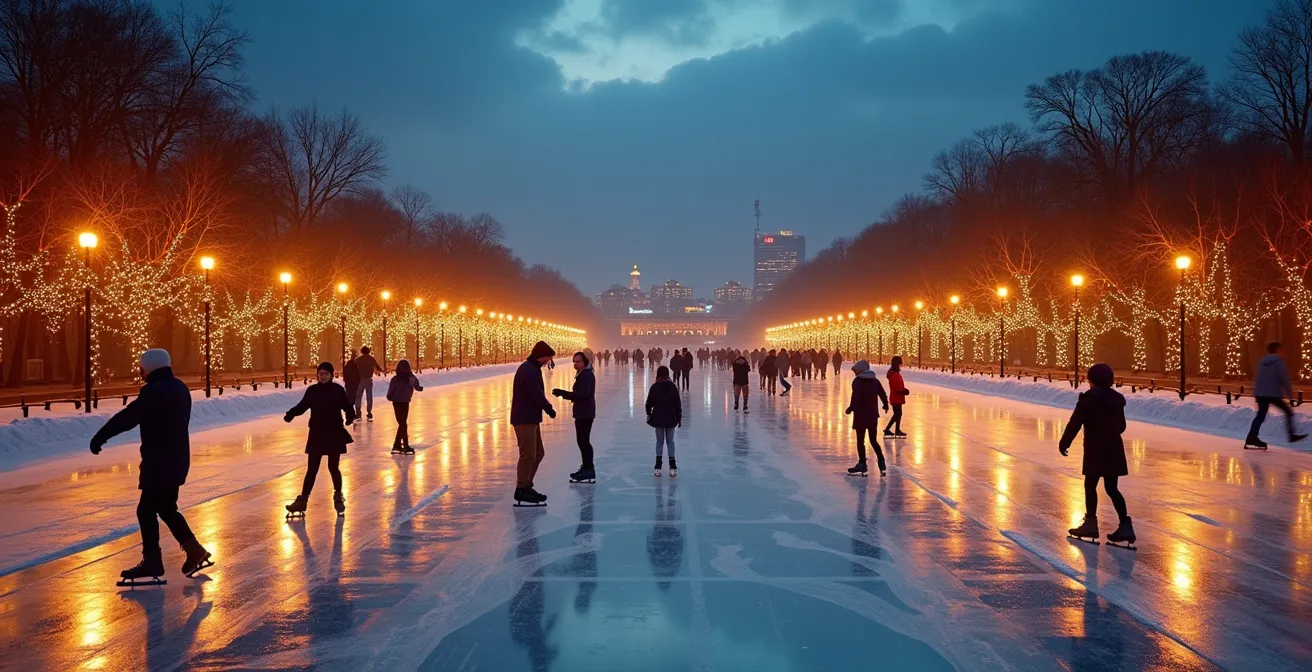
Gorky Park in winter transforms into one of Europe’s largest and most magical ice rinks, with illuminated paths winding through the trees. Renting skates to enjoy this experience is a quintessential Moscow winter activity. Regarding the deposit, most major rental services in Moscow, including Gorky Park, have streamlined their processes. While a cash deposit used to be standard, many now operate on a ticket-based system where the rental is tied to your entry pass, or they may place a temporary hold on a credit card rather than taking cash. The key is that you won’t need to carry a large amount of cash just for a deposit.
The rental process itself is integrated into the rink’s ticketing system. The most important tip for a smooth experience is to book everything online in advance. This allows you to select a specific 2-3 hour session and pay for both entry and skate rental simultaneously, completely bypassing the often-long ticket queues at the entrance. The experience is structured into timed sessions to manage crowds and maintain ice quality.
Here are the key practical steps for a hassle-free skating adventure at Gorky Park:
- Purchase Tickets Online: This is the single most important step. Go to the official Gorky Park website to buy your entry tickets for a specific time slot. Sessions typically cost between 400-700 rubles.
- Add Skate Rental: During the online purchase, you will have the option to add skate rental to your order. This usually costs an additional 400 rubles and is the most efficient way to secure your skates.
- Arrive for Your Session: Arrive at the beginning of your chosen session for the best ice conditions. The ice is resurfaced between each session.
- Use Alternative Entrances: The main entrance can get very crowded. Gorky Park has several rental pavilions (павильон проката), and your online ticket may direct you to a less busy one.
Winter Palace vs. Grand Kremlin Palace: Which offers more opulence?
This is like asking whether the Louvre or the Élysée Palace is more opulent—they both are, but they express opulence in fundamentally different ways. The Grand Kremlin Palace embodies the opulence of state power and ceremony. Its grandeur is formal, official, and largely inaccessible, designed to impress visiting dignitaries and project the might of the Russian state. Its halls are for state functions, not public viewing.
The Winter Palace in St. Petersburg, now home to the State Hermitage Museum, represents a different kind of opulence: the opulence of immense personal wealth and cultural collection. It was a primary residence of the Tsars, and its scale is almost incomprehensible. The palace’s sheer vastness, which includes an astonishing 1,057 rooms, was designed to house the imperial family, their court, and an ever-expanding art collection. Today, that opulence is on public display. You can wander through gilded state rooms, marvel at the Peacock Clock, and get lost in one of the world’s greatest art collections.
For a visitor, the difference is stark. The Winter Palace offers an immersive, self-guided experience of lavishness. The Grand Kremlin Palace offers a rare, guided glimpse into an exclusive world. The following comparison, tailored for a French perspective, clarifies the distinction:
| Aspect | Winter Palace (Hermitage) | Grand Kremlin Palace |
|---|---|---|
| Current Function | Public museum | Presidential residence |
| Accessibility | Open to all visitors | Restricted, expensive tours only |
| Type of Opulence | Art collection & display | State power & ceremony |
| Visitor Experience | Self-guided exploration | Exclusive guided access |
| French Equivalent | The Louvre | Élysée Palace |
Key Takeaways
- Tsaritsyno = Fairytale Fun: Choose this for its magnificent, photo-ready Gothic architecture and vast spaces perfect for imaginative play.
- Kolomenskoye = Authentic History: Opt for this estate for a genuine walk through different eras of Russian history, from a 16th-century UNESCO site to a 17th-century reconstructed marvel.
- Experience over Sightseeing: The best choice depends on your family’s mood—match the ‘palace personality’ to your desired experience for the day.
How to visit the Terem Palace typically closed to the public?
The Terem Palace is one of the ultimate treasures hidden within the Moscow Kremlin, and visiting it is a true mark of a dedicated historical traveler. Built in 1636, it’s a breathtaking example of pre-Peter the Great Russia, a time before French and Italian architectural styles became the standard. Its vibrant, tiled roof and interiors decorated with rich frescoes of heraldic patterns and biblical themes offer a rare glimpse into the opulent but distinctly Russian world of the 17th-century Tsars.
The reason it is so coveted is its extreme inaccessibility. The Terem Palace is not a standalone museum and is located within the complex of the Grand Kremlin Palace, the President’s official residence. Therefore, there is only one way to gain access: as an exclusive part of a private, pre-booked tour of the Grand Kremlin Palace. You cannot visit the Terem Palace on its own. It is the crown jewel included in some of the most exclusive and expensive Kremlin tours available.
This means that all the conditions for visiting the Grand Kremlin Palace—booking through an accredited agency, high costs, and a formal, guided experience—apply here as well. The 19th-century restoration of the palace was done with great care to preserve its original 17th-century style, so what you see is a remarkably authentic view of a bygone era. For those deeply passionate about Russian history, gaining access is a pinnacle experience, offering a tangible connection to the world of Ivan the Terrible’s successors, a world vastly different from the European-influenced grandeur of St. Petersburg.
Now that you have this detailed breakdown, you can use this framework to confidently choose the right royal estate for your family’s perfect day out in Moscow.