In summary:
- Finding a specific, affordable pelmeni class in France is difficult, but creating your own “home workshop” is more rewarding.
- Mastering the folding technique is the most crucial skill, more important than any special tool.
- Authentic ingredients like Smetana and the right meat cuts are available in French supermarkets and specialty delis if you know what to look for.
- This guide provides all the steps to source ingredients in France and master the recipes to bring skills home, not just memories.
So, you’re a foodie in France with a delicious mission: you don’t just want to taste authentic Russian pelmeni, you want to learn the craft and bring that skill home. Your search for an English-language cooking class, specifically for pelmeni and under €50, has likely led you down a rabbit hole of fancy restaurant tastings, generic cooking schools, and recipes that miss the cultural soul of the dish. It can be frustrating when all you want is a hands-on experience.
Many will point you towards simply buying frozen dumplings or settling for a recipe online. But that misses the point. You’re seeking the tactile joy of folding the dough, the satisfaction of creating the perfect filling, and the story behind the food. The real challenge isn’t just finding a class; it’s accessing the authentic knowledge behind this beloved comfort food.
But what if the solution isn’t to find a class, but to create one? This guide takes a different approach. We will transform your French kitchen into an authentic pelmeni workshop. We’ll bypass the scarcity of formal classes by empowering you with the essential knowledge that culinary instructors share. You’ll learn the secrets that go beyond a simple recipe, turning this challenge into a deeply rewarding culinary project.
We’ll cover the science behind the flavor, the critical folding technique, how to shop for ingredients with confidence in French stores, and even how to host your own pelmeni-making party. Prepare to become the expert you were looking for.
For those who are visual learners, the following video offers a fantastic close-up demonstration of the classic Siberian pelmeni folding technique. It’s a perfect companion to the detailed instructions you’ll find later in this guide.
This article is structured to guide you step-by-step through your pelmeni-making journey. The table of contents below outlines each stage, from understanding the foundational flavors to finding the best ready-made options for comparison.
Table of Contents : Your Complete Guide to a DIY Pelmeni Workshop in France
- Why does authentic Borscht taste better the next day?
- The secret technique to folding pelmeni that 90% of beginners get wrong
- Cooking with kids in Moscow: Which studios offer family workshops?
- Where to find “Smetana” and dill in Paris to replicate recipes?
- Siberian vs. Ural dumplings: What is the difference in the meat filling?
- Can tourists buy fruits at Danilovsky or is it just a food court?
- Can you buy high-quality pelmeni in supermarkets to cook in your Airbnb?
- Siberian dumplings tasting: 3 spots locals prefer over tourist traps
Why does authentic Borscht taste better the next day?
Before we even touch the dough for our pelmeni, we must understand the soul of Eastern European cuisine: patience. The iconic borscht is the perfect teacher. The reason it tastes profoundly better on day two is not magic, but a beautiful process of flavor alchemy. When the soup rests, its distinct, sharp flavors—the earthy beet, the tangy tomato, the rich meat broth—begin to meld and mellow. The acidity softens, allowing the subtler, sweet notes of the vegetables to emerge.
This principle of “nastoyatsya,” or infusing, is central to many dishes. A key part of this transformation is that the flavor development in traditional Eastern European stews requires 24 hours of resting. During this time, the starches in the potatoes and the gelatin from the meat bones continue to break down, giving the soup a silkier, more cohesive texture. It’s a lesson in letting ingredients get to know each other.
When you reheat your borscht in a French kitchen, do so gently. A cast-iron pot or a classic French *cocotte* is ideal for its even heat distribution. Reheat it on a low setting, allowing it to come to temperature slowly without boiling, which can destroy the delicate balance you’ve achieved. This patient approach to flavor is the first secret to thinking like a Russian cook, a mindset that will be invaluable when we prepare our pelmeni filling.
The secret technique to folding pelmeni that 90% of beginners get wrong
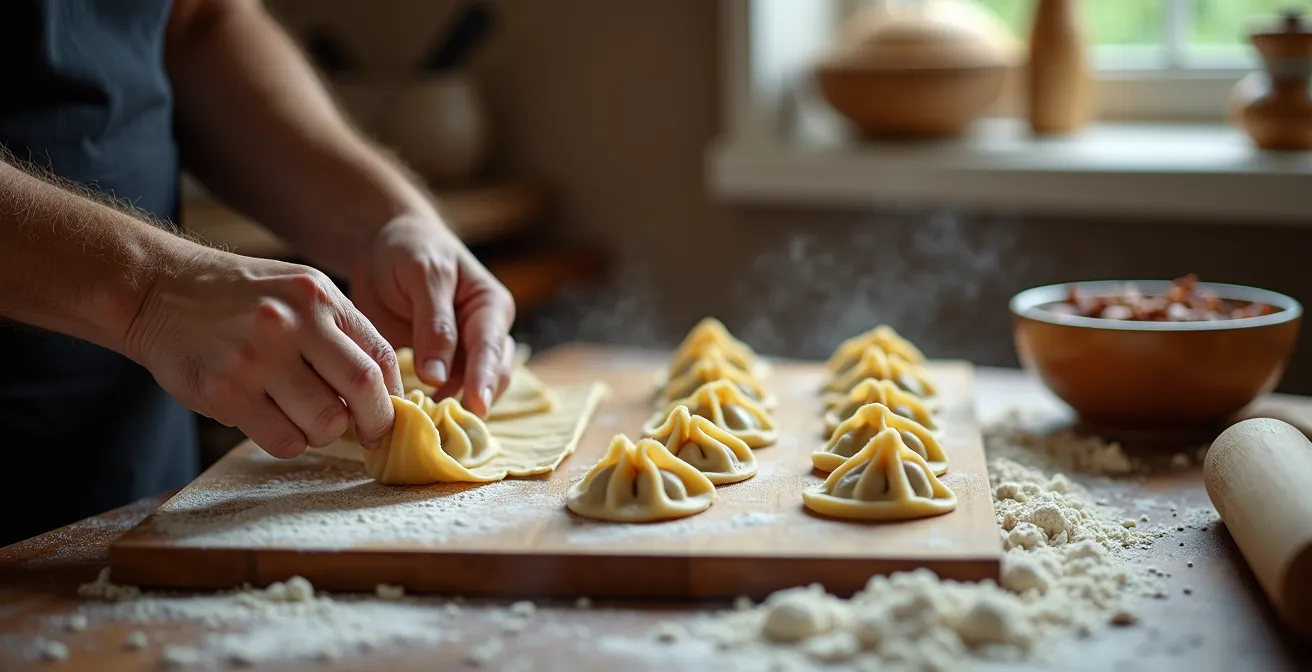
Now for the heart of our workshop: the fold. This is where most beginners falter. The secret to a perfect pelmeni isn’t speed or having a special mold; it’s achieving a paper-thin dough and a hermetic seal. The biggest mistake is using dough that is too thick. It leads to a gummy, unpleasant texture and makes the signature “little ear” shape nearly impossible to form. Your goal is a dough so thin you can almost see the filling through it.
The second error is overfilling. A small, teaspoon-sized ball of meat is all you need. Too much filling will cause the seams to burst during boiling, leaving you with a pot of meat soup instead of plump dumplings. Once you’ve placed the filling on your dough circle, fold it in half to create a crescent. Now, the crucial step: pinch the edges together with fervor. You must press out every pocket of air before sealing completely. Air expands when heated and is the number one enemy of a well-formed dumpling.
To create the iconic shape, take the two corners of the crescent and bring them together, pinching them firmly. One corner should slightly overlap the other. This not only creates the “pelmen” (ear) shape but also provides a double-seal, ensuring its integrity in the bubbling water.
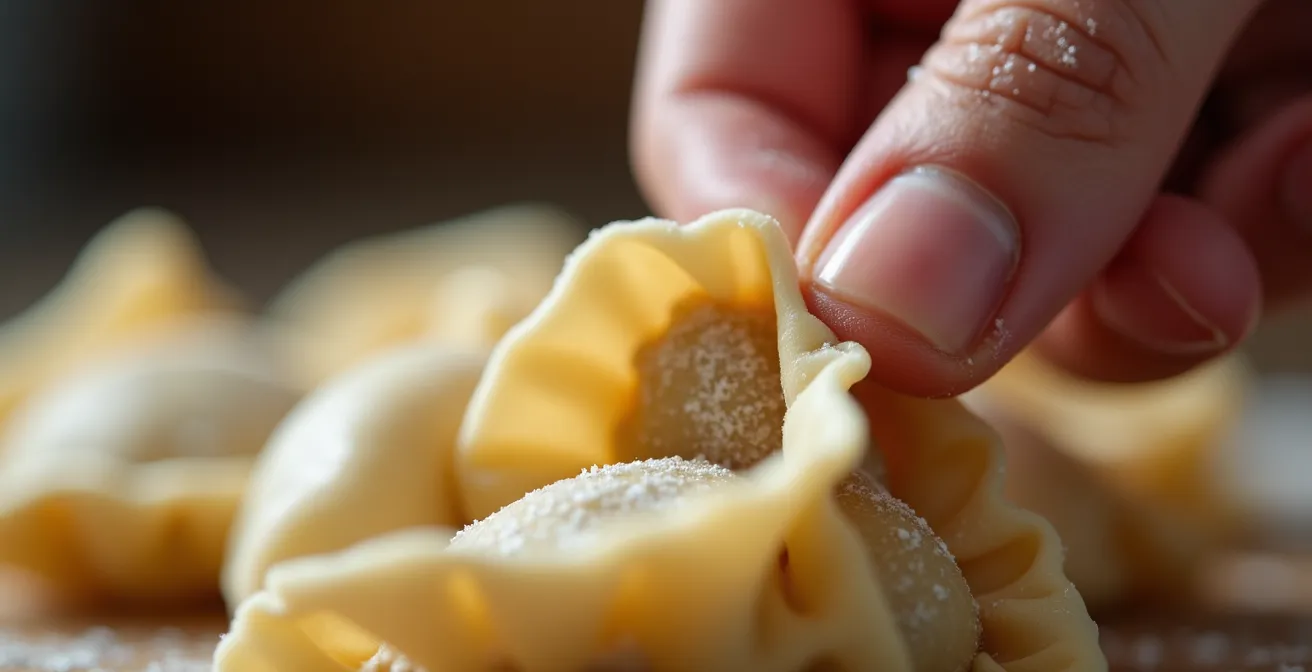
As you can see in this close-up, the technique is about precision. Your fingers are the most important tool you have. Dust them lightly with flour to prevent sticking, but not so much that you can’t get a good grip to seal the dough. Practice this a few times, and you’ll develop a rhythm. This manual technique is the true skill you’ll take home.
Cooking with kids in Moscow: Which studios offer family workshops?
While the dream might be a family cooking class in the heart of Moscow, you don’t need to travel that far to share this wonderful experience with your children. You can recreate that joyful, flour-dusted atmosphere right in your French home. The key is to turn your kitchen into a family-friendly workshop for an afternoon. It’s less about a formal lesson and more about creating memories together.
In fact, many Franco-Russian cultural associations in Paris, Nice, and Strasbourg host family-oriented events, proving the spirit of communal cooking is alive and well in France. The restaurant Pelmeni Paris, for instance, welcomes families and enjoys demonstrating their craft. This ethos is what you’ll replicate: making it fun, accessible, and a little bit messy. Assigning age-appropriate tasks is crucial. Younger children can help mix the filling or dust the counter with flour, while older kids can be trusted with rolling the dough or even trying the folding technique.
The goal is participation, not perfection. Making pelmeni is traditionally a social activity, where families and friends gather for hours to chat while folding hundreds of dumplings. By bringing this tradition into your home, you’re giving your children a far more authentic cultural lesson than many formal classes could offer.
Your DIY Pelmeni Party Shopping List in France
- Child-safe tools: Head to stores like Zodio for plastic rolling pins and fun cookie cutters (to make the dough circles).
- Colorful gear: Find vibrant mixing bowls and child-sized aprons at a shop like Du Bruit dans la Cuisine to make it feel official.
- The mold (optional, for ages 8+): A “pelmenitsa” mold can be a fun tool, available at Russian delicatessens or online from French retailers.
- Dough cutting tools: Simple safety scissors are a great way for kids aged 5+ to help cut the dough into strips.
- Finishing touches: Flour dusters and small pastry brushes are perfect for little hands to feel involved in the final steps.
Where to find “Smetana” and dill in Paris to replicate recipes?
Your pelmeni are folded and ready, but the experience is incomplete without the proper accompaniments. The quintessential topping is a dollop of Smetana, a tangy, rich sour cream that cuts through the savory meat filling. But where do you find it in a country famous for its own dairy, *crème fraîche*? This is your next foodie mission: the authentic ingredient hunt. Your first stop should be the specialty Eastern European or Russian delicatessens (*épiceries russes*). In Paris, the Gastronom chain has several stores, and a well-known deli named ‘St. Petersburg’ operates in the 17th arrondissement. Similar shops can be found near the Russian Orthodox Cathedral in Nice and in Strasbourg.
However, if you can’t get to a specialty store, don’t despair. A good French supermarket offers excellent substitutes, though it’s important to understand the differences in fat content and texture. Fresh dill (*aneth*), the other essential garnish, is readily available in the fresh herb section of most French supermarkets like Carrefour, Monoprix, or at any local outdoor market.
Understanding the nuances between Russian Smetana and its French cousins is key to getting the flavor profile right. This table breaks down your options.
| Product | Fat Content | Best Use | Where to Buy |
|---|---|---|---|
| Authentic Smetana | 15-20% | Pelmeni topping | Russian delis |
| Crème fraîche d’Isigny | 30-35% | Borscht, sauces | Any supermarket |
| Fromage blanc | 0-8% | Light dumplings | Dairy sections |
| Yaourt à la grecque | 10% | Cold toppings | All stores |
As you can see, for topping pelmeni, Crème fraîche d’Isigny is a fantastic, widely available substitute. While richer than Smetana, its thick texture and tangy flavor profile are a very close match. Just be sure to buy the thick *épaisse* version, not the liquid *liquide* one.
Siberian vs. Ural dumplings: What is the difference in the meat filling?
Not all pelmeni are created equal. The two most classic styles, Siberian and Ural, are distinguished primarily by their filling. Understanding this difference will elevate your home workshop from simply following a recipe to making a conscious culinary choice. Siberian pelmeni, the most famous variety, traditionally use a filling of mixed meats. The classic ratio is 45% beef, 35% lamb, and 20% pork. The filling is seasoned very simply with finely minced onion, black pepper, and salt. The focus is purely on the quality and flavor of the meat itself.
Ural-style pelmeni, on the other hand, often feature a 50/50 mix of beef and pork and introduce more seasonings. In addition to onions, you might find garlic, and sometimes even spices like nutmeg. While Siberian pelmeni are known for their pure, robust meatiness, Ural pelmeni offer a slightly more complex and aromatic flavor profile. A fun fact for foodies: according to tradition, traditional Siberian pelmeni typically weigh 15 grams each, a testament to the satisfyingly dense filling.
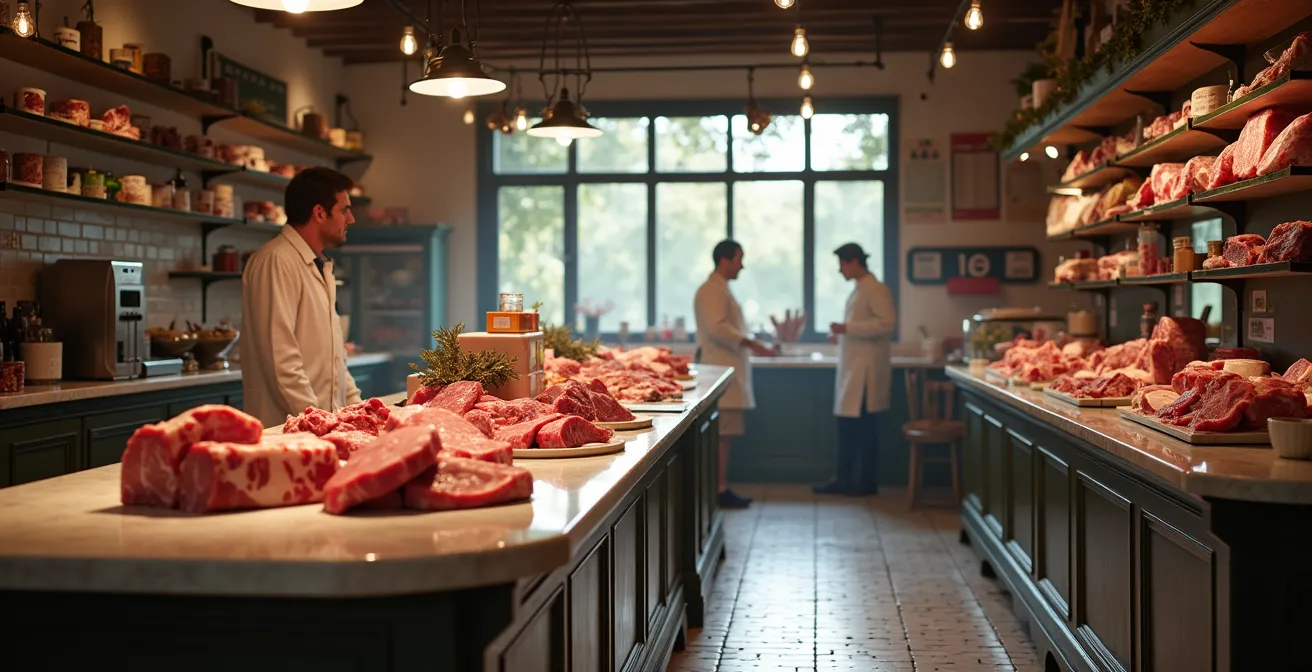
When you embark on your sourcing mission to a French *boucherie*, you can ask for specific cuts to replicate these styles. For a rich Siberian blend, ask for *échine de porc* (pork shoulder) and *collier de bœuf* (beef chuck). Crucially, specify that you want a fat ratio of around *70% maigre, 30% gras* (70% lean, 30% fat), as fat is essential for a juicy, flavorful filling. The best butchers will grind it fresh for you if you order *viande hachée sur demande*. This level of detail will not only impress your butcher but will make a world of difference in your final product.
Can tourists buy fruits at Danilovsky or is it just a food court?
While Moscow’s famous Danilovsky Market is a vibrant hub of food stalls and fresh produce, you can find that same spirit in a traditional French market. Your goal might be pelmeni ingredients, but the market experience itself is part of the cultural immersion. A great Parisian equivalent is the Marché d’Aligre in the 12th arrondissement. It’s a bustling, chaotic, and wonderful place where you can find everything from beautiful French produce to stalls run by Eastern European vendors selling ingredients for your workshop.
However, navigating a French market requires a bit of local etiquette, which differs from Russian markets. It is considered essential to greet vendors with a polite “*Bonjour madame/monsieur*” before you start browsing. Unlike in many other countries, you should avoid touching the produce yourself. Instead, point to what you want, and the vendor will select it for you. This is a sign of respect for their expertise and the quality of their goods.
For the freshest ingredients, it’s best to visit on a weekday or Saturday morning before 11 am. At Marché d’Aligre, you can complete your entire shopping list in one go: find your dill and onions from a French farmer, then head to an Eastern European stall for authentic Smetana or even a pack of high-quality frozen pelmeni for comparison. Budgeting for this sourcing mission is also straightforward.
Here is a general idea of what to expect in terms of cost when shopping for your pelmeni ingredients across different types of stores in France.
| Store Type | Price Range | Quality | Selection |
|---|---|---|---|
| Hypermarket (Carrefour) | €15-20/kg meat | Standard | Basic |
| Local Market | €18-25/kg meat | Fresh daily | Good |
| Russian Deli | €22-30/kg meat | Authentic cuts | Specialized |
| Frozen Pelmeni | €8.90-19.90/pack | Ready-made | Various fillings |
Can you buy high-quality pelmeni in supermarkets to cook in your Airbnb?
Absolutely. After a rewarding day of folding your own pelmeni, you might just want a quick and delicious meal. Or perhaps you want to benchmark your creation against a commercial standard. High-quality frozen pelmeni are readily available, especially in Russian delicatessens, but you can also find them in the frozen section of larger French hypermarkets like Auchan or Carrefour, particularly in areas with large Eastern European communities.
However, quality can vary dramatically. To avoid disappointment, you need to learn how to read the label like a pro. The best pelmeni will have a high meat content and simple, natural ingredients. Here are the key things to look for on the packaging:
- Grade Marking: Look for the Russian letter ‘Категория А’ (Kategoriya A) or a simple ‘A’ on the package. This is the highest grade, indicating the filling contains over 80% meat.
- Meat Percentage: The label should clearly state the percentage of meat. Anything less than 50% is likely to be disappointing.
- Avoid Fillers: Scan the ingredient list for terms like “*protéines végétales*” (plant proteins) or soy. These are fillers used to reduce costs and they compromise the texture and flavor.
- Freshness: Check the production or frozen date. The more recent, the better (ideally within the last 3 months).
This distinction between homemade and store-bought is at the heart of Russian food culture. As Wikipedia contributors note in their extensive article on the dish:
Store-bought pelmeni are considered a kind of convenience food, while home-made pelmeni are considered hearty, healthy food
– Wikipedia contributors, Wikipedia – Pelmeni
This perfectly captures the spirit of your home workshop. While a good quality store-bought pack is a great convenience, nothing compares to the satisfaction and superior taste of those made by hand.
Key takeaways
- The true art of pelmeni lies in the patient, manual folding technique, which creates the perfect texture and seal.
- Sourcing authentic ingredients in France is an achievable mission, with excellent local substitutes available for key items like Smetana.
- Transforming your kitchen into a “home workshop” provides a more authentic and rewarding experience than searching for a rare formal class.
Siberian dumplings tasting: 3 spots locals prefer over tourist traps
After you have successfully created your own pelmeni, the final, rewarding step is to go out and taste the work of the professionals. This isn’t about finding flaws in your own creation, but about celebrating the dish in all its forms and training your palate. Paris has a few gems where you can taste authentic Siberian dumplings, spots beloved by locals that prioritize quality over tourist appeal. Going to one of these establishments serves as your “graduation dinner.”
A standout hidden gem is Pelmeni Paris, located in the 17th arrondissement. This is not a tourist trap; it’s a passion project. The owner, Raphael, invested in a genuine pelmeni machine from Omsk, Russia, and is meticulous about his ingredients, using organic flour from the Moulin de Versailles and Red Label meats. Here, you can taste pelmeni with various fillings, from classic meat to vegetarian, with prices ranging from €8.90 to €19.90. It’s the perfect place to see how your homemade creations stack up against an authentic, high-quality benchmark.
When you visit an authentic spot, be sure to order like a local to get the full experience. Ask for your pelmeni with the classic trio of *smetana, maslo, uksus* (sour cream, melted butter, and a touch of vinegar). A sprinkle of fresh *ukrop* (dill) is a must. On a cold day, try them served *v bulyone* (in a clear broth). And to complete the meal, pair your dumplings with a traditional drink like *kvas* (a fermented rye bread drink) or *mors* (a berry drink).
Your culinary adventure awaits. Start your ingredient sourcing mission, clear your kitchen table, and get ready to fold. The satisfaction of serving a steaming bowl of your own handmade pelmeni is the best souvenir you could ever bring home.