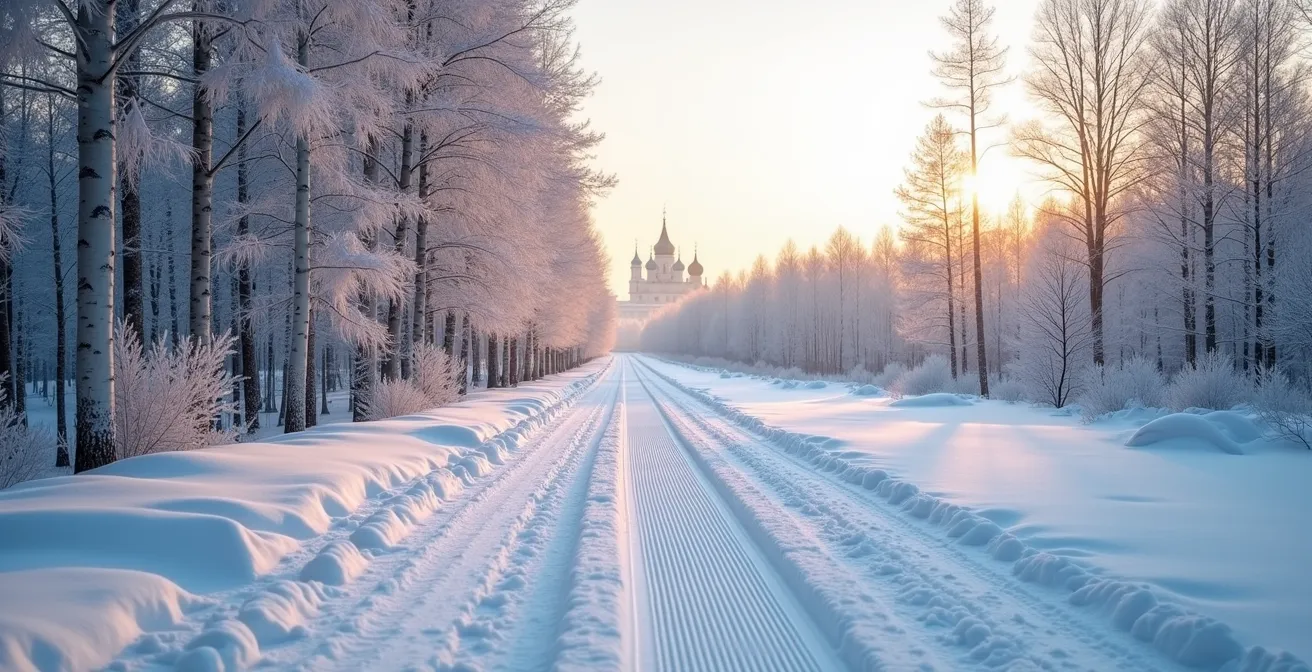
To truly experience a Moscow winter, you need to think like an athlete, not a tourist.
- Success lies in mastering the small details: from the right clothing layers to understanding modern, deposit-free rental systems.
- Authentic experiences, like finding a real samovar or a less-crowded troika ride, are found just beyond the main tourist paths.
Recommendation: Focus on one or two parks, but explore them fully. A great day combines an intense ski session with a rewarding, traditional warm-up.
Alright team, listen up! When that crisp Moscow air hits and the snow is perfect, the city transforms into a winter athlete’s paradise. Many guides will just give you a bland list of parks. But you’re not here for a casual stroll; you’re here to embrace the snow, to feel the burn in your lungs and the glide of skis beneath your feet. It’s not just about finding a trail; it’s about mastering the Russian winter rhythm: an invigorating workout followed by an authentic, soul-warming recovery.
Forget the generic advice. Most tourists make the same mistakes—improper gear, sticking to the most crowded spots, and missing the real magic that happens just off the main path. They see the cold as an obstacle. We see it as an opportunity. But if the key to an unforgettable Moscow ski adventure wasn’t just *where* you go, but *how* you approach the entire day?
This guide is your coaching manual. We’re going to ditch the tourist mindset and gear up like seasoned locals. We will tackle the crucial questions every active traveler has, from safety logistics and gear essentials to finding those perfect, iconic moments that make a trip truly legendary. Get ready to conquer Moscow’s winter, one powerful stride at a time.
To help you plan your ultimate winter sports day, we’ve broken down the essential intel into key areas. This structure will let you pinpoint the exact information you need to build a perfect, high-energy itinerary.
Summary: Your Moscow Winter Sports Playbook
- VDNKh or Sokolniki: Which park has the safest tubing slides for kids?
- Is it safe to walk on the Moskva River ice in January?
- Where to find samovars in parks to warm up after skiing?
- Poklonnaya Hill: When are the ice sculptures illuminated?
- Thermal underwear: Why jeans are the worst choice for winter walking?
- How to rent skates at the Gorky Park mega-rink without a deposit?
- Troika rides at Tsaritsyno: Are they a tourist trap or a must-do?
- Gorky Park in winter vs. summer: Which season offers better activities?
VDNKh or Sokolniki: Which park has the safest tubing slides for kids?
When you have little athletes in your crew, safety is priority number one. Tubing looks like simple fun, but it’s a real sport that demands a proper venue. You wouldn’t ski off-piste without checking the conditions, and tubing is no different. In fact, one study showed a massive 250% increase in tubing-related injuries over two decades, highlighting the need for vigilance. The choice between VDNKh and Sokolniki comes down to the kind of environment you want.
VDNKh is about structure and control. Think of it as a formal ski resort. It has formally groomed slopes, ticketed entry, and trained staff supervising the action. It’s a highly organized system designed to manage large crowds safely. Sokolniki, on the other hand, offers a more natural, “forest adventure” feel. The slopes are less formal, and the environment is more self-regulated, which requires more active supervision on your part. For younger kids or first-timers, the controlled environment of VDNKh is often the smarter bet.
To help you decide, here is a direct comparison of their safety features.
| Safety Aspect | VDNKh | Sokolniki |
|---|---|---|
| Organized System | Ticketed entry, controlled access | More open, natural forest setting |
| Hill Design | Formally groomed slopes | Less formal slopes, varied terrain |
| Supervision | Trained staff at strategic points | Self-regulated environment |
| Child Facilities | World’s largest ice rink nearby | Snegohog-Ville winter activity center |
| Warm-up Options | Multiple cafés and indoor facilities | Traditional park amenities |
Your Pre-Tubing Safety Huddle: Points to Check
- Check the run-out zone: Ensure the hill doesn’t end near hazards like parking lots, streets, trees, or fences.
- Verify kiddie hills: For children 5 or younger, confirm there’s a specially designated, gentler slope.
- Gear check: Everyone needs warm snow boots, a hat, gloves, and removable layers. No street clothes!
- Daylight operations: Only go tubing during daylight hours for full visibility of the track and other people.
- Tube inspection: Before you slide, inspect rented tubes for proper inflation and any signs of damage.
Ultimately, both parks offer fantastic winter fun, but your choice should align with your comfort level for supervision and your children’s experience.
Is it safe to walk on the Moskva River ice in January?
Let’s be crystal clear on this, team: No. Absolutely not. Walking on the frozen Moskva River might look like a romantic scene from a movie, but it is a dangerously bad idea. The ice thickness is unpredictable due to currents, and the risk of falling through into the freezing water is real and life-threatening. Don’t let a photo opportunity fool you into taking a foolish risk. Your winter adventure should be memorable for the right reasons.
Authorities are very clear on this point, and it’s a rule you need to respect for your own safety. As a leading local publication puts it, this is a firm boundary not to be crossed. In an article on winter sports, The Moscow Times states unequivocally:
While walking on a frozen river might seem like a romantic Russian cliché, it’s officially prohibited and dangerous.
– The Moscow Times, Hitting the Slopes and Cross Country Skiing in Moscow
The good news is that Moscow offers countless safe and spectacular alternatives to get your “on the ice” experience. The city boasts around 1,500 ice rinks, so you have plenty of solid, maintained surfaces to choose from. For a truly epic day, head to VDNKh, home to the world’s largest outdoor ice rink, which often features incredible light and firework shows. Or, for an iconic backdrop, skate at Gorky Park, which hosts the world-acclaimed Ice Sculpture Festival. You get all the magic of being on the ice without any of the danger.
Choose a designated rink, lace up your skates, and enjoy the incredible winter atmosphere safely. Your workout is on the trails and rinks, not testing the river ice.
Where to find samovars in parks to warm up after skiing?
Now we’re talking! After a tough ski session, there is nothing more authentically Russian than warming up with steaming hot tea from a traditional samovar. This isn’t just about getting a hot drink; it’s a cultural experience, an atmospheric refuel that’s part of the Russian winter rhythm. But you need to know what to look for. Not all “samovars” are created equal.
The real deal is a charcoal-fired samovar. You can spot them by the chimney on top, which is used to vent the smoke from the burning coals inside that heat the water. The electric versions you might see are fine, but they lack the soul and the faint, smoky aroma of the traditional method. These authentic samovars are most commonly found in parks during the Maslenitsa festival (a week-long sun festival before Lent) or on busy winter weekends when vendors cater to the crowds.
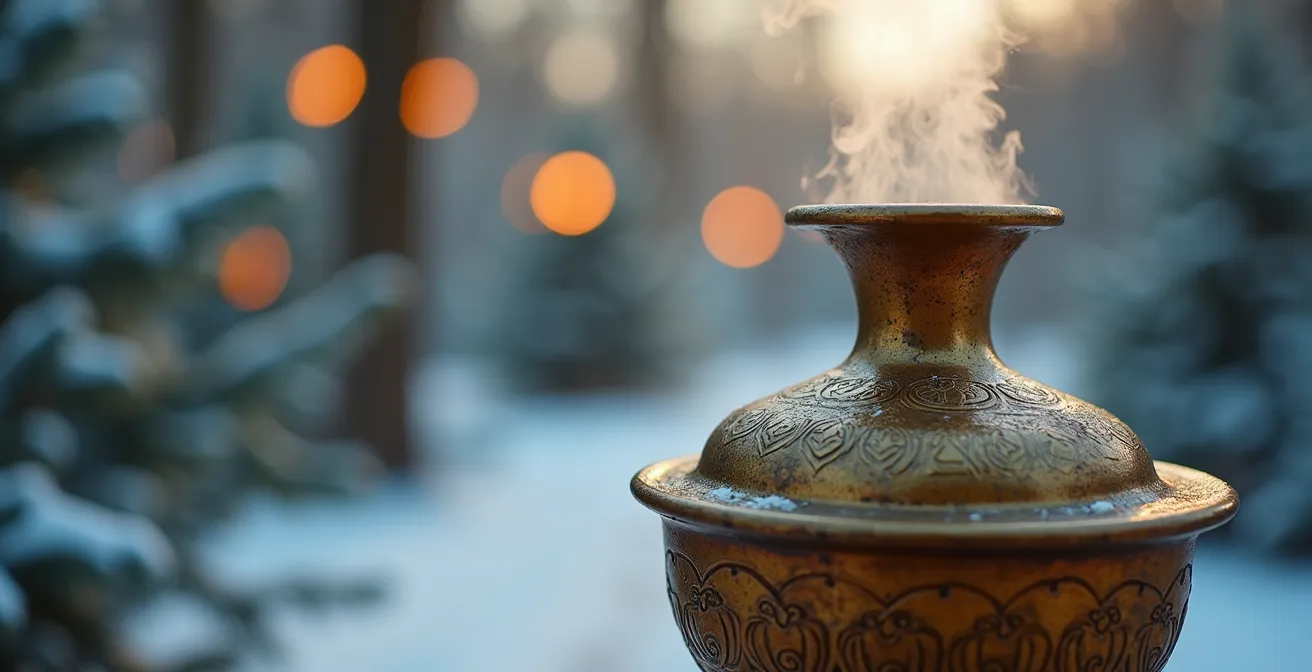
As the image shows, the experience is about more than just tea; it’s about the steam rising into the cold air, the glint of light on aged brass, and the feeling of community as everyone gathers for a moment of warmth. To participate like a local, you first buy your cup and tea bag from a nearby vendor, then serve yourself the hot water (known as ‘kipyatok’) from the samovar’s tap. For the full experience, grab some Bubliki or Sushki—traditional Russian bread rings perfect for dunking.
Your Samovar Spotting Guide
- Look for the chimney: A pipe on top means it’s a traditional charcoal-fired samovar, not an electric kettle.
- Purchase your supplies: Buy a cup and a tea bag from a nearby stall before approaching the samovar.
- Serve yourself ‘kipyatok’: Turn the tap and fill your cup with the boiling hot water yourself.
- Get the dunkables: Enhance the experience with traditional Bubliki or Sushki bread rings for dunking.
- Time it right: Visit parks on weekends or during the Maslenitsa festival for the best chance of finding an authentic setup.
This simple act of warming up connects you to a tradition that has been part of Russian winters for centuries. It’s the perfect reward after pushing yourself on the ski trails.
Poklonnaya Hill: When are the ice sculptures illuminated?
Poklonnaya Hill’s Victory Park transforms into a breathtaking gallery of ice during the winter, especially during the “Journey to Christmas” festival. Seeing these monumental sculptures is one thing, but seeing them illuminated is a whole other level of magic. The key to this experience is timing. The city-wide festive lighting, including the illumination of the ice sculptures, typically runs from late December to mid-January. This is your prime window.
To get the absolute most out of your visit, you need a strategic viewing plan. Don’t just show up after dark. The pro move is to arrive just before sunset. This allows you to witness the sculptures in two completely different lights. First, you’ll see the incredible detail and craftsmanship in the soft, natural light of dusk. Then, as darkness falls and the vibrant illuminations switch on, you’ll see them transform into glowing, otherworldly creations. It’s an experience very much like Lyon’s Fête des Lumières, but instead of buildings, the canvas is monumental ice art.
While Poklonnaya Hill is a fantastic destination, don’t forget that Red Square also becomes a winter wonderland with its own spectacular lights, ice rink, and festive atmosphere. For an active traveler, a great evening plan could be a brisk walk or even a ski through a nearby park as the sun goes down, followed by a visit to the illuminated sculptures once night has fully set in. This combines your workout with a world-class cultural and visual experience.
By planning your arrival around sunset, you get two shows for the price of one and capture the full artistic glory of Moscow’s incredible ice festivals.
Thermal underwear: Why jeans are the worst choice for winter walking?
Let’s have a serious talk about gear. What you wear is the single most important factor that will make or break your winter sports day in Moscow. And I’m going to say this once, so listen closely: do not wear jeans. Not for skiing, not for walking, not for anything active in the cold. A travel expert once put it perfectly, and this should resonate with anyone who knows the Alps:
Wearing jeans in a Moscow winter is like wearing espadrilles to hike Mont Blanc.
– Travel Expert, Moscow Winter Guide
It’s a rookie mistake, and here’s why from a technical standpoint: jeans are made of cotton. When you exert yourself, you sweat. Cotton absorbs that moisture and holds it right against your skin. In cold temperatures, that wet layer steals your body heat, making you feel colder, faster. It’s not just uncomfortable; it’s a recipe for hypothermia. Proper winter athletes rely on the layering system, and the foundation of that system is a high-performance base layer.
Your base layer, or thermal underwear, should be made from either merino wool or a synthetic fabric. These materials are designed to wick moisture away from your skin, keeping you dry and therefore warm. On top of that, you add a mid-layer for insulation (like fleece or down) and an outer shell that is waterproof and windproof. This system allows you to regulate your temperature by adding or removing layers as your activity level changes. If you forget a piece of gear, don’t panic; large chain stores like Sportmaster are found all over Moscow and have everything you’ll need.
The Winter Athlete’s Layering System
- Base layer: Merino wool or synthetic thermal underwear. Actively avoid cotton.
- Mid layer: Fleece or a down-insulated jacket to trap heat.
- Outer layer: A waterproof and windproof shell jacket to protect you from the elements.
- Bottoms: Thermal leggings worn under waterproof snow pants.
- Accessories: Wool socks, insulated gloves, and a neck gaiter or scarf are non-negotiable.
Invest in proper layers, and you’ll be able to stay out longer, perform better, and truly enjoy the magnificent Moscow winter without a single shiver.
How to rent skates at the Gorky Park mega-rink without a deposit?
Logistical mastery is key to a smooth day, and navigating the rental process is a big part of that. The old system of leaving your passport or a hefty cash deposit is quickly becoming a thing of the past at Moscow’s major rinks. Today, “no deposit” usually means a modern, streamlined system that relies on electronic payment methods. So, don’t be surprised if they don’t ask for your documents.
Here’s how it generally works at major venues like the Gorky Park rink or the world’s largest at VDNKh: your rental is processed using a credit or debit card. The transaction itself serves as a digital footprint, linking you to the equipment. This is faster, more secure, and far more convenient than carrying large amounts of cash or handing over your passport. The key is to have a valid card ready. For the most popular rinks, like the iconic GUM rink right on Red Square, it’s also a very good idea to reserve your skates in advance online, especially on weekends, to guarantee availability and skip the longest queues.

The process is designed to be efficient, getting you out on the ice as quickly as possible. The rental points are usually well-staffed, and the atmosphere is bustling and full of energy, as you can see. Just approach the counter with your payment card, tell them your size, and you’ll be on your way. It’s a simple, modern system that prioritizes your time on the ice over old-fashioned paperwork.
Embrace this efficiency. It means less time waiting in line and more time gliding through the magical light tunnels of Gorky Park’s incredible mega-rink.
Troika rides at Tsaritsyno: Are they a tourist trap or a must-do?
Ah, the troika ride. A horse-drawn sleigh gliding through a snowy palace park—it’s the quintessential Russian fairy-tale image. But is the experience at a popular spot like Tsaritsyno worth the price, or is it just a short, overpriced ride for tourists? The answer, like with many things, is: it depends on what you’re looking for. For a first-time visitor to Russia, a troika ride is an absolute must-do. The sheer magic of the experience and the incredible photo opportunities against the backdrop of Tsaritsyno’s magnificent palace are hard to beat.
However, it’s important to have the right expectations. The rides are typically short, around 15-20 minutes, and on weekends they can be crowded with higher prices. For a seasoned traveler who has perhaps already had similar experiences elsewhere (think gondolas in Venice), it might feel a bit touristy. The value is in the atmosphere, not the duration. For a less crowded but equally authentic experience, consider heading to Izmailovo Park. They offer troika rides through beautiful tree-lined avenues, often with sleighs laden with colorful rugs and fur throws, providing a fantastic alternative.
Here’s a breakdown to help you weigh the pros and cons for yourself:
This comparative analysis, based on information from a detailed guide on Moscow’s winter activities, can help you decide if it aligns with your travel style.
| Aspect | Pros | Cons |
|---|---|---|
| Experience | Iconic Russian tradition, fairy-tale atmosphere | Short duration (typically 15-20 minutes) |
| Setting | Magnificent Tsaritsyno palace and park backdrop | Can be crowded on weekends |
| Photo Opportunities | Excellent for memorable vacation photos | Similar to touristy gondola rides in Venice |
| Best Time | Weekdays for fewer queues | Weekend prices may be higher |
| Overall Value | Must-do for first-time visitors | Seasoned travelers might find it overpriced |
My coaching advice? If it’s your first time, do it. The memory and the photos will be priceless. Just go on a weekday to get the best value and a more peaceful experience.
Key Takeaways
- Your gear is your greatest ally. The right layering system (no cotton!) is non-negotiable for warmth and performance.
- Safety is an active choice. Always opt for organized venues for activities like tubing and skating, and stay off forbidden river ice.
- Embrace the full experience. The best days combine intense activity with authentic cultural cooldowns like a traditional samovar tea.
Gorky Park in winter vs. summer: Which season offers better activities?
Gorky Park is one of Moscow’s most beloved green spaces, but the question of which season is “better” is like asking if a track athlete is better than a swimmer. They are both elite, just in different disciplines. The park doesn’t just change with the seasons; it completely transforms its identity and energy. There is no “better”—there are simply two different, world-class experiences.
In summer, Gorky Park has a relaxed, social vibe, reminiscent of the ‘Paris Plages’ along the Seine. It’s a place for riverside lounging, open-air dancing, cycling, and picnics. The atmosphere is laid-back and sprawling. Winter, however, is a whole different beast. The park becomes a high-energy hub of focused activity. The relaxed lawns are replaced by a mega ice rink with dazzling light tunnels, and the quiet paths become groomed trails for cross-country skiing. It’s a magical transformation, turning the park into a dynamic winter sports arena with an atmosphere more akin to the Grand Palais des Glaces.
For the active traveler, winter arguably offers a more unique and concentrated set of activities. You can spend a full day there, starting with a long cross-country ski, followed by an afternoon of skating on the massive rink, and finishing with a visit to the spectacular Ice Sculpture Festival. It’s a complete winter sports triathlon in one location.
| Season | Unique Activities | Atmosphere | Best For |
|---|---|---|---|
| Summer | Open-air dancing, riverside lounging, outdoor concerts | ‘Paris Plages’ style: relaxed, social | Picnics, cycling, boat rides |
| Winter | Mega ice rink with light tunnels, Ice Sculpture Festival, cross-country skiing, tubing hills | ‘Grand Palais des Glaces’: magical, energetic | Ice skating, winter sports, festival atmosphere |
So, the choice isn’t about which is better, but which experience you are training for. For pure, concentrated, and magical winter sports, the winter version of Gorky Park is an unbeatable champion.