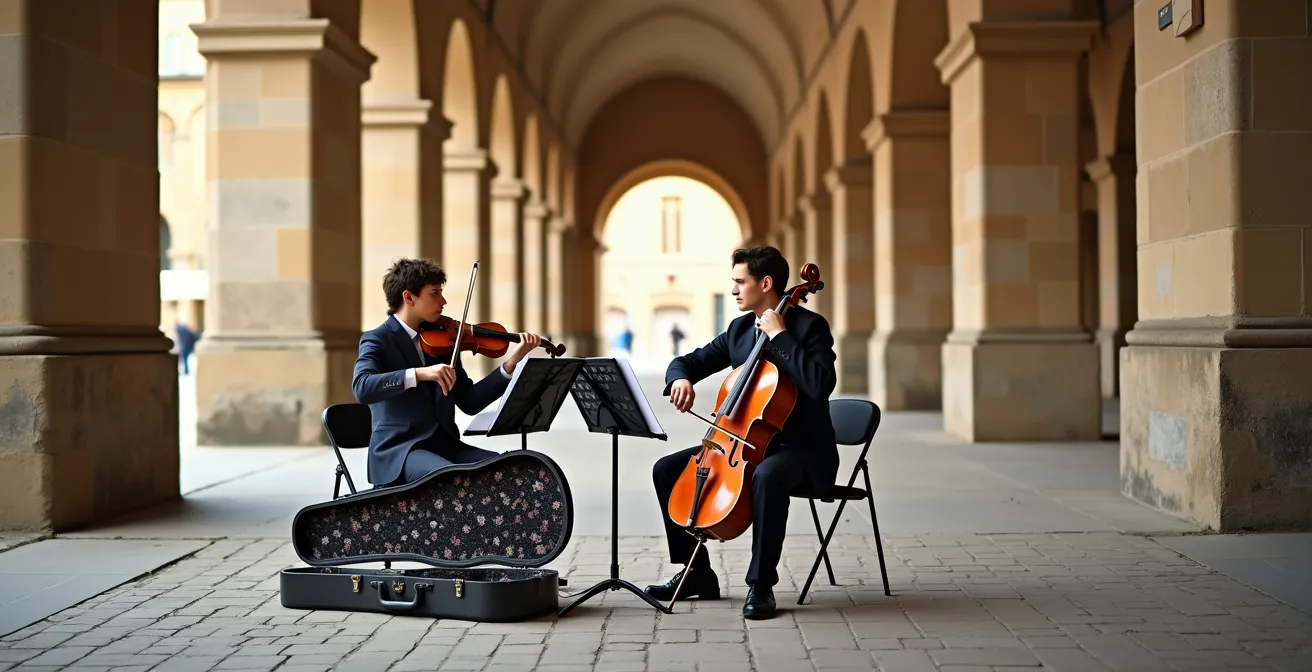
The most breathtaking concert halls in Paris are often not buildings, but hidden public spaces where the city’s next generation of virtuosos perform for free.
- Legitimate street music is a curated art; official Métro musicians pass rigorous auditions, and top-tier students seek out spaces with superior natural acoustics.
- Success lies in knowing the system: understanding the unofficial schedules, the best acoustic hotspots, and the modern etiquette of digital tipping.
Recommendation: Skip the random wandering and target specific locations like the arcades of Place des Vosges or designated Métro platforms during early evenings for a truly world-class experience.
There’s a unique magic to Paris that exists outside its gilded museums and grand concert halls. It’s the moment you turn a corner in Le Marais and are stopped in your tracks by a flawless opera aria, or when a haunting cello melody rises above the din of the Métro. Many visitors hope to stumble upon these moments by chance, wandering through the Latin Quarter or Montmartre. This is a strategy of luck, not a scout’s method.
The common advice to “just explore” often leads to tourist-heavy spots with performers of varying quality. But what if finding these sublime, high-caliber performances wasn’t about luck, but about knowing the city’s secrets? The truth is that Paris has an informal, yet structured, ecosystem for pre-professional talent. The city’s conservatory students and auditioned artists don’t play just anywhere; they seek out specific acoustic hotspots and perform at optimal times.
This guide is your backstage pass. It moves beyond generic advice to give you an insider’s perspective. We will decode the system of the official Métro musicians, reveal the science behind the city’s best “urban recital halls,” and navigate the unwritten code of conduct—from digital tipping to sidestepping common scams. By the end, you won’t just be a listener; you’ll be a music scout, equipped to find the soul of Paris’s next generation of artists.
This article will guide you through the essential strategies and locations for discovering top-tier free music. The following summary outlines the key areas we will explore to transform your approach from a hopeful tourist to a knowledgeable insider.
Summary: Your Scout’s Guide to Paris’s Free Music Scene
- Music in the Metro: How to find the schedule of official metro performers?
- Why is Kuznetsky Most the hub for evening acoustic performances?
- Cash or QR code: How to tip street musicians in a cashless society?
- The “Free CD” scam: How to politely decline aggressive street sellers?
- Where to find bands playing Viktor Tsoi covers on Friday nights?
- The Viktor Tsoi Wall: Why do fans still gather here to sing?
- Stanislavsky Theatre vs. Bolshoi: Why the second option might be better?
- Old Arbat walking tour: Avoiding the tourist kitsch to find history
Music in the Metro: How to find the schedule of official metro performers?
The Paris Métro is far more than a transportation network; it’s one of the most rigorously curated performance spaces in the world. For a musician to earn the “Musicien du Métro” accreditation from the RATP, they must pass a highly competitive audition. This isn’t an open mic; it’s a juried selection. The quality control is immense; in a recent session, only about 300 artists were selected from nearly 1,500 applicants. This means the performers you see with the official badge are already vetted professionals or pre-professionals.
Finding them, however, requires a bit of strategy as there’s no centralized public schedule. The system is based on designated performance spots. Talented artists gravitate towards stations with high footfall and superior acoustics. Here are some of the most reliable locations and times to find them:
- Station République: A major hub where you can often find soul artists like Kalala Soul or pop-folk performers during the afternoon rush hours (4-6 PM).
- Station Châtelet: The long, vaulted connecting corridors are a favorite for lyrical singers. Look for them mid-day when the echo is not overwhelmed by commuter noise.
- Station Bastille: Known for its jazz musicians, especially in the early evening (5-7 PM) when the acoustics are at their best.
For more specific tracking, modern musicians often use their own channels. Many performers display a small sign with a QR code linking to their Instagram or Spotify, where they sometimes post their weekly schedule. Following the #MusiciensDuMétro hashtag on social media is another excellent way to discover featured artists and potential performance times.
Why is Kuznetsky Most the hub for evening acoustic performances?
In Paris, the spiritual equivalent of Moscow’s legendary artistic hubs like Kuznetsky Most isn’t a single street, but a collection of “urban recital halls”—public spaces blessed with extraordinary natural acoustics. The true hub for conservatory-level acoustic performances is arguably the Place des Vosges in the Marais. The reason is pure physics: the stone arcades running along the square’s perimeter create an exceptional natural reverberation. This architectural feature acts as a sound amplifier and refiner, turning the space into a world-class, open-air concert hall.
Case Study: Place des Vosges, Paris’s Premier Acoustic Stage
As noted by keen observers, opera singers and classical musicians, many of them students from the nearby Conservatoire à Rayonnement Régional (CRR) de Paris, gather beneath the vaulted ceilings of the arcades. The stone arches amplify and enrich their sound, creating a powerful, immersive experience enhanced by the historic setting. Unlike open squares where sound dissipates, here it is focused and contained, allowing for nuanced performances usually reserved for indoor venues. This makes it a magnet for talent honing their craft.
This is where you can witness the raw passion of a singer perfecting an aria or a string quartet rehearsing. The best time to go is during the “golden hour” in the late afternoon or early evening, when the crowds thin and the light adds to the atmosphere. An unwritten rule among musicians here is the rotation system; performers typically play for about 45 minutes before giving the prime spot to another artist. As an appreciative audience member, the best practice is to listen to at least one full piece before moving on, a silent nod of respect for their artistry.
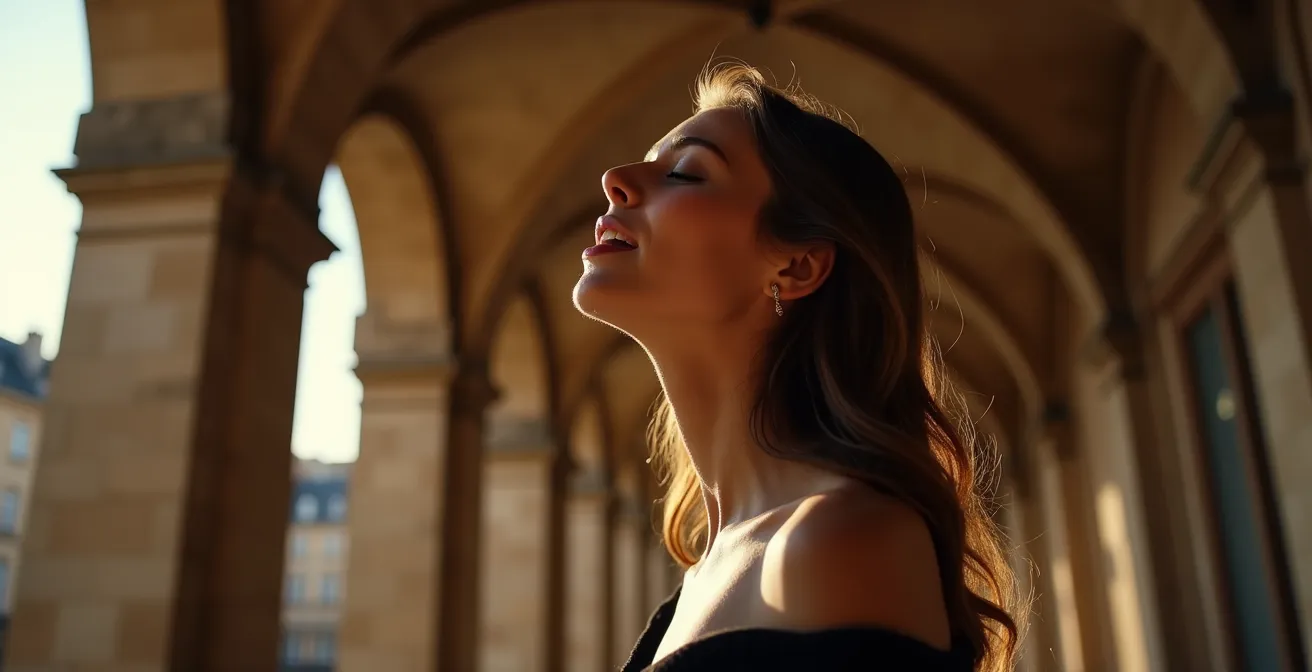
Beyond Place des Vosges, other acoustic hotspots exist. The narrow, stone-walled streets of Île Saint-Louis and certain quiet courtyards in the Latin Quarter also offer excellent sound properties. The key is to look for hard, reflective surfaces that create a natural amphitheater effect.
Cash or QR code: How to tip street musicians in a cashless society?
The romantic image of tossing a few coins into an open violin case is becoming a relic of the past. In an increasingly cashless France, showing your appreciation for a stunning street performance requires a more modern approach. With data showing that as many as 42% of French consumers are expected to use digital wallets by 2025, musicians have adapted. Being prepared to tip digitally is now a key part of the audience’s role.
Most professional and pre-professional street performers now facilitate digital payments through various platforms, usually indicated on a small, discreet sign. Forgetting to bring cash is no longer an excuse not to support the arts. Instead, you’re likely to see a QR code that makes tipping as easy as taking a picture. Knowing which apps are common can make the process seamless and show you’re an informed supporter, not a confused tourist.
While a few euros in cash is always appreciated, having one or two of these apps on your phone will ensure you’re ready to support the artists you discover. It’s a small gesture that helps sustain the vibrant, independent music scene that makes Paris so special.
Your checklist for digital tipping
- Lydia App: This is the most prevalent mobile payment app in France for peer-to-peer transfers. Many musicians will have a Lydia QR code ready for you to scan.
- PayPal.me Links: A global standard, many performers will display their personal PayPal.me link, allowing for quick and easy international payments.
- Contactless Readers: It’s increasingly common to see serious performers with small SumUp or Zettle card readers, allowing you to tap your credit card for a set amount.
- Wero (formerly Paylib): Keep an eye out for Wero, the new pan-European instant transfer solution being rolled out by French banks, which will also heavily feature QR code payments.
- Bandcamp/Spotify QR Codes: Some artists link directly to their Bandcamp page, allowing you to purchase a digital track or album, offering more sustainable support.
The “Free CD” scam: How to politely decline aggressive street sellers?
While Paris is filled with genuine artists, certain high-traffic areas are also home to aggressive sellers and scammers masquerading as musicians. The infamous “Free CD” scam is a classic example. An individual will approach you, aggressively push a CD into your hand, claim it’s free, and then demand a “donation” once you’re holding it, often becoming confrontational if you refuse. Knowing how to differentiate a true artist from a scammer and how to decline firmly but politely is an essential skill for any urban explorer.
Identifying Legitimate Performers vs. Scammers
True musicians are almost always stationary. They find a good spot, set up their equipment, and let their music attract an audience. Their instrument case is open for voluntary contributions. Scammers, on the other hand, are mobile and proactive. As noted by frequent visitors, they often target tourists directly on the steps of the Sacré-Cœur, the bridges near Notre-Dame, and around the Centre Pompidou. They initiate contact, relying on pressure tactics rather than talent. The same awareness should apply to other common distractions, like the “string bracelet” tricksters or petition-signers in these areas.
The key to handling these situations is to be polite, firm, and decisive. Hesitation is often interpreted as an opening. You are under no obligation to engage, listen, or accept anything handed to you. A confident refusal is your best tool. Here are some effective techniques:
- The Direct Refusal: A clear and firm “Non, merci, ça ira” (No thanks, I’ll be fine) is usually sufficient. It is polite but leaves no room for negotiation.
- The Clear Disinterest: Alternatively, “Désolé, pas intéressé(e)” (Sorry, not interested) works well.
- Body Language: Avoid making prolonged eye contact. Keep your hands to yourself and simply keep walking with purpose. Do not stop.
- The Broken Record: If they persist, simply repeat “Non, merci” without raising your voice. Do not get drawn into an argument or explanation.
Remember, genuine artists respect a listener’s choice to walk away. Scammers rely on creating an uncomfortable situation. By learning to recognize the difference and refusing confidently, you protect yourself and help ensure that your support goes to the real performers who enrich the city’s soundscape.
Where to find bands playing Viktor Tsoi covers on Friday nights?
While you’re unlikely to find direct covers of the Russian rock icon Viktor Tsoi, the spirit of his poetic rebellion and cultural significance finds a powerful parallel in the tradition of French *chanson*. To find the soul of Tsoi in Paris, you must look for the keepers of the flame for artists like Georges Brassens and Jacques Brel. These are the musicians who gather to celebrate a legacy of lyrical depth and social commentary, often in informal, passionate jam sessions.
One of the most authentic places to witness this is the Place de la Contrescarpe in the Latin Quarter, particularly on Friday evenings. This square has long been a meeting point for performers dedicated to the *chanson française* tradition. It’s a world away from the polished tourist shows, offering a raw and heartfelt experience.
The Living Legacy of Chanson at Place de la Contrescarpe
As chronicled by enthusiasts of urban soundscapes, this specific square hosts regular, informal gatherings of musicians honoring the great singer-poets. Much like fans of Tsoi, they come together not just to perform, but to participate in a shared cultural heritage. The atmosphere is one of communal celebration, with passersby and locals alike stopping to listen, sing along, and immerse themselves in the defiant, poetic spirit that defines this genre. It’s here that the cultural resonance of Tsoi’s music finds its Parisian echo.
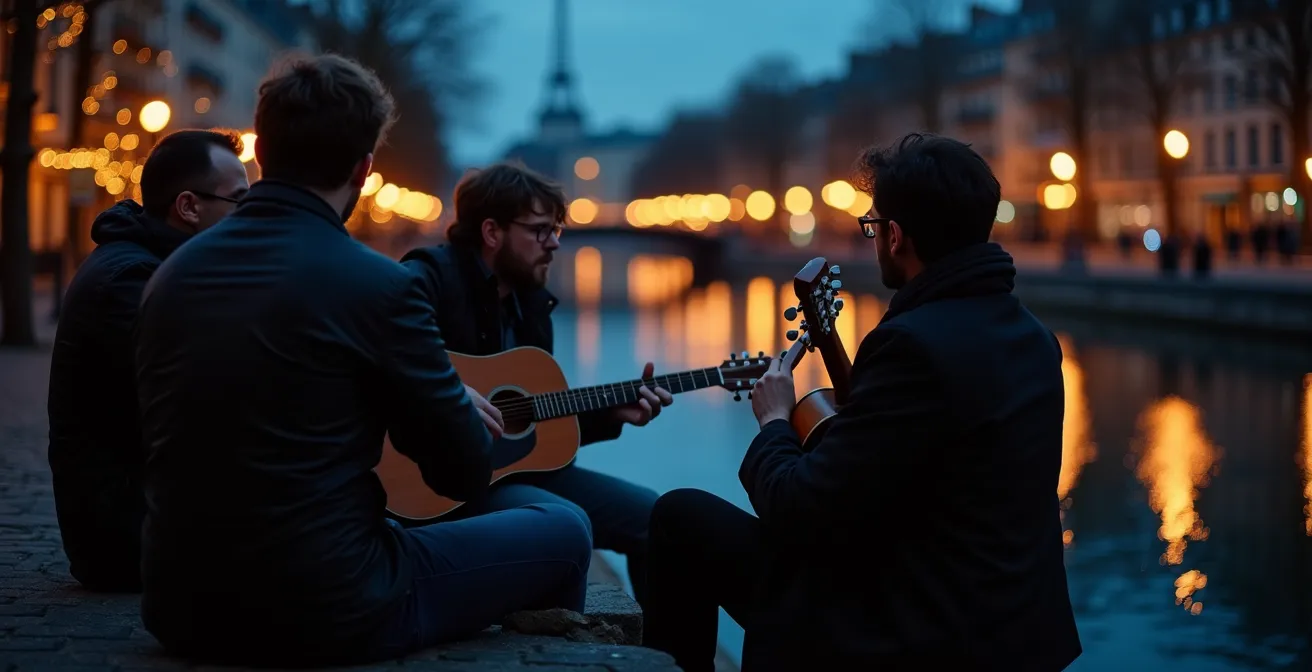
Other places where this spirit thrives include the banks of the Canal Saint-Martin, where groups of friends and musicians often gather for impromptu sessions as dusk falls. The key is to look for acoustic guitars, shared songbooks, and an atmosphere of participation rather than performance. It’s in these moments of collective musical expression that you will find the true Parisian equivalent of a tribute to a cultural icon.
The Viktor Tsoi Wall: Why do fans still gather here to sing?
Paris may not have a “Viktor Tsoi Wall,” but it is a city built on living memorials to its musical legends. Fans and musicians gather not at a graffiti-covered wall, but in the very streets and squares where their idols began, transforming public spaces into shrines of living heritage. This tradition of spontaneous musical gathering is deeply ingrained in the city’s identity.
Street music is an old tradition out of which emerged Edith Piaf who began her career by singing in the streets of Paris.
– Soundlandscapes Blog, Street Music Heritage in Paris
This connection to a legendary past is precisely why fans still gather. It’s an act of remembrance and cultural continuation. For them, playing a song in a specific place is not just a performance; it’s a pilgrimage. It’s about tapping into the energy of the artists who came before and keeping their legacy alive for a new generation. This phenomenon is beautifully illustrated by the enduring spirit of Jazz Manouche in the city.
Django Reinhardt’s Living Heritage in Saint-Germain and Saint-Ouen
The ghost of the legendary guitarist Django Reinhardt is very much alive in Paris. Near the church of Saint-Germain-des-Prés, it’s not uncommon to find elderly jazz musicians gathered, playing for their own pleasure rather than for money. Furthermore, on weekend afternoons at the Marché aux Puces de Saint-Ouen (flea market), spontaneous Jazz Manouche jam sessions erupt, honoring Django’s legacy in a raw, authentic, and joyous celebration. These are not scheduled concerts; they are organic expressions of a shared passion, a living “wall” of sound and memory.
These gatherings are about community and identity. They are a testament to the power of music to create a sense of place and belonging that transcends time. By finding these spots, you are not just hearing music; you are witnessing a cultural ritual that has been repeated in Paris for generations.
Stanislavsky Theatre vs. Bolshoi: Why the second option might be better?
In Paris, the choice isn’t between Moscow’s iconic theatres, but between a grand, formal evening at the Opéra Garnier and the thrilling discovery of a future star at a conservatory recital. For the true music scout, the second option often provides a more profound and valuable experience. While an evening at a historic opera house is unforgettable, it is also a highly produced, expensive, and often tourist-oriented event. You are watching established professionals at the peak of their careers.
Conversely, student recitals at institutions like the Conservatoire National Supérieur de Musique et de Danse de Paris (CNSMDP) offer something entirely different. These are often free and open to the public, especially for end-of-year exams or masterclasses. Here, you witness raw, unpolished talent and the palpable hunger of an artist on the cusp of greatness. It’s a chance to see the next world-class soprano or violin virtuoso before they are famous, in an intimate setting where every note is filled with passion and ambition.
The comparison below highlights the distinct value proposition of choosing the path of discovery over the established spectacle. While Opéra Garnier offers guaranteed polish, the conservatory provides the thrill of the hunt and a front-row seat to the future of classical music.
| Aspect | Opéra Garnier | CNSMDP Student Recitals |
|---|---|---|
| Cost | €10-250 per ticket | Free admission |
| Venue Size | 1,979 seats | 50-400 seats (intimate) |
| Performer Status | Established professionals | Future world-class talent |
| Experience Type | Formal, tourist-oriented | Raw passion, exam performances |
| Booking Required | Weeks in advance | First-come, first-served |
For a music lover, the choice represents a philosophical difference: do you prefer the finished masterpiece or the electrifying moment of creation? The conservatory offers the latter, making it arguably the “better” option for anyone seeking authentic artistic discovery.
Key Takeaways
- Seek Curation and Acoustics: The best free music is not random. Prioritize officially auditioned Métro musicians and seek out architectural spaces like the Place des Vosges arcades known for their natural reverberation.
- Embrace Modern Etiquette: A cashless society requires a prepared audience. Have a digital payment app like Lydia or PayPal ready to tip, as this is now the standard for most performers.
- Distinguish Art from Scams: Genuine artists are stationary and perform for willing audiences; scammers are mobile and use pressure tactics. A firm “Non, merci” and confident body language are your best defense.
Old Arbat walking tour: Avoiding the tourist kitsch to find history
In Paris, the equivalent of an “Old Arbat” walking tour—one that sidesteps tourist kitsch to uncover authentic artistic history—is a journey through the musical soul of Montmartre. While most visitors flock to the crowded Place du Tertre with its caricature artists, a true music scout knows that the real history lies in the quieter side streets, cabarets, and hidden squares where the legends of *chanson* were born. This self-guided tour allows you to walk in the footsteps of giants like Erik Satie and the bohemian poets of the early 20th century.
By following this path, you trade the noise of the main square for the echoes of musical history. The best time for this walk is on a weekday morning, when the streets are calm and you can feel the artistic spirit of the neighborhood without the overwhelming crowds. The walk culminates not in a tourist trap, but in a place of genuine, ongoing artistic expression.
- Start at Au Lapin Agile (22 Rue des Saules): Begin at this legendary little cabaret, famously painted by Picasso. It was the epicenter of bohemian Paris, where poets and musicians invented the modern *chanson*. Feel the history before you even begin walking.
- Visit Erik Satie’s Former Residence (6 Rue Cortot): Just a short walk away, you’ll find the former home of the eccentric and brilliant composer Erik Satie. The building now houses the Musée de Montmartre.
- Explore Square Suzanne-Buisson: Duck into this quiet, leafy square. It’s a peaceful oasis where you’ll often find art students sketching and occasionally a lone musician practicing, far from the tourist bustle.
- End at Musée de Montmartre Gardens: The gardens behind the museum offer a stunning view over the Montmartre vineyard and the city. They often host intimate musical events and provide a perfect, serene end to your historical tour.
Culture Rapide has the feel of a little cabaret in Montmartre in the late 1890s.
– Discover Walks Blog, Top Places for Street Artists in Paris
This tour is about finding history, not just observing it. It’s an active way to engage with the neighborhood’s past, and you might just be rewarded with an intimate performance that feels like it’s being played just for you, a hundred years after the first notes were sounded on these same streets.
Now equipped with the knowledge of a seasoned scout, your next step is to put it into practice. Go beyond the guidebooks and start your own journey of discovery through the vibrant, living soundscape of Paris.